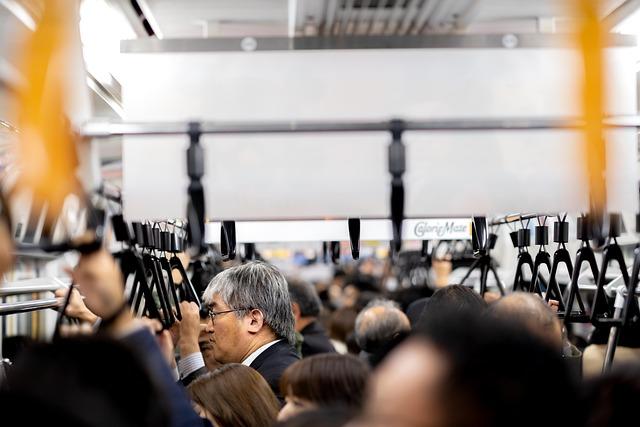
Rush-hour trains and night buses are meant to move Londoners, not divide them. Yet for too many people,the journey across the capital still carries the risk of abuse,intimidation,or violence targeted at who they are. From racist slurs on station platforms to Islamophobic harassment on buses and homophobic taunts on the Tube, hate crime on public transport undermines both personal safety and the city’s identity as a diverse, open metropolis.
As London grows and its transport network becomes busier than ever, tackling hate crime is no longer just a policing issue but a public priority. The Mayor’s Office, Transport for London (TfL), the British Transport Police and community organisations are working to prevent incidents before they happen, support victims when they do, and encourage witnesses to speak up.This article explores how London is confronting hate on its buses, trains and trams-and what every passenger can do to help keep the network safe for all.
Understanding the roots of hate crime on London’s buses and trains
On the capital’s buses, Tubes and trains, hostility rarely starts with a single incident. It is often the outcome of underlying prejudice, fuelled by misinformation, social isolation and online echo chambers that normalise bigotry. Moments of stress – a rush-hour delay, a crowded carriage, a minor disagreement over a seat – can act as a trigger when someone already holds hostile beliefs about a person’s race, faith, disability, sexuality or gender identity. Alcohol and drugs can lower inhibitions further,turning an ugly thought into an abusive comment or assault. Crucially, many perpetrators feel emboldened by the perceived anonymity of public transport, assuming they can simply disappear into the crowd at the next stop.
- Hidden bias reinforced at home, in peer groups and online.
- Social and economic tension that gets misdirected at visible minorities.
- Group dynamics, where bystanders’ silence is mistaken for approval.
- Weak challenge to “jokes” and slurs that gradually escalate.
| Underlying factor | How it shows up on transport |
|---|---|
| Stereotypes | Targeting people by clothing, language or accent |
| Power imbalance | Picking on those travelling alone or appearing vulnerable |
| Normalization of hate | Slurs used loudly with no expectation of challenge |
| Impunity | Offenders assuming CCTV and witnesses “won’t matter” |
How better reporting and data sharing can stop repeat offenders
Every abusive comment on a bus or threatening shove on a platform leaves a trace – in witness accounts, CCTV footage and staff reports. When that information is accurately captured and securely shared between transport operators, the police and City Hall, patterns emerge: the same faces, the same routes, the same times of day.Instead of treating each incident as an isolated flare‑up, agencies can link cases and move swiftly to identify suspects, secure evidence and intervene before hostility escalates into serious violence. This joined‑up approach also protects victims: consistent data means survivors do not have to repeatedly relive their experience just to be taken seriously by different authorities.
Smarter data systems turn these individual stories into a live safety map for London’s transport network. Shared dashboards can flag hotspots, reveal under‑reported routes and highlight where extra patrols or community engagement are needed. To work,the system must be simple for staff and passengers to use,and clear about how information is stored and anonymised. When people know that speaking up leads to concrete action,confidence grows and silence breaks.
- Faster identification of serial perpetrators across multiple lines and services
- Stronger cases built from linked reports, CCTV and witness statements
- Targeted prevention measures focused on emerging hotspots
- Greater trust in reporting systems among passengers and staff
| Data Source | Used For |
|---|---|
| Passenger reports | Spotting repeat behaviours and locations |
| Staff incident logs | Tracking regular offenders on specific routes |
| CCTV footage | Confirming identity and timeline of events |
| Police records | Linking transport incidents to wider offending |
Designing safer stations through staff presence technology and layout
Targeted design sends a clear message that hate has no place on the network. Visible,approachable staff are frequently enough the strongest deterrent,yet modern tools mean they don’t have to stand on every platform to be everywhere at once. By combining roaming safety teams, live-link help points and mobile incident-reporting apps, transport operators can project a constant presence that is both human and high-tech. Strategically positioned staff hubs with clear sightlines over ticket halls, entrances and interchange points ensure there are fewer “blind spots” where abuse can go unseen.When staff can instantly pull up camera feeds, trigger announcements or call specialist support, people who might otherwise be targeted-such as LGBTQ+ passengers, disabled Londoners or those wearing visible religious symbols-gain swift access to help.
Physical layout is just as crucial as personnel. Stations that are cramped, poorly lit or confusing to navigate can enable harassment by making it harder for victims to move away or find assistance. Redesigns now focus on:
- Open-plan concourses that reduce hidden corners and create natural surveillance
- Clear, multilingual signage so passengers can quickly find exits, staff points and safe routes
- Well-lit platforms and walkways that make faces and behaviour more visible on CCTV
- Dedicated “safe waiting zones” near staffed areas or cameras for those who feel at risk
| Design feature | Safety benefit |
|---|---|
| Staff hub with 360° view | Faster spotting of harassment |
| Help point with live video | Direct, reassuring contact |
| Safe waiting zone marker | Clear destination in an emergency |
Empowering passengers and communities to intervene safely and support victims
Witnesses play a crucial role in stopping hateful behaviour from escalating, but no one should be asked to put themselves at risk. Rather, Londoners are encouraged to use the “4 Ds” of safe intervention: Distract the aggressor by asking for directions or starting a neutral conversation; Delegate by alerting transport staff, the driver, station staff or calling 999 if there is immediate danger; Document incidents discreetly, noting time, place and what was said or done; and Delay by checking in with the targeted person once it is indeed safe, offering reassurance and practical help. These small actions can make a important difference to how supported a victim feels and how effectively incidents are investigated.
- Speak up safely – use calm, non-confrontational language from a safe distance.
- Stand beside, not in front of – sit or stand near the victim, showing quiet solidarity.
- Use the tools available – from station help points to texting transport safety lines.
- Record responsibly – only share footage with the victim and, if they agree, the police.
- Report every incident – even “minor” ones help map patterns and prevent escalation.
| Situation | Safe Response |
|---|---|
| Shouting or slurs on a busy bus | Move near the victim, press the stop button, alert the driver |
| Targeted harassment on a platform | Use the help point, inform staff, offer to wait with the victim |
| Intimidation when no staff are visible | Call 999 in emergencies, or report via online hate crime services later |
The Way Forward
Ultimately, preventing hate crime on London’s public transport network is not the duty of any single authority, but a shared civic duty. The measures now in place-from strengthened reporting channels to visible enforcement and targeted community outreach-can only be fully effective if passengers feel confident to use them.
By recognising hate crime when it happens, challenging it safely where possible, and reporting every incident, Londoners help to expose patterns of abuse that might otherwise remain hidden.Transport operators and the police, in turn, are under growing pressure to respond transparently, act decisively, and ensure victims are properly supported.
As the capital’s population grows and diversifies,the stakes are clear: a transport system that tolerates hate cannot claim to serve the city it carries. The test for London will be whether its streets, stations and services become places where difference is not merely protected in law, but respected in practice-and where no journey has to be made in fear.