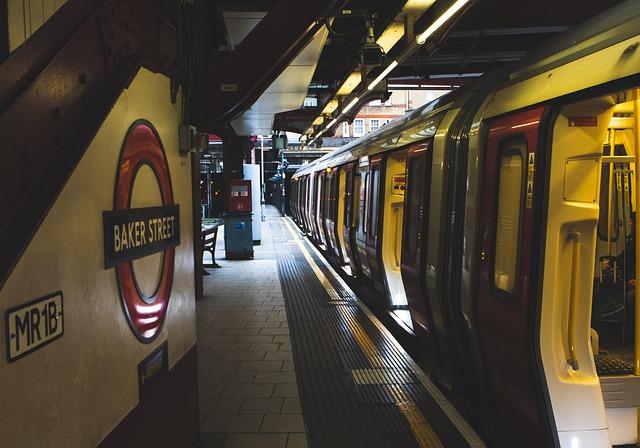
A man has been jailed for 11 years after carrying out a “horrific” double stabbing on a packed London Underground train, in an attack British Transport Police described as “brutal and terrifying.” The incident, which left two men seriously injured and passengers fleeing in panic, has raised fresh concerns over knife crime on the capital’s transport network. The sentencing at a London court marks the end of a case that shocked witnesses and underscored the crucial role of CCTV and swift police work in bringing the attacker to justice.
Man jailed for 11 years for horrific double tube stabbing in London
The shocking attack unfolded during a routine evening commute, when a 23-year-old man launched an unprovoked knife assault on two strangers inside a packed Tube carriage. Panic swept through the train as passengers scrambled to safety, while witnesses described scenes of “sheer terror” as the assailant repeatedly lashed out with the blade. British Transport Police officers, supported by fast-acting members of the public, detained the attacker at the next station, where paramedics treated the seriously injured victims on the platform before rushing them to hospital. Both survived but were left with life-changing physical and psychological scars.
At the sentencing hearing, the judge condemned the assault as a “brutal and utterly senseless act” and imposed an 11-year custodial term, followed by an extended period on license, to protect the public. The court heard how detectives pieced together CCTV footage, witness statements and forensic evidence to secure the conviction, while specialist officers supported the victims throughout the inquiry. Key elements of the case included:
- Location: Busy evening service on a central London Underground line
- Victims: Two men in their 20s, both seriously injured
- Offender: 23-year-old male, known to police for previous violent behaviour
- Charge: Two counts of attempted murder and possession of a bladed article
- Sentence: 11 years’ imprisonment with an extended licence period
| Key Aspect | Details |
|---|---|
| Investigation lead | British Transport Police Serious Crime Unit |
| Evidence used | CCTV, forensics, eyewitness reports |
| Public impact | Increased patrols on affected routes |
| Victim support | Ongoing counselling and legal advocacy |
How British Transport Police pieced together evidence from CCTV and witnesses
Detectives began by tracing the attacker’s movements across the Underground, pulling hours of station and on-train CCTV from multiple locations. Frame by frame,officers followed his journey: entering the network,loitering on platforms and boarding the carriage where the violence erupted. Distinctive features-his clothing,gait and the way he carried a backpack-were logged and cross-checked against footage from ticket halls,escalators and exit barriers. Technicians then created a precise timeline, mapping each sighting to a specific camera angle. This visual trail was overlaid with Oyster and bank card data, allowing investigators to pinpoint not just where he travelled, but exactly when he passed through key points.
Alongside this, officers worked systematically through witness accounts to align what people had seen with what the cameras recorded. Commuters described moments of chaos, but also noticed crucial details that technology alone could not capture. Investigators prioritised accounts that were:
- Consistent with the visual timeline from digital evidence
- Specific about clothing, actions and spoken threats
- Corroborated independently by more than one witness
| Source | Key Contribution |
|---|---|
| CCTV footage | Tracked movements before, during and after the attack |
| Passenger statements | Confirmed identity and behaviour inside the carriage |
| Station staff reports | Fixed the suspect’s route through specific stations |
Impact of the attack on victims public safety concerns and commuter confidence
The violent assault left not only physical scars on the victims, but also a lingering sense of vulnerability that has reshaped how they navigate everyday journeys. Survivors and witnesses reported heightened anxiety when entering stations, boarding carriages, or standing near strangers, with many now altering long-established routines to feel safer. Some now choose to travel only during daylight, others sit closer to the driver’s carriage, and a number have sought counselling to cope with flashbacks triggered by the sound of train doors or crowded platforms. This ripple effect extends to families and colleagues who worry about loved ones commuting on the network, amplifying a collective unease that stretches far beyond the immediate crime scene.
For regular passengers, the incident has sharpened existing concerns about safety in confined public spaces and raised fresh questions about how effectively risks are managed below ground. While many commuters remain resilient, the attack has prompted renewed scrutiny of visible policing and security measures, with travellers paying closer attention to who is in their carriage and how quickly help can be summoned.Key areas of concern voiced by passengers include:
- Visibility of officers on platforms and trains during peak and late-night services
- Speed of emergency response when serious incidents occur underground
- Reliability of CCTV and surveillance to deter offenders and support prosecutions
- Availability of support for traumatised witnesses and victims after incidents
| Concern | Commuter Reaction | Behaviour Change |
|---|---|---|
| Personal safety | More alert to nearby behaviour | Choosing busier carriages |
| Late-night travel | Heightened apprehension | Leaving events earlier |
| Emergency response | Demand for faster intervention | Keeping exits and help points in view |
Recommendations for improving security incident reporting and prevention on the Tube
In the wake of this violent attack, safeguarding passengers depends on making it easier to speak up early and act decisively when something feels wrong. Transport authorities should deploy more visible and plain-clothed officers at key interchanges, backed by clearer in-carriage signage explaining how to report concerns via text, apps or platform help points. Equally vital is speeding up how reports are triaged and shared between British Transport Police, station staff and control rooms, supported by live CCTV monitoring and smart analytics that flag suspicious patterns in real time. To reinforce trust, commuters need reassurance that every tip-off is taken seriously, with regular publication of anonymised outcomes that show how public information has directly helped prevent harm.
Prevention also starts long before an incident unfolds. Targeted campaigns can educate passengers on recognising escalating behaviour, setting boundaries and safely intervening by distraction, not confrontation. Staff should receive regular, scenario-based training that reflects current offending patterns, with rapid debriefs after serious incidents to capture lessons learned. Simple tools can make a difference:
- Discreet reporting via SMS, app buttons and QR codes in carriages and on platforms.
- Faster alerts to nearby stations when violence is reported on a moving train.
- Enhanced CCTV with clear signage to deter would-be offenders.
- Joint exercises between BTP, Underground staff and local emergency services.
| Measure | Main Benefit |
|---|---|
| Dedicated reporting app | Quicker, anonymous tip-offs |
| Extra patrols at peak times | Higher deterrence and visibility |
| Staff refresher training | Sharper response under pressure |
| Public awareness drives | More bystanders ready to act safely |
The Conclusion
The case underscores both the swift response of emergency services and the courts’ readiness to impose lengthy custodial sentences for serious violence on the rail network. As British Transport Police continue targeted patrols and appeal for public vigilance, the message from investigators and prosecutors remains clear: knife crime on public transport will be met with firm and decisive action.