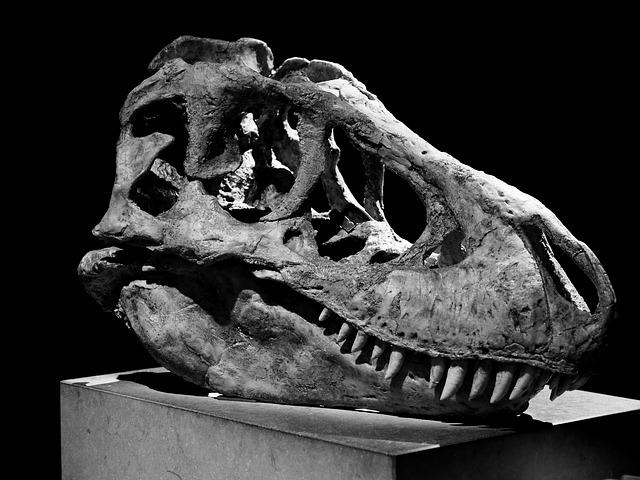
In a striking collision of paleontology and financial crime enforcement, the UK’s National Crime Agency (NCA) has revealed that a cache of dinosaur bones has been forfeited to settle an Unexplained Wealth Order (UWO) case. The rare fossils, believed to be worth a significant sum, were among the high-value assets seized as investigators probed the origins of a suspect’s wealth. The case underscores how UWOs-legal tools designed to compel individuals to account for lavish assets that appear disproportionate to their declared income-are reaching into ever more unusual corners of the luxury market. It also raises fresh questions about the murky trade in rare antiquities and natural-history specimens, and the lengths to which some individuals will go to convert illicit funds into prestige collectibles.
Tracing the dinosaur bones from private collection to state forfeiture in the NCA investigation
Investigators began by unpicking the bones’ journey through the opaque world of high-end collectibles, starting with a discreet auction house in Eastern Europe and ending in a Mayfair drawing room. Invoices were incomplete, shipping documents conflicted on origin and value, and the declared provenance shifted from a “Midwest ranch” to an unnamed “Asian collection” within a year. NCA financial analysts overlaid these claims with customs data, freight records and bank transfers, building a digital trail that showed the fossils had passed through a series of shell companies and freeports commonly used to hold art and antiquities out of sight.Each new document raised more questions than it answered, reinforcing the suspicion that the fossils were being used less as scientific specimens and more as portable, appreciating assets.
As the evidence chain tightened,officers moved from spreadsheets to storage units,coordinating with foreign partners to verify dig-site permits,export licences and authenticity certifications.Their work highlighted a pattern of red flags, including:
- Inconsistent valuations over a short period, with prices trebling without market justification
- Missing excavation records from the country where the species was believed to have been unearthed
- Payments routed through offshore accounts linked to unrelated luxury purchases
- Customs declarations describing the cargo as “ornamental stone” rather than paleontological material
| Key Step | Finding |
|---|---|
| Initial auction review | Provenance claims unverified |
| Bank account analysis | Funds from unexplained overseas sources |
| Customs checks | Mislabelled fossil shipments |
| Legal assessment | Bones deemed recoverable criminal property |
How Unexplained Wealth Orders exposed hidden assets and reshaped high value fossil trading
The deployment of Unexplained Wealth Orders (UWOs) in the fossil trade has forced open a market once shielded by scientific prestige and opaque international supply chains. What was long presented as a niche collectors’ pursuit is now being scrutinised through the same lens as high-end art and luxury property,exposing concealed assets and complex offshore structures. Investigators have begun tracing the journey of rare dinosaur remains from remote dig sites to elite auction houses, following money that flows through shell companies and discreet private sales. As an inevitable result, high-value fossils are no longer seen purely as curiosities, but as potential vehicles for money laundering and asset concealment, prompting collectors and dealers to rethink their risk exposure.
This shift has had a ripple effect across the sector, forcing greater transparency and reshaping commercial behavior. Auction houses and galleries dealing in fossils are now more likely to implement:
- Enhanced due diligence on consignors and beneficial owners
- Provenance verification that extends beyond academic citations
- Contractual safeguards against illicit excavation and export
- Disclosure clauses for politically exposed or high-risk clients
| Market Change | Impact on Fossil Trade |
|---|---|
| Visibility of ownership | Fewer anonymous high-value buyers |
| Pricing of rare specimens | Risk premiums factored into valuations |
| Compliance standards | Alignment with art and antiquities markets |
| Enforcement actions | Specimens seized and forfeited as assets |
By treating prehistoric skeletons like any other high-value asset, UWO cases have not only uncovered hidden wealth but have also redefined what it means to trade in fossils at the top end of the market, blending paleontology with financial scrutiny in ways that were unthinkable a decade ago.
Legal implications for collectors dealers and auction houses handling rare paleontological finds
In the wake of high-profile asset seizures linked to illicit wealth, the trade in dinosaur fossils and other rare specimens is moving into a far more regulated and scrutinised space.Private buyers, specialist dealers and prestige auction houses now face a convergence of provenance, cultural property, and anti-money laundering obligations that mirror those in the fine art market.Failure to verify a fossil’s lawful origin, export status and chain of custody can expose market participants to asset freezes, civil recovery, and even criminal charges, notably where a specimen is suspected of being used to launder the proceeds of crime. Compliance teams are being forced to treat a Tyrannosaurus skull not as a curiosity,but as a high-risk financial asset subject to rigorous checks.
- Enhanced due diligence on high‑value buyers and sellers
- Verification of excavation permits and export licences
- Documented provenance back to the dig site, not just prior sales
- Sanctions and politically exposed person (PEP) screening for clients
- Suspicious activity reports where source of funds or objects is unclear
| Risk Area | Key Question | Possible Consequence |
|---|---|---|
| Origin of specimen | Was it legally excavated and exported? | Seizure and repatriation |
| Ownership history | Is the chain of title fully documented? | Forfeiture under proceeds of crime rules |
| Client profile | Can wealth and funds be explained? | Unexplained Wealth Orders, account freezes |
| Compliance records | Are checks recorded and auditable? | Regulatory penalties, reputational damage |
For collectors, this means that the romantic narrative of “discovering” a rare skeleton must now be backed by paper trails, not just prestige. Auction houses and galleries are re-drafting contracts to include warranties on legal title, origin and export, and inserting clauses that allow lots to be withdrawn if red flags emerge. Dealers,simultaneously occurring,are investing in specialist legal advice to interpret overlapping regimes-heritage laws,customs rules,and unexplained wealth powers-before consigning a single vertebra. The message from enforcement agencies is clear: scientific rarity offers no immunity. Those who fail to build robust compliance frameworks around fossil trading risk seeing headline-grabbing lots migrate from catalogues to case files.
Strengthening due diligence and international cooperation to protect cultural and scientific heritage
As this landmark case shows, the illicit trade in fossils, artefacts and rare specimens thrives where checks are weak and cross-border communication is slow. Auction houses, private dealers and museums are under growing pressure to apply enhanced due diligence, not only verifying legal title and export licences, but also assessing the ethical and scientific implications of each acquisition. That means scrutinising provenance chains, querying unusual ownership histories and refusing to handle pieces that lack verifiable documentation, even when the legal risk appears low.Institutions that fail to adapt face reputational damage, civil recovery actions and the loss of trust from both the public and the academic community.
Law enforcement and heritage agencies are now working more closely to block traffickers from exploiting jurisdictional gaps. Joint investigations, shared databases and rapid alerts help track high-value objects as they move through ports, freeports and online marketplaces. This collaborative approach is increasingly framed around common standards such as:
- Shared provenance registers linking customs, police and museum records across borders.
- Standardised risk indicators for red-flag shipments and suspicious consignments.
- Coordinated seizure protocols so at-risk items can be quickly frozen and assessed.
- Specialist training for investigators, prosecutors and cultural institutions.
| Key Actor | Primary Role |
|---|---|
| National Crime Agency | Financial and asset-tracing investigations |
| Customs Services | Border checks and seizure of suspect shipments |
| Museums & Universities | Provenance review and scientific assessment |
| International Partners | Mutual legal assistance and returns |
Wrapping Up
The forfeiture of these rare fossils underlines how far authorities are now prepared to go in targeting assets suspected to be linked to illicit wealth, regardless of their form or apparent scientific value. As the NCA continues to test the limits of Unexplained Wealth Orders, the case is likely to serve as a reference point for future actions against high-value, unconventional holdings. For collectors, dealers and institutions alike, it sends a clear message: even the most unusual treasures are not beyond the reach of financial scrutiny.