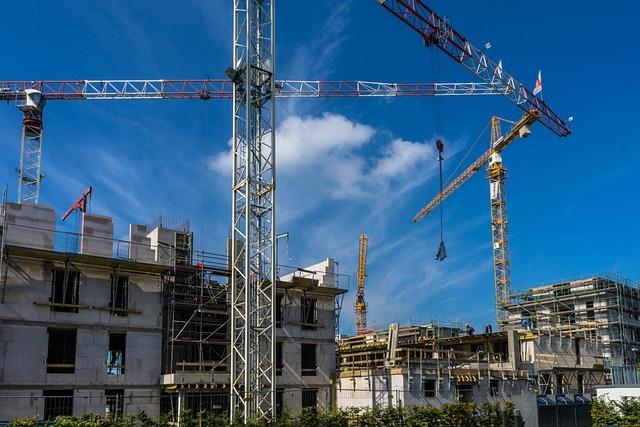
For more than a decade, Britain’s housing crisis has been described in familiar terms: too few homes, spiralling rents, young people locked out of ownership. Nowhere is this tension more acute than in London, where the capital’s once-frenetic pace of construction has slowed to a crawl. Despite cross-party agreement on the need to build, cranes are disappearing from the skyline, major schemes are being shelved, and councils are struggling to turn planning permissions into bricks and mortar.
This slowdown is not the result of a single policy failure or economic shock, but of a tangle of forces: rising borrowing and construction costs, an uncertain planning system, political skittishness over density, and a model of progress that leans heavily on private profit to deliver public need. As London’s population continues to grow and its social fabric strains under the weight of unaffordable housing, the cost of inaction is mounting.
This article examines what is really behind the capital’s housebuilding slump – and, crucially, what it would take to restart the engines. From reforms to planning and land use, to new funding models and a rethinking of “viability”, we explore the policies and politics that could determine whether London remains a city for the many, or becomes an increasingly exclusive enclave for the few.
Diagnosing the roots of London’s stalled housing pipeline
Peel back the cranes frozen on the skyline and a complex web of obstacles emerges. Developers complain that land values, build costs and borrowing rates have risen in lockstep, shredding viability spreadsheets that once worked on tight margins. Town halls, under pressure to deliver genuinely affordable homes, are demanding higher proportions of low-rent units just as planning departments are hollowed out by budget cuts. At every stage, delay is baked in: environmental assessments drag on, design revisions pile up, utility connections stall. In this climate, even well-capitalised builders are shelving schemes, not for lack of demand but because the numbers no longer stack up.
- Rising costs outpacing sales values
- Slow, under-resourced planning teams
- Tighter regulation after building safety scandals
- Fragile funding for affordable housing partners
| Stage | Typical Delay | Main Friction |
|---|---|---|
| Land assembly | 12-24 months | High prices, fragmented ownership |
| Planning | 18-36 months | Staff shortages, policy conflict |
| Financing | 6-12 months | Interest rates, lender caution |
| Construction start | On hold | Cost spikes, contractor risk |
Yet the story is not only financial or bureaucratic. City-wide targets clash with local politics, where councillors are wary of height, density and voter backlash, especially in suburban boroughs. Green belt protections, heritage concerns and design codes frequently enough collide with the urgent need for more homes, making every major scheme a battlefield of competing priorities. Meanwhile,housing associations-the traditional delivery engine for sub-market rent-face their own squeeze as they divert budgets into retrofitting ageing stock and meeting post-Grenfell safety rules. The result is a capital where the policy ambition to build big is repeatedly undercut by the systems meant to deliver it.
Rethinking planning rules and unlocking land for sustainable development
For a city constrained by a tight green belt and labyrinthine regulations, the real frontier is not just more land, but smarter rules. London’s planning system still treats low-density, car-dependent layouts as the default, while genuinely sustainable, transit-linked schemes are buried under delay and appeal. A new approach would flip this logic: proactively map “growth corridors” along rail lines and bus rapid transit, identify underused retail parks, surface car parks and single-storey sheds, and then pre‑approve design codes for mid-rise, mixed-use neighbourhoods. Instead of site-by-site battles, councils would set clear parameters on height, daylight, materials and public realm, giving developers certainty and local people a sense of control.
- Brownfield first, with clear targets by borough
- Fast-track consent for net-zero, car‑lite schemes
- Design codes to guarantee quality, not just quantity
- Public land used to anchor genuinely affordable homes
| Land Type | Current Use | Potential Homes | Key Benefit |
|---|---|---|---|
| Retail park edge | Big-box stores + parking | Mid-rise flats above shops | Shops saved, density added |
| Station hinterland | Storage, garages | Car‑free housing | Direct access to rail |
| Public estates | Undercroft + sheds | Infill and rooftop homes | Upgrades for existing tenants |
Unlocking these sites at scale means rewiring incentives. Boroughs that zone more land for energy‑efficient, affordable housing should keep a greater share of land value uplift to reinvest in parks, schools and social care, rather than watching it vanish into opaque viability calculations. In return, they would commit to binding delivery timetables and clear community benefits. Combined with streamlined approval for schemes that meet strict green standards-low embodied carbon, heat pumps, minimal parking-London could turn today’s stalled pipelines into a new generation of compact, walkable districts that ease the housing crisis without erasing the city’s character.
Mobilising public investment and partnerships to accelerate affordable building
London cannot rely on private developers alone to reverse the collapse in completions; it needs a fresh wave of strategic public capital and smarter collaboration. That means giving boroughs and housing associations the confidence to plan long-term by restoring grant levels, freeing them from restrictive borrowing caps and allowing them to buy land ahead of the market. It also means using public balance sheets to de-risk genuinely affordable schemes so that pension funds, insurers and impact investors can back them at scale. New city-wide vehicles – part developer, part infrastructure fund – could assemble land, secure planning and then invite partners in, rather than asking each scheme to battle through the system in isolation.
To turn this from rhetoric into bricks and mortar, City Hall and Whitehall must be clearer about what they will fund, and on what terms. Transparent pipelines of sites, standardised contracts and accelerated approval for partnership schemes would cut years from delivery timetables. Targeted incentives could prioritise projects that combine social rent,key-worker housing and modern methods of construction. The tools already exist – from public land disposals to guarantees and revolving loan funds – but they are fragmented and underused. A coordinated framework could look like this:
- Strategic land partnerships between boroughs, housing associations and institutional investors.
- Long-term subsidy settlements that outlast political cycles and support social rent.
- Risk-sharing guarantees to unlock private finance for mixed-tenure schemes.
- Public land covenants to lock in affordability for the long term.
| Model | Main Role | Typical Outcome |
|---|---|---|
| City-led housing company | Masterplans, sets affordability mix | Large, phased estates with social rent |
| Public-pension JV | Provides patient capital | Stable, mid-market rented homes |
| Community land trust | Holds land in perpetuity | Local, permanently affordable homes |
Designing denser, greener neighbourhoods that win over local communities
Winning support for higher density starts with everyday experience, not planning jargon. Residents are more likely to back change when they can see how it improves their street: warmer homes instead of damp bedsits, reliable buses instead of gridlocked commutes, pocket parks instead of derelict corners. That means treating each neighbourhood as a stitched-together ecosystem, where mid-rise blocks, converted high streets and co‑designed public spaces form a coherent whole rather than a scatter of speculative towers. In practice, this is about moving beyond statutory consultations and into genuine co-production: workshops that let locals rearrange building heights on interactive maps; design codes written in plain English; and pilot projects that can be walked through, not just viewed in PDFs.
- Human-scale density with mid-rise blocks and active ground floors
- Green infrastructure that cools streets and manages flood risk
- Mixed-tenure housing that keeps key workers and families in the area
- Community control over shared spaces and long-term stewardship
| Feature | What residents see | Planning benefit |
|---|---|---|
| Tree-lined streets | Cooler, quieter roads | Better air quality |
| Courtyard blocks | Shared, safe play areas | Higher density, low impact |
| Active ground floors | Cafés, studios, clinics | Local jobs and services |
Crucially, the politics of trust sits alongside the architecture. Boroughs that publish clear, visual rules on height and sunlight, ring-fence a visible share of new homes for social rent, and give residents first refusal on new units find it easier to argue for enterprising schemes. In parts of London, community land trusts and co‑operatives are shifting the mood by letting locals capture rising land values rather than simply endure them. When people can trace a direct line from extra storeys to new playgrounds, from compact blocks to safer cycle routes, higher density stops looking like an imposition and starts to feel like a collective upgrade.
In Retrospect
None of this will be easy.Rewiring Britain’s planning regime, overhauling local government finance and confronting the politics of the green belt demand more than eye‑catching announcements and short‑term targets. But the alternative is a managed decline in the capital’s prospects: a city where employers struggle to recruit, essential workers are pushed ever further out, and the idea of home ownership becomes a relic of an earlier era.
London’s housebuilding slump is not a force of nature; it is the sum of policy choices, political incentives and institutional inertia.The tools to reverse it already exist – from devolved planning powers and long‑term land assembly to serious investment in social and intermediate housing. The question is whether national and city leaders are prepared to use them, consistently and at scale, despite the certain local resistance.
If they are, the capital can once again become a place where growth and affordability coexist, rather than collide. If they are not, London will be left to drift: dynamic in its rhetoric, hollowed out in its reality. The future of the city – and of those who still hope to build a life in it – depends on which path they choose.