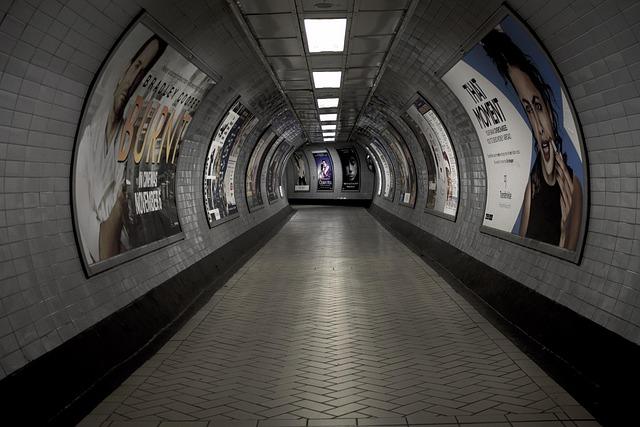
Violent incidents, sexual harassment and a rising tide of antisocial behavior are reshaping how Londoners experience the capital’s buses, trains and Underground. New figures and first-hand testimonies obtained by the BBC reveal a city increasingly on edge during its daily commute, with many passengers – notably women and younger people – altering their routines, routes and even careers to avoid potential danger. As transport chiefs highlight record levels of reported crime and a surge in security measures, a stark question emerges: how safe do Londoners really feel on the network that keeps their city moving? This article examines the data behind the headlines, the lived reality for passengers and staff, and what is being done to restore confidence in public transport across the capital.
Rising anxiety on the Underground how perceptions of danger outpace official crime data
On packed platforms and late-night carriages, many Londoners say it no longer feels enough to glance up at the CCTV dome or the “See it, say it, sorted” posters. From whispered warnings about “don’t sit near the doors” to viral clips of altercations shared on social media, a sense of unease is reshaping how people judge risk underground. Commuters describe avoiding certain lines after dark, changing routes to dodge poorly lit interchanges, or standing rather than sitting so they can move quickly if something happens. These everyday calculations persist even as Transport for London and police figures show that, while some offences have risen in pockets, overall recorded crime has not exploded in the way public anxiety might suggest.
The gap between what people feel and what the spreadsheets show is being widened by a mix of lived experience and perception. A single high-profile incident, replayed across timelines and group chats, can weigh more heavily than a year’s worth of official bulletins, especially for groups who already feel exposed. Women, disabled passengers and ethnic minorities consistently report adjusting their behaviour more than others, even on routes deemed “low risk” by the data. That tension is visible in how Londoners now talk about safety:
- Passengers prioritise visibility – choosing busy carriages and stations over shorter journeys.
- Social media amplifies fear – rare incidents look routine when shared repeatedly.
- Trust in statistics is fragile – many riders say numbers “don’t match” what they see and hear.
| What people say | What data shows |
|---|---|
| “The Tube feels more threatening at night.” | Night-time crime stable on several key lines. |
| More riders avoid travelling alone. | Passenger numbers rebounding across the network. |
| Frequent reports shared in local chats. | Serious incidents remain statistically rare. |
Women and vulnerable passengers share daily experiences of harassment on buses and trains
On late-night platforms and crowded double-deckers, a pattern of unwanted attention has become so routine that many Londoners now factor it into their journey plans. Women describe calculating where to sit, who to stand near and when to pretend to be on a call, while disabled and younger passengers recount being singled out as “easy targets”. Behaviour that ranges from leering and sexually explicit comments to groping and stalking is often dismissed as “just part of city life”, leaving victims feeling both unsafe and unheard. The result is a silent reshaping of travel habits: early departures instead of last trains, longer routes chosen for better lighting, and a growing dependence on ride-hailing apps for what should be straightforward journeys home.
Those experiences are rarely isolated, but part of a wider pattern of hostility and intimidation:
- Unwanted physical contact in crowded carriages and on bus stairwells
- Sexist and homophobic slurs directed at visibly queer or gender-nonconforming passengers
- Filming and upskirting using concealed or tilted phones
- Targeting of visually impaired and older people for theft and verbal abuse
- Reluctance to intervene from bystanders who fear escalation
| Passenger | Change in behaviour |
|---|---|
| Student, 21 | Stops going out if last tube is after 11pm |
| Carer, 45 | Sits near driver and avoids top deck at night |
| Commuter, 32 | Shares live location on every solo journey |
Night-time travel under scrutiny gaps in staffing lighting and CCTV coverage across the network
After the last train announcements fade and station shutters rattle down, many passengers say the city feels different. Commuters interviewed by the BBC describe “blind spots” along their routes where platforms are sparsely staffed, walkways are poorly lit and the reassuring red glow of surveillance cameras is nowhere to be seen. Women, shift workers and young people are among those most likely to voice concern, highlighting a pattern of routes and interchanges where they feel exposed. Transport unions argue that a reliance on roving patrols and remote monitoring cannot replace the deterrent effect of a visible, accessible staff member on platforms and buses.
Transport campaigners and safety experts are calling for a targeted overhaul of high‑risk locations, backed by clearer public information on where help can be found. Key demands include:
- Minimum night staffing levels at all open stations and major bus hubs.
- Consistent lighting standards in underpasses, outer platforms and car parks.
- Continuous CCTV coverage with signage showing where cameras are actively monitored.
- Emergency help points placed at regular intervals and checked nightly.
| Issue | Passenger impact | Suggested fix |
|---|---|---|
| Unstaffed platforms | Reluctance to travel late | On-site night marshals |
| Dim lighting | Poor visibility of threats | LED upgrades and audits |
| CCTV gaps | Low chance of detection | Camera infill and signage |
From bystander training to better reporting practical steps to make public transport feel safer
Transforming uneasy journeys into confident commutes means shifting from passive concern to collective action. Targeted bystander workshops, delivered in community hubs and stations, can equip passengers with clear, rehearsed responses: simple phrases to challenge harassment safely, ways to film or document incidents without escalation, and techniques for quietly supporting victims, such as sitting beside them or signalling staff.These sessions work best alongside visible prompts on trains and buses – posters, carriage decals and short announcement scripts that normalise speaking up and explain what bystanders can actually do in the moment. When people understand that intervention doesn’t have to be confrontational, and that even small gestures matter, the atmosphere on board subtly changes from isolated individuals to a shared watchfulness.
Equally critical is turning that vigilance into usable, trusted data. Transport bodies are investing in slicker reporting channels, but these tools only work if people know about them and believe they’ll lead to action. Clear signage and digital prompts should highlight anonymous reporting, fast response times and feedback loops so victims and witnesses are told what happened next. Even small interface tweaks – pre-filled location fields, time-stamped options and one-tap category buttons – reduce friction and encourage more comprehensive reports.
- Discreet reporting apps linked to transport operators
- On-board QR codes directing to instant report forms
- Staff training to handle reports consistently and empathetically
- Regular public updates on enforcement outcomes and safety improvements
| Tool | What it Offers | Impact on Safety |
|---|---|---|
| Text hotline | Silent, in-journey alerts | Faster staff response |
| Mobile app | Photo, video, location data | Stronger evidence trails |
| Online portal | Follow-up and case tracking | Greater public trust |
In Summary
As London’s transport network continues to expand and adapt, so too must the strategies designed to keep its users safe. The concerns highlighted by passengers are not abstract statistics but a reflection of lived experience across buses, tubes and trains. Addressing them will demand more than reassuring rhetoric: it will require visible policing where it counts, better reporting mechanisms, and a sustained effort to rebuild trust.
For the millions who rely on public transport every day, feeling safe is as vital as getting from A to B. The challenge now falls to Transport for London, the police and policymakers to show that they have heard these fears-and that they are prepared to act on them.