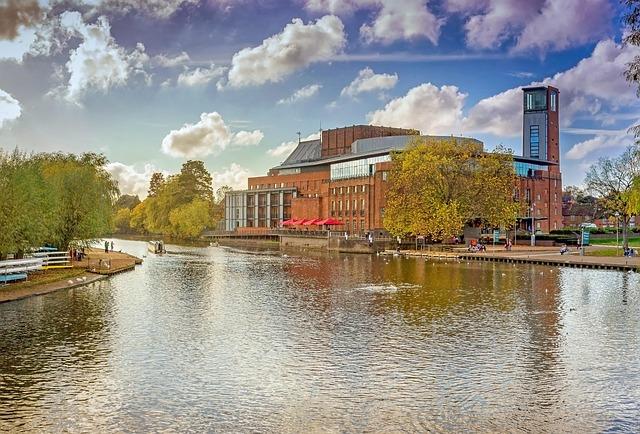
The artistic director of Theatre Royal Stratford East has defended the venue’s decision to stage a “Black Out” performance of its latest production, following a wave of public debate and media scrutiny. The initiative, which reserves one evening’s audience exclusively for Black ticket-holders, has drawn both praise and criticism, reviving long‑running arguments about inclusivity, segregation and who gets to feel welcome in British theatre spaces. Speaking to the BBC, the director insisted the event is designed to create a safer, more affirming environment for Black audiences-not to exclude others-while critics question whether racially targeted performances risk deepening social divides. As the controversy grows, the row has become a flashpoint in the wider cultural battle over representation, access and the future of diversity initiatives on the UK stage.
Context of the Black Out performance and public reaction
The experimental staging, conceived as a one-night performance exclusively for Black audience members, was pitched by the venue as a response to long-standing conversations about representation and belonging in British theatre. Programmers framed it as a deliberate attempt to create a safer, culturally specific space where Black spectators could engage with the work without the usual pressures of being scrutinised as a minority in the room. Within the building, staff described it as part of a broader season aimed at widening access and challenging inherited norms about who gets to feel “at home” in a theatre. The director argued that such targeted programming is not exclusionary, but a corrective to decades of implicit segregation in programming, marketing, and pricing structures across the UK arts sector.
Online, however, the declaration ignited a polarised debate that quickly moved beyond the show itself. Critics cast the decision as a form of “reverse discrimination”, questioning whether public funds should support any event that appears to limit entry by race, while supporters countered that similar identity-focused nights already exist in comedy, club culture and queer performance scenes. Social media timelines filled with arguments about legality,public funding obligations and the ethics of affinity spaces. Press statements from the theatre stressed that the wider run remained open to all, and that the single targeted night was one strand in a larger inclusion strategy that also encompassed:
- Subsidised tickets for local residents
- Community workshops with emerging artists
- Relaxed performances for neurodivergent audiences
| Group | Typical Response |
|---|---|
| Black theatregoers | Described feeling “seen” and “prioritised” |
| Free-speech advocates | Raised concerns over race-based access |
| Arts professionals | Framed it as part of global inclusion trends |
Artistic intent behind audience specific programming
At the heart of single-audience nights lies a clear artistic choice: to shape the atmosphere of the room as carefully as the script itself. Directors argue that when a group with shared lived experience fills the auditorium, the collective responses – laughter, silence, murmurs of recognition – become part of the dramaturgy. This is not about closing doors, they say, but about experimenting with how context alters meaning, much like changing the lighting or sound design. In that sense,the crowd becomes a creative element,allowing artists to test how far nuance,subtext and culturally specific references can travel when they are not being translated in real time for a mixed audience.
Supporters of these curated nights stress that they are driven by intentional choices, not tokenistic gestures. They point to core aims such as:
- Deepening thematic resonance by aligning audience experience with the work on stage.
- Creating psychological safety for groups who rarely see themselves centred in major venues.
- Challenging inherited norms about who theatre is “for” and how it should be watched.
- Gathering sharper feedback from communities the production is explicitly depicting.
| Artistic Goal | Programming Choice |
|---|---|
| Test cultural in-jokes | Targeted preview night |
| Shift power dynamics | Community-led seating and Q&A |
| Amplify under-heard voices | Limited-run audience-specific shows |
Legal and ethical considerations around race exclusive events
Supporters of performances reserved for specific racial groups argue that they can function as a form of cultural reparation, carving out rare spaces where marginalised audiences can experience art without the weight of scrutiny, code‑switching or representation fatigue. From a legal standpoint in the UK,theatres must navigate the Equality Act 2010,which prohibits discrimination in service provision but also permits positive action in certain circumstances,such as improving participation by underrepresented communities. That tension fuels debate: is restricting entry a proportionate measure to address historic exclusion, or does it risk reproducing the very dynamics of segregation that equality law seeks to prevent?
- Access vs. autonomy: Balancing open doors with targeted safe spaces.
- Perception risk: Media narratives can frame these nights as divisive.
- Proportionality test: Whether the measure is narrowly tailored and time‑limited.
- Clarity: Clear communication about purpose, frequency and context.
| Key Issue | Ethical Question | Practical Risk |
|---|---|---|
| Inclusion | Who is empowered and who feels shut out? | Alienating regular audiences |
| Precedent | Could others copy the model for exclusionary aims? | Misuse by bad‑faith organisers |
| Accountability | How are communities involved in decisions? | Token consultation or box‑ticking |
Ethically, such nights sit at the intersection of restorative justice and liberal universalism: one emphasises redressing structural harm through targeted measures, the other insists that publicly funded institutions remain open to all at all times. Critics fear a slippery slope towards identity‑gated culture, while advocates counter that occasional, clearly signposted events are a modest intervention compared with the persistent, largely unchallenged exclusion faced by Black audiences in mainstream theatre. The legitimacy of these initiatives ultimately hinges on context, frequency, intent and dialog: are they part of a broader, measurable effort to transform the institution, or a symbolic gesture that leaves underlying inequities untouched?
Recommendations for inclusive dialogue and future theatre policies
To move beyond polarised soundbites, theatres need to create structured spaces for dissent as well as celebration.This could include facilitated post-show conversations, open rehearsals where community groups can question creative choices, and digital forums moderated with clear anti-harassment rules. Programming teams should publish transparent criteria explaining why certain events – including identity-focused performances – are commissioned, and how audience feedback will shape future seasons. A simple commitment to data disclosure on ticketing demographics, access schemes and pricing bands can also help anchor debates in evidence rather than speculation.
Future policy frameworks will likely hinge on how venues balance targeted events with broadly accessible programming. Theatres could adopt internal guidelines that distinguish between exclusive,priority,and open performances,clarifying who each is for and why. Embedding these categories in equality and artistic policies, and reviewing them annually with audience representatives, can protect both artistic freedom and public trust.
- Co-create advisory panels with local communities and artists.
- Publish clear explanations for identity-specific nights.
- Monitor legal and ethical implications with external experts.
- Invest in staff training on anti-racism and inclusive practice.
- Evaluate pilots openly, adapting or ending them based on evidence.
| Policy Focus | Practical Action |
|---|---|
| Audience Inclusion | Sliding-scale pricing and community allocations |
| Programming Diversity | Minimum targets for underrepresented creatives |
| Dialogue | Regular town-hall style meetings in the foyer |
| Accountability | Annual public report on access and representation |
Wrapping Up
As the debate over Black Out continues, Theatre Royal Stratford East’s production has become a flashpoint in wider conversations about race, representation and who gets to feel welcome in Britain’s cultural spaces. Whether viewed as an act of necessary redress or an exclusionary gesture, the show’s reception underlines how charged the question of access to the arts remains. What is clear is that initiatives like this are unlikely to be the last, as theatres grapple with how to reflect an audience that is as diverse, and as divided, as the country beyond their doors.