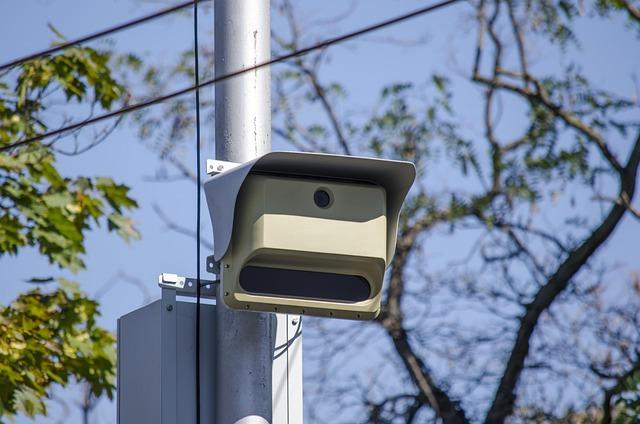
London’s drivers are set to encounter a new generation of speed cameras that promise to be both smarter and harder to spot. High-tech, no-flash devices are being rolled out across the capital in a bid to improve road safety without the familiar bursts of bright light that have long signalled a speeding offense. Using advanced sensors and low-light imaging, the new cameras can operate discreetly around the clock, capturing clear evidence in all conditions. Transport officials say the technology will help tackle dangerous driving and reduce collisions, but its quiet efficiency is also likely to raise fresh questions about privacy, enforcement, and the balance between safety and surveillance on the city’s streets.
How new no flash speed cameras work and why they matter for London drivers
Unlike older roadside units that rely on a sudden flash to capture speeding vehicles, the latest digital systems use continuous infrared imaging and radar or laser-based sensors to track cars in real time.They quietly monitor each lane, measure a vehicle’s speed over a fixed distance, and automatically cross-check number plates with DVLA databases. Many are linked via fibre or 4G networks to a central hub, allowing enforcement teams to receive evidence packages within seconds. These cameras can also operate in poor light and bad weather, making them particularly useful on London’s busiest commuter routes and around junctions where braking late is common.
- No visible flash – reduced distraction for drivers and residents
- Sharper night-time images – clearer plates without dazzling light
- Average-speed capability – discourages short bursts of speeding
- Smarter placement – targeted to collision hotspots and school zones
| Benefit | Impact on London drivers |
|---|---|
| Quieter enforcement | Less visual clutter, fewer sudden flashes at night |
| Higher detection accuracy | Harder to “game” the system with last-second braking |
| Data-driven deployment | More protection on routes with serious crash records |
For motorists, the technology shift is more than a cosmetic change.The ability to enforce average speeds over longer stretches means that compliance becomes a habit rather than a last-minute reaction to a camera box. That is central to London’s efforts to cut deaths and serious injuries under its Vision Zero strategy, especially on roads where excess speed has been a recurring factor in crashes. It also alters driving psychology: with enforcement becoming more discreet and harder to predict,the safer bet is to stick to the posted limit,smoothing traffic flow and possibly reducing stop-start congestion in areas already choked with pollution and delays.
Balancing privacy and public safety in the era of always on traffic enforcement
Unlike the old flash-and-forget cameras, continuous, high-resolution monitoring builds a detailed picture of how, where and when we move. That raises uncomfortable questions about who controls this data and for how long. Civil liberties groups warn that systems built to catch speeders can silently evolve into tools for tracking everyday life, especially when combined with automatic number plate recognition, facial analytics or cross-referenced databases. Londoners are now asked to trust not just the technology, but the safeguards wrapped around it: clear retention limits, strict access controls and independent oversight capable of challenging mission creep.
- Data minimisation – capturing only what is necessary to enforce speed limits.
- Transparent governance – publishing how the technology works and who can use the data.
- Accountability – logging every access request and making audit trails public by default.
- Proportional penalties – ensuring enforcement doesn’t unfairly target particular communities.
| Public Goal | Privacy Risk | Safeguard |
|---|---|---|
| Fewer serious collisions | Location profiling | Short retention periods |
| Consistent enforcement | Mass surveillance fears | Independent regulators |
| Data for road planning | Re-identification | Strong anonymisation |
Policing experts argue that the same granular data that unsettles privacy advocates can also save lives, especially in crash hot spots where speeding is endemic. The debate is shifting from whether to use such systems to how to embed democratic controls inside them from the outset. That means treating code as a form of public policy: subject to consultation, updated in the open and designed so that safeguards are as “always on” as the cameras themselves.
What London can learn from global rollouts of high tech speed camera networks
From Singapore’s AI-driven enforcement on expressways to Stockholm’s privacy-conscious,low-light cameras,some of the most advanced systems abroad show how technology can nudge behaviour long before fines are issued. Cities that have successfully deployed similar no-flash networks tend to blend real-time analytics with transparent public interaction, publishing anonymised data on typical speeds, collision hotspots and response times. That approach has helped shift the narrative from punishment to prevention, turning cameras into visible symbols of street safety rather than silent traps. For London, mirroring this model could mean pairing new roadside hardware with dashboards that residents can explore, revealing how journeys are changing as enforcement becomes more precise and less intrusive.
- AI-assisted pattern detection to spot repeat dangerous behaviour
- Dynamic speed enforcement that adapts to weather and congestion
- Public-facing data on crashes, near-misses and compliance rates
- Strict privacy rules that limit how long footage is stored and who sees it
| City | Key Feature | Lesson for London |
|---|---|---|
| Singapore | AI speed & lane tracking | Target habitual offenders, not just one-off mistakes |
| Oslo | Zero-vision safety strategy | Integrate cameras with broader road design changes |
| Melbourne | Transparent fine statistics | Publish clear evidence that safety is improving |
Another lesson from abroad is that the most effective networks don’t operate in isolation: they are stitched into integrated transport policies that coordinate public transport, cycling infrastructure and freight movement. In the Netherlands, for example, high-resolution cameras feed into live traffic management systems that tweak signal timings and advisory limits before conditions deteriorate. Applied to the capital, a similar feedback loop could allow Transport for London to use the same high-tech sensors to fine-tune bus reliability, reduce congestion around schools and construction sites, and monitor air quality impacts. The challenge will be to design a system where every captured frame serves a public purpose, not just a penalty notice.
Practical steps motorists should take now to avoid fines and adapt to the new system
As London’s next generation of speed cameras quietly clock every movement, drivers need to assume they are being monitored continuously rather than only at bright flashpoints. The first step is to refresh your understanding of limits on all the routes you regularly use – especially where limits have recently dropped from 30mph to 20mph. Keep your sat-nav or navigation apps updated, as many now highlight average-speed zones and new enforcement sites.In the car, make use of built‑in speed limiters, cruise control and dashboard alerts; these tools help you smooth out harsh acceleration and avoid the creeping speeds that trigger fines. Above all, shift your mindset from “spotting cameras” to driving consistently within the limit, because these devices are designed to catch patterns of behaviour, not just a single flash of excess speed.
Motorists should also prepare for the data trail these cameras can generate.They’re likely to be linked with Automatic Number Plate Recognition (ANPR), so ensure your vehicle registration, tax and insurance details are accurate and up to date – small admin errors can quickly escalate into fines or impounded vehicles.Consider keeping a simple in-car checklist, and if you use a company vehicle, check your employer’s policy on penalty notices and driver monitoring. The table below outlines a swift reference guide to sensible adjustments:
| Action | Why it matters |
|---|---|
| Update navigation maps | Reflects new limits and camera sites |
| Enable speed alerts | Reduces accidental over-speeding |
| Review regular routes | Spots recent 20mph and average-speed zones |
| Check vehicle records | Avoids fines linked to ANPR mismatches |
- Drive as if every stretch is enforced, not just obvious hotspots.
- Use technology in your favour – from apps to in‑car safety systems.
- Keep documents clean and current to prevent admin fines stacking up.
To Wrap It Up
As London prepares to roll out this new generation of no-flash, high-tech speed cameras, the stakes extend well beyond the capital’s road network. Supporters argue the technology promises quieter streets, safer junctions and more accurate enforcement, all without the disruptive glare of conventional cameras. Critics,however,warn of expanding surveillance powers and the potential for mission creep as more data is quietly collected and analysed.
How these systems are deployed-and how transparently they are managed-will shape public trust.Clear rules on data use, independent oversight and open communication about the cameras’ capabilities will be crucial in determining whether Londoners see them as a tool for safety, or another step towards a city under constant watch.
For now, one thing is clear: the days of spotting a bright yellow box and a sudden flash in the rear-view mirror may soon be numbered. Whether drivers change their behaviour because of that, or simply get better at blending into a more closely monitored traffic system, will be the real test of this latest bid to bring cutting-edge technology to the kerbside.