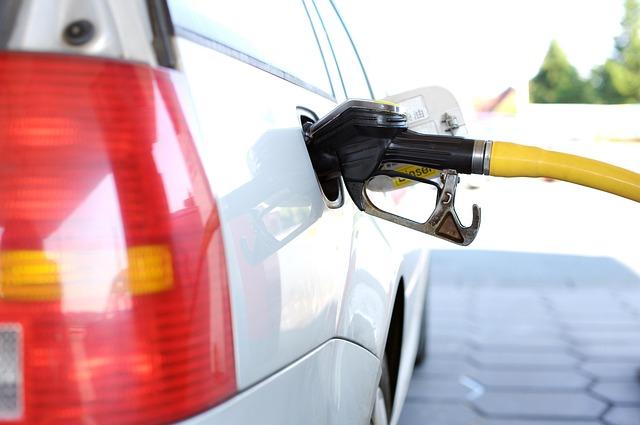
Gas prices have soared by nearly 25% in the wake of Iran’s latest attack on Qatar, sending fresh shockwaves through global energy markets and raising urgent questions over the stability of vital Gulf supply routes. The sudden spike, triggered by fears of disruption to one of the world’s key liquefied natural gas exporters, is already feeding into mounting cost pressures for European importers and UK businesses. As traders scramble to reprice risk and policymakers brace for renewed energy volatility, London’s financial and industrial sectors are confronting the prospect of yet another external shock to fragile post-crisis recovery. This article examines the factors behind the surge, its immediate impact on markets, and what it could mean for energy security, inflation, and consumers in the months ahead.
Immediate market shock as European gas prices leap nearly a quarter after Iran strikes Qatar
The shockwaves hit London trading floors within minutes, with benchmark Dutch TTF futures spiking by almost 25% in early deals, dragging UK NBP contracts sharply higher. Traders scrambled to reprice risk as fears mounted over potential disruptions to LNG flows through the Gulf, a critical artery for European gas imports already strained by reduced Russian pipeline supply. Volatility gauges surged, bid-ask spreads widened, and several energy-intensive manufacturers across Europe signalled they may need to reassess production schedules if elevated prices persist.
Market analysts warn that the latest escalation could reset the floor for European gas prices heading into next winter, especially if insurers raise premiums for vessels transiting the region or if cargoes are diverted to Asia. Early trading data showed:
- Futures jump: Front-month gas contracts up nearly a quarter in a single session.
- Supply anxiety: LNG-dependent markets face renewed concerns over security of delivery.
- Power impact: Wholesale electricity prices moved higher in tandem with gas benchmarks.
- Policy pressure: EU governments braced for calls to extend energy support schemes.
| Market Indicator | Before Strike | After Spike |
|---|---|---|
| EU Gas Futures (daily move) | +3% | +24% |
| UK Power Prices | Stable | Moderately higher |
| Trading Volatility | Low | High |
Energy security under strain how disrupted Gulf supplies expose UK and EU dependence on imports
For the UK and EU, the latest shock from the Gulf is a stark reminder that the backbone of their gas supply still runs through a handful of vulnerable chokepoints and politically volatile producers. While policymakers talk up the transition to renewables, liquefied natural gas (LNG) tankers from Qatar and neighbouring states remain critical to keeping factories humming and homes heated. A single missile strike or shipping disruption in the Strait of Hormuz can translate into instant price spikes on European hubs, with traders scrambling to reprice risk and utilities forced to hedge at far higher levels. This fragility is sharpened by the slow progress on storage build-out and interconnectors, leaving many markets exposed to any interruption in Gulf cargoes.
Energy strategists warn that what looks like a pricing story is, in reality, a structural vulnerability. Decades of underinvestment in domestic production, combined with the rapid shutdown of coal and nuclear capacity, have left Europe leaning harder than ever on imported gas just as geopolitical risk is intensifying. To cushion future shocks, analysts point to a mix of measures:
- Diversifying LNG sources beyond the Gulf towards the US, Africa and Eastern Mediterranean.
- Expanding strategic gas storage to smooth out supply disruptions and seasonal swings.
- Accelerating renewables and flexibility to reduce gas-fired generation at the margin.
- Reinforcing grid interconnectors so surplus in one country can offset shortages in another.
| Region | Key Gas Source | Exposure Level |
|---|---|---|
| United Kingdom | Qatari LNG, North Sea | High |
| Western EU | Pipeline gas, Gulf LNG | Medium-High |
| Nordic States | Domestic, Norwegian gas | Medium |
Winners and losers in the energy economy from household bills to industrial competitiveness
The sudden spike in wholesale gas prices is already filtering through to ordinary consumers, crystallising a stark divide between those who can absorb higher costs and those on the brink. Households on variable tariffs, small landlords with older, poorly insulated properties and energy‑intensive small businesses such as bakeries, launderettes and restaurants are feeling the pinch first. In contrast,owners of highly efficient homes,early adopters of heat pumps and rooftop solar,and consumers on long‑term fixed tariffs are temporarily shielded. The result is a new layer of inequality, where access to capital and technology determines who can escape the brunt of the shock.
- Households: Higher heating and cooking costs, pressure on disposable income.
- Small firms: Shrinking margins, risk of closures and job cuts.
- Energy‑efficient users: Relative protection through lower consumption.
- Fossil fuel producers: Short‑term revenue boost from elevated prices.
| Segment | Short‑term Impact | Competitiveness |
|---|---|---|
| UK heavy industry | Rising production costs | Weaker vs.US & Asia |
| Energy‑intensive manufacturers | Risk of output cuts | Pressure to relocate |
| Renewables & storage firms | Stronger investment case | Improved long‑term edge |
| Gas exporters & traders | Higher trading gains | Short‑term advantage |
At the industrial level, the price shock threatens to reshape Europe’s competitiveness map. UK and EU manufacturers, already paying more for energy than many US and Asian rivals, now face a further erosion of margins, accelerating debates over offshoring, automation and fuel switching. Sectors such as chemicals, steel, glass and fertilisers are particularly exposed, with some plants considering curtailing production if prices remain elevated. Meanwhile, companies positioned in low‑carbon technologies – from wind and solar developers to battery storage and energy‑efficiency specialists – may find that volatility in gas markets bolsters their investment appeal, as governments and corporates seek to hedge against the geopolitical risks embedded in fossil fuel supply chains.
Policy responses that matter targeted relief diversification and accelerated investment in renewables
As volatility ripples through UK wholesale markets following the shock attack on Qatari infrastructure, ministers face mounting pressure to move beyond ad‑hoc crisis management and adopt a more strategic toolkit.That means cushioning the blow for the most exposed households and businesses while recalibrating the energy mix away from a single point of failure in the Gulf. Targeted relief, rather than blanket subsidies, is emerging as the fiscally sustainable option, with policy experts urging measures that channel public money only where it prevents acute hardship or business collapse.In practice, this could include:
- Time‑limited bill credits for low‑income households and energy‑intensive SMEs.
- Emergency liquidity lines for suppliers facing margin calls in derivatives markets.
- Conditional tax deferrals for manufacturers that keep production and jobs in the UK.
- Ring‑fenced support for critical public services such as hospitals, care homes and schools.
Beyond immediate firefighting, the surge in gas prices is sharpening the case for a faster pivot into renewables and a more diversified supply map that dilutes geopolitical risk. Officials are revisiting North Sea output projections, LNG import contracts and storage capacity while also weighing accelerated planning approvals for wind, solar and grid upgrades. Analysts warn that without a coordinated push on clean power, the UK will repeatedly pay a premium for imported gas whenever tensions flare in key producer states. To that end, policy briefs circulating in Whitehall highlight a three‑track approach:
- Fast‑track consents for utility‑scale wind and solar projects, especially in grid‑ready zones.
- Incentives for storage technologies, from batteries to green hydrogen, to smooth price spikes.
- Strategic diversification of LNG suppliers, backed by regional interconnector upgrades.
| Policy Lever | Primary Goal | Timeframe |
|---|---|---|
| Targeted bill relief | Protect vulnerable users | Immediate |
| LNG contract diversification | Reduce supplier risk | Short term |
| Renewables acceleration | Lower import dependence | Medium term |
| Storage and grid upgrades | Stabilise prices | Long term |
The Way Forward
As energy markets absorb the immediate shock of Iran’s attack on Qatar, the 25% surge in gas prices underscores just how exposed Europe and the UK remain to geopolitical risk. For households and businesses already grappling with elevated costs, the latest spike threatens to push inflationary pressures back up and complicate the Bank of England’s path on interest rates.
Much now hinges on whether this is a short-lived shock or the start of a more protracted period of volatility. Any sustained disruption to Qatari exports, intensified sanctions, or an escalation in regional tensions could tighten supplies further and keep prices elevated well into the winter heating season.
For London’s financial markets, the episode is another reminder that energy security is now inseparable from economic stability. Policymakers will face renewed calls to accelerate investment in domestic generation and storage, diversify import routes, and build greater resilience into the UK’s energy system. Until then, consumers and companies alike may have little choice but to brace for a bumpier – and potentially more expensive – ride.