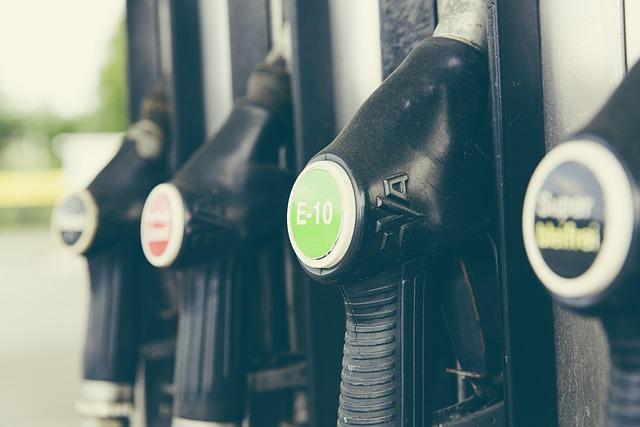
Diesel prices in the UK have surged to their highest level in three years, piling fresh pressure on households, businesses and the wider economy. New data shows the average cost per litre climbing sharply in recent weeks,driven by a combination of rising global oil prices,supply constraints and persistent geopolitical tensions. For London’s businesses – from logistics firms and construction companies to small retailers dependent on road transport – the renewed spike in fuel costs threatens to squeeze margins, push up prices and complicate already fragile recovery plans. As policymakers weigh the implications for inflation and growth, the capital is braced for another round of cost-of-living and cost-of-doing-business challenges.
Drivers and hauliers squeezed as diesel prices in London climb to three year peak
Transport firms across the capital are confronting a sharp rise in operating costs as pump prices push past levels last seen in 2021, tightening already thin margins in the logistics sector. Independent hauliers say they are being forced to choose between absorbing the increase or passing it on to customers, a move that risks losing long-term contracts. Urban delivery operators, particularly those serving London’s expanding low-emission and congestion zones, face a double hit: higher fuel bills and mounting compliance costs. Industry sources warn that smaller fleets are especially exposed, with limited access to bulk-buy discounts and little leverage in renegotiating rates with major retailers and freight forwarders.
Trade bodies are calling for targeted support to prevent critical supply chains from fraying,arguing that rising diesel costs could translate into higher prices for food,construction materials and consumer goods. Many firms are accelerating plans to modernise their fleets,looking at more efficient diesel engines,alternative fuels,and last-mile electrification to hedge against future volatility. Operators report a growing reliance on data to manage the squeeze,using telematics and route-optimisation tools to track every litre burned and every mile driven.
- Small hauliers struggle to pass on costs to larger clients.
- Retailers face increased distribution charges and potential price rises.
- Consumers risk higher shelf prices as logistics bills climb.
- Fleet managers turn to technology for efficiency gains.
| Cost Pressure | Impact on Operators |
|---|---|
| Fuel up by 12% in 6 months | Tighter margins, delayed vehicle upgrades |
| Urban delivery surcharges | Higher fees for central London drops |
| Compliance and clean-air charges | Route changes and fleet restructuring |
Why diesel is soaring now global supply dynamics taxes and refinery shifts explained
Behind the latest spike at the pump lies a web of shifting global flows and policy choices.Europe, once a net importer of Russian diesel, has been forced to redraw its energy map following sanctions, sourcing more fuel from the US, Middle East and India – longer shipping routes that add cost and volatility. Simultaneously occurring, emerging markets are consuming more middle distillates for freight, construction and backup power, tightening the balance between supply and demand. Layered on top are refinery outages and the closure or conversion of several older European plants to biofuel production, leaving fewer facilities able to churn out conventional diesel just as economies lean on it to move goods.
Tax regimes and environmental rules are amplifying those underlying pressures. As governments push for decarbonisation, many have increased fuel duties or introduced carbon charges that fall hardest on diesel, historically treated more favourably than petrol. New emissions standards are prompting refiners to invest in cleaner, lower-sulphur output, costs that are swiftly passed through to wholesale prices. For UK businesses and drivers, the result is a price structure shaped by:
- Reduced refining capacity in Europe, pushing reliance on distant suppliers.
- Higher transport and insurance costs for long-haul fuel cargoes.
- Tax and carbon policies that now penalise diesel more explicitly.
- Rising demand from freight and industry, outpacing new supply.
| Key Driver | Effect on UK Diesel |
|---|---|
| Loss of Russian supplies | More expensive, longer-haul imports |
| Refinery conversions to biofuels | Less output of conventional diesel |
| Carbon and fuel taxes | Higher pump prices and volatility |
| Global freight rebound | Persistent demand pressure |
The ripple effect on London business from logistics costs to consumer prices
As wholesale diesel prices climb, the impact on London’s commercial ecosystem is immediate and deeply layered. Hauliers, last‑mile couriers and cab fleets face rising fuel invoices that must be absorbed, passed on, or offset through cuts elsewhere. For small and medium‑sized firms operating on tight margins, even a few extra pence per litre can alter hiring plans, delay investment in new stock or technology, and force renegotiation of delivery contracts. Larger retailers, meanwhile, are quietly revisiting their citywide distribution models, with some trialling micro‑fulfilment hubs and low‑emission vehicles in a bid to contain costs without sacrificing convenience.
The consequences ultimately filter through to Londoners’ wallets. From supermarket shelves to same‑day ecommerce deliveries, higher diesel costs are being baked into price tags and service fees, often in ways that are hard for consumers to spot. Businesses are balancing three competing pressures:
- Protecting margin: Adjusting prices or slimming product ranges.
- Maintaining competitiveness: Offering promotions while fuel surcharges rise in the background.
- Investing in resilience: Accelerating the shift to electric fleets and smarter route planning.
| Sector | Typical Response | Consumer Impact |
|---|---|---|
| Supermarkets | Fuel surcharges on suppliers | Higher food prices |
| Delivery Apps | Revised courier fees | Increased delivery charges |
| Construction | Repriced tenders | Costlier renovation projects |
How companies and motorists can mitigate the diesel surge practical steps and policy options
Fleets and individual drivers are already deploying a mix of short-term tactics and longer-term strategy to cushion the impact of spiralling pump prices. On the ground, firms are tightening route planning with telematics, incentivising staff to adopt eco-driving techniques and switching to fuel-efficient vehicles or hybrid models where leases allow. Motorists are turning to fuel price comparison apps, car sharing and defensive driving habits such as smoother acceleration and correct tire pressures. Many businesses are also revisiting delivery schedules to avoid peak congestion, while logistics operators negotiate fuel clauses into contracts to share volatility risk with clients.
- Optimise routes with GPS and telematics to cut idle time
- Adopt eco-driving training for all high‑mileage staff
- Shift modes to rail or river freight where feasible
- Pool journeys via car clubs and ride‑sharing platforms
- Review contracts and introduce indexed fuel surcharges
| Policy lever | Who acts? | Impact focus |
|---|---|---|
| Targeted fuel rebates for SMEs | Government | Protect local logistics and trades |
| Accelerated EV and HVO incentives | Government & councils | Speed up fleet transition |
| Company-wide mobility budgets | Employers | Reward low‑carbon travel choices |
| Urban consolidation hubs | City authorities | Cut last‑mile diesel trips |
Above the individual level, London and Westminster have levers that can reduce dependence on volatile fossil prices while supporting business continuity. Time-limited fuel duty relief for critical sectors, fast‑track grants for electric vans and e‑cargo bikes, and streamlined planning for depot charging can all ease the transition pressure. Local authorities can complement this with low‑emission logistics zones, preferential access for cleaner fleets and curated public procurement that favours suppliers with credible decarbonisation plans.The combined effect is to turn a painful price shock into a catalyst for modernising how London moves people and goods, while giving both companies and motorists a clearer, more stable cost trajectory.
Closing Remarks
As diesel prices climb to levels not seen in three years, the implications for London’s businesses, commuters and supply chains are only beginning to unfold. From logistics operators to independent retailers, the rising cost of fuel is set to test margins, reshape pricing strategies and potentially accelerate the shift toward alternative energy and transport solutions.
In the months ahead, all eyes will be on whether this surge proves temporary or marks the start of a new normal for energy costs. For now, London’s commercial landscape must contend with a more expensive fuel reality-one that will demand agility, careful planning and, for many, a reassessment of how goods and people move across the capital.