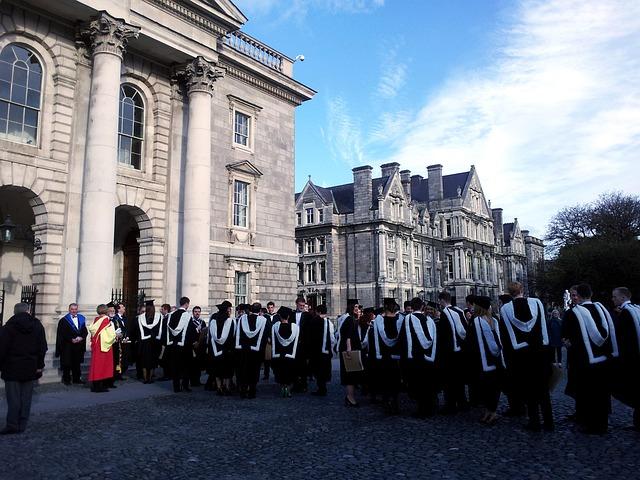
“History is made by those who turn up.” With this pointed reminder, Australia’s 29th Prime Minister, Malcolm Turnbull, addressed a packed auditorium at King’s College London, where students, academics, and alumni gathered for a rare possibility to engage directly with a former world leader.Hosted by the KCL Politics Society and covered by Roar News, the event offered more than a retrospective on Turnbull’s tenure in Canberra. It became a live seminar in contemporary politics: a discussion of leadership under pressure, the shifting nature of democracy, and the responsibilities of citizens who choose to “turn up” in an age of polarisation and rapid change.
Contextualising Malcolm Turnbulls Legacy in Australian and Global Politics
From the gilded corridors of Canberra to the debating halls of King’s College London, Malcolm Turnbull’s trajectory reflects the dilemmas of a liberal leader navigating a populist age. As prime minister, he attempted to fuse pro-business pragmatism with a cautious embrace of social progress, advancing policies on marriage equality, innovation, and counter-terrorism while constrained by a fractious party room increasingly suspicious of centrist compromises. His visit to King’s offers a rare chance to dissect how a leader widely seen as intellectually cosmopolitan and media-savvy nonetheless found himself hemmed in by the internal dynamics of the Liberal Party and by a voter base torn between economic orthodoxy and cultural anxiety.
On the global stage,Turnbull’s tenure coincided with the jolts of Brexit,the election of Donald Trump,and intensifying competition between the United States and China-developments that forced middle powers like Australia to recalibrate strategy and rhetoric in real time. His advocacy for a rules-based international order, his early adoption of cyber and tech-focused security narratives, and his insistence on aligning climate and energy policy with market signals now appear as an early case study in managing 21st‑century disruption.In the context of student debate at King’s, his record invites reflection on how leaders balance conviction and survival in an era of fractured party systems, 24‑hour media cycles, and resurgent nationalism.
- Domestic fault lines: party instability, leadership spills, climate wars.
- Global headwinds: US-China rivalry, disruptive populism, Brexit shockwaves.
- Enduring questions: Can centrist liberalism survive in polarised democracies?
| Theme | Turnbull’s Approach | Global Parallel |
|---|---|---|
| Climate & Energy | Market-based solutions, internal backlash | UK Tory climate splits |
| Party Leadership | Moderate in a divided base | Macron’s centrist strain |
| Geopolitics | Middle-power hedging on US-China | EU strategic ambiguity |
Behind the Podium How Kings Politics Society Brought a Former Prime Minister to Campus
What looked like a seamless evening in the Great Hall was in fact the result of months of quiet logistics and carefully timed emails. The committee began courting Malcolm Turnbull long before posters appeared on Strand Campus, building a case for why King’s students were a uniquely engaged audience. From drafting diplomatic invitation letters to coordinating with Turnbull’s office across time zones,each stage demanded professional-level organisation. Members divided responsibilities into tight workstreams – venue, security, media, and student liaison – mirroring the structure of a small political campaign rather than a typical student event. At one point, a clash with parliamentary business in Canberra forced a complete rescheduling, and the society had to renegotiate room bookings, AV support, and promotional timelines almost overnight.
This behind‑the‑scenes operation was powered less by budget than by persistence and networking. Committee members leveraged alumni contacts,sought informal advice from the university’s public affairs team,and persuaded external partners to underwrite key costs.Crucially, they treated the event as a learning laboratory for political organising, not just a high-profile photo opportunity. Their preparation included:
- Policy briefings for student moderators to ensure pointed, informed questions.
- Media coordination with Roar News and student broadcasters for multi-platform coverage.
- Audience curation to balance society members,policy students,and broader King’s cohorts.
| Key Milestone | Timeline | Lead Team |
|---|---|---|
| Initial outreach to Turnbull’s office | 6 months prior | President & VP |
| Security & protocol confirmed | 8 weeks prior | Logistics |
| Student Q&A shortlist finalised | 2 weeks prior | Events & Editorial |
Key Takeaways from Turnbulls Address on Democracy Leadership and Climate Policy
Across an hour of candid reflection, Turnbull sketched a politics rooted less in charisma than in civic stamina – the unglamorous work of turning up, listening and refusing fatalism. He argued that democratic leadership today means resisting “performative outrage” and instead building coalitions around evidence, institutional integrity and respect for the rule of law. Students were left with a blueprint for public life that privileges courage over convenience: speak plainly about hard trade-offs, defend independent media and courts, and never outsource moral judgment to party machines or social media mobs.
- Democracy demands participation,not passive outrage.
- Leadership is measured by decisions made under pressure, not slogans.
- Climate policy is a test of intergenerational duty.
- Media literacy is now a core democratic skill.
| Theme | Turnbull’s Emphasis |
|---|---|
| Democracy | Show up, scrutinise, vote – and keep turning up. |
| Leadership | Back principle even when it costs power. |
| Climate | Follow the science, price carbon, move fast. |
| Public Debate | Reject disinformation, reward honesty over heat. |
From Talk to Action Recommendations for Students Seeking to Influence Public Life
Turnbull’s visit underlined that meaningful political engagement starts long before anyone steps into elected office. Students hoping to shape public life must first cultivate credibility-by mastering the issues they care about, testing their arguments in seminars and debates, and learning to listen as sharply as they speak. Political influence is less about overnight virality and more about consistent presence in meetings, campaigns and consultations where decisions are actually shaped.That presence is most effective when grounded in integrity: knowing where you draw the line, which compromises are acceptable, and which would hollow out the very principles that brought you into politics.
Turning talk into tangible outcomes requires a intentional strategy, not just conviction. Students can begin by choosing arenas where their efforts have visible impact and by building coalitions that stretch beyond familiar social circles. They should treat every campus society, local party branch or community organisation as a training ground for public life, where they can practice negotiation, media literacy and policy analysis in low‑stakes environments. Above all,they must recognize that showing up is just the start; what follows is the hard,frequently enough unglamorous work of preparation,follow‑through and accountability.
- Start local – attend council meetings, community forums and constituency surgeries.
- Join or form societies – use student groups as laboratories for ideas and leadership.
- Engage across divides – seek out conversations with people who disagree with you.
- Learn policy, not just slogans – read legislation, budgets and committee reports.
- Practise persistence – follow issues over months, not news cycles.
| Action | Where to Begin | Impact Horizon |
|---|---|---|
| Policy research | Library & think‑tank reports | Medium term |
| Campaigning | Student union & local parties | Short to medium term |
| Community organising | Neighbourhood groups | Long term |
| Media engagement | Campus press & op‑eds | Short term |
To Wrap It Up
As the evening drew to a close, Turnbull left the audience with a portrait of leadership shaped as much by compromise and contingency as by conviction. His reflections underscored how political change is rarely the product of solitary actors, but of those willing to “turn up” repeatedly-in parliament, in communities, and in public debate.For King’s students, the event offered more than a glimpse into the mechanics of Australian politics; it was a reminder that the decisions taken in distant capitals are part of a shared, global conversation about democracy, power and responsibility. In bringing a former prime minister into direct dialog with the next generation of voters, advocates, and policymakers, the Politics Society not only illuminated recent history, but also quietly posed a challenge: if history is made by those who turn up, then the question now is who will step forward next.