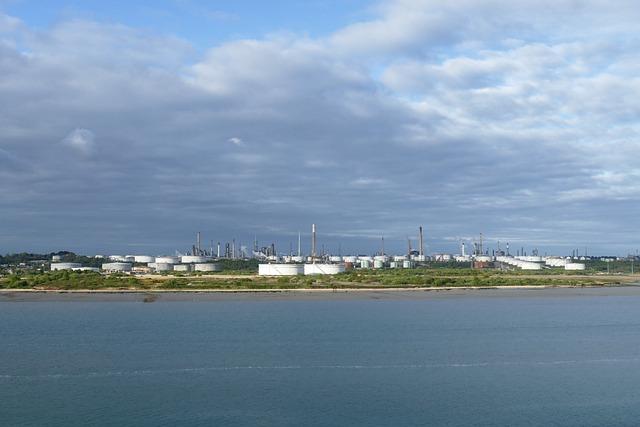
Russia’s vast oil industry, long the financial backbone of Vladimir Putin’s war effort in Ukraine, is facing unprecedented disruption. A wave of Ukrainian drone and missile strikes deep inside Russian territory has knocked key refineries and storage facilities offline, undermining Moscow’s ability to fund and fuel its military campaign. As energy markets absorb the shock and the Kremlin scrambles to repair critical infrastructure, the conflict is spilling ever more directly into the heart of Russia’s economic engine. This article examines how Ukraine’s evolving tactics are reshaping the battlefield, roiling global oil markets, and testing the resilience of the Russian state’s wartime finances.
Strategic precision strikes how Ukraine is systematically degrading Russian oil infrastructure and logistics
Kyiv has moved from sporadic drone raids to a calculated campaign that targets the backbone of Russia’s energy export network. Using long-range UAVs and adapted Soviet-era missiles, Ukrainian forces are zeroing in on high-value nodes such as refineries, fuel depots and rail-loading terminals, creating cascading disruptions across the supply chain. These are not symbolic attacks; they are designed to raise insurance costs, deter foreign buyers, and strain the Kremlin’s ability to keep fuel flowing to the front. Russian air defences, stretched thin across a vast territory, are increasingly forced to choose between protecting cities, bases or refineries – a dilemma that plays directly into Ukraine’s hands.
- High-impact targets: key refineries, export terminals, storage hubs
- Operational goal: reduce refined fuel output and complicate military logistics
- Method: drones, stand-off missiles and coordinated timing with frontline offensives
- Effect: costlier repairs, insurance hikes, and rerouted fuel supplies
| Target Type | Primary Impact | Military Consequence |
|---|---|---|
| Refineries | Lower fuel output | Fewer ready supplies for armour |
| Oil depots | Local shortages | Delays in unit resupply |
| Rail hubs | Transport bottlenecks | Slower troop movements |
By repeatedly striking these nodes, Ukraine is forcing Moscow into an expensive game of defense and repair that diverts resources from the battlefield.Each successful hit ripples through Russia’s logistics chain, compelling rerouted trains, longer truck convoys and improvised fuel storage far from the safety of hardened infrastructure. Over time, the pattern is eroding the reliability of Russia’s internal supply lines while undermining its status as an energy superpower – a dual pressure that Western analysts say could prove more strategically damaging than any single battlefield setback.
Economic shockwaves the cascading impact on Kremlin revenues global energy markets and European security
Each successful strike on refineries and export terminals reverberates far beyond Russia’s war chest, unsettling budget forecasts in Moscow while reshaping energy risk calculations in Brussels, Berlin and beyond. As crude processing capacity is knocked offline, the Kremlin faces a double squeeze: declining export volumes and rising domestic fuel pressures, undermining one of its few remaining hard‑currency lifelines. Traders now price in a persistent “Ukraine risk premium” on Russian barrels, while European policymakers quietly accelerate diversification plans, looking to lock in option suppliers before the next disruption. The result is a subtle but significant rebalancing of leverage in which Russia’s once-dominant role in the global oil system is steadily eroded.
For Europe, the immediate concern is not scarcity but volatility, as markets juggle redirected Russian flows, increased Middle Eastern output and growing US exports. Energy companies and governments are hedging against further Ukrainian strikes by building strategic buffers and fast‑tracking infrastructure for non‑Russian imports. In this unfolding realignment,several trends are already visible:
- Greater bargaining power for European buyers as they diversify away from Russian supply.
- Heightened price swings driven by geopolitical events rather than pure demand cycles.
- Closer energy‑security ties between EU states,the US and key producers such as Norway and Qatar.
- Accelerated investment in renewables and LNG as strategic shock absorbers.
| Key Player | Primary Concern | Strategic Response |
|---|---|---|
| Kremlin | Falling oil revenues | Rerouting exports, budget cuts |
| EU Governments | Energy price shocks | Diversification, joint purchasing |
| Global Traders | Supply disruption risk | Hedging, shifting portfolios |
| Ukraine | Constraining war funding | Precision strikes on oil assets |
The evolving battlefield why oil refineries have become a central target in Ukraine’s asymmetric warfare strategy
What began as a defensive struggle has morphed into a sophisticated campaign aimed at dismantling the economic backbone of Moscow’s war effort. Ukrainian planners have identified oil refineries and fuel depots as high‑value nodes in Russia’s logistics network, exploiting long-range drones and precision strikes to do what conventional forces cannot: disrupt, degrade and delay. In an asymmetric contest where Kyiv cannot match Russia tank for tank or missile for missile, targeting the complex, expensive and hard‑to-replace infrastructure that turns crude into movement has become a force multiplier. The message is clear – the road to the front line runs through the refinery gate.
This shift in strategy rests on a simple calculation: every blaze at a processing plant forces the Kremlin to divert resources, reconsider supply routes and absorb financial pain that outlasts the smoke. The battlefield is now as much about insurance premiums, repair times and refinery throughput as it is indeed about artillery duels. Analysts note that these strikes ripple far beyond the blast radius, undermining Russia’s energy revenues and eroding its ability to sustain prolonged offensives. In this emerging phase of the conflict, Ukraine is leveraging ingenuity over sheer firepower, turning Russia’s vast energy infrastructure from a strategic asset into a persistent vulnerability.
- High-impact targets that are costly and slow to replace
- Psychological pressure on Russian industry and investors
- Disruption of fuel flows to front-line units and key bases
- Strategic signalling to allies and energy markets
| Aspect | Conventional Warfare | Asymmetric Refinery Strikes |
|---|---|---|
| Primary Goal | Hold or seize territory | Cripple economic & fuel capacity |
| Key Tools | Tanks, artillery, massed troops | Drones, precision munitions, intelligence |
| Cost Ratio | High for both attacker and defender | Low-cost strikes, high-cost damage |
| Time Horizon | Immediate battlefield gains | Long-term attrition of war capacity |
Policy responses and risk mitigation steps Western governments and businesses should take as energy assets come under fire
As refineries, pipelines and export terminals become targets, Western capitals and boardrooms must move from reactive crisis management to a forward-leaning defence of critical energy arteries. Governments should deepen intelligence-sharing on cyber and kinetic threats to infrastructure, fast-track joint air and missile defence for key transit states, and expand strategic fuel reserves calibrated not just for price shocks but for sudden capacity losses. Equally vital is regulatory clarity: clear, pre‑agreed protocols for sanctions escalation, secondary sanctions on shadow fleets, and emergency waivers for alternative suppliers can prevent policy paralysis when the next strike lands. To keep markets anchored, authorities should back this with transparent interaction on supply buffers, contingency plans and timelines for infrastructure repair.
For businesses, the conflict marks the end of an era in which geopolitical risk was an abstract footnote in annual reports. Energy traders, insurers, shipping lines and logistics firms need to embed war‑risk scenarios into their core operating models, redesign supply chains around redundancy rather than pure efficiency, and harden digital systems against state‑sponsored intrusions aimed at market disruption. Practical steps include:
- Diversifying supply routes away from single chokepoints and politically exposed corridors.
- Rewriting contracts to include robust force‑majeure, rerouting and pricing adjustment clauses tied to security events.
- Investing in cyber resilience, especially for terminals, trading platforms and vessel tracking systems.
- Building cross‑sector alliances with utilities, port operators and telecoms providers for joint incident response.
| Actor | Key Risk Move | Timeframe |
|---|---|---|
| Governments | Expand strategic reserves & defence of transit hubs | Short-medium term |
| Regulators | Pre‑define sanctions and emergency waivers | Immediate |
| Energy firms | Scenario‑based hedging & route diversification | Ongoing |
| Insurers | Redesign war‑risk coverage frameworks | Medium term |
Wrapping Up
As the conflict grinds on, Ukraine’s campaign against Russia’s energy infrastructure is reshaping both the battlefield and the broader economic landscape.Each strike on refineries, depots, and export terminals chips away at a core pillar of the Kremlin’s war machine, testing the resilience of a petrostate under unprecedented pressure.
For now, Moscow is scrambling to reroute supplies, patch critical facilities, and reassure markets that its vast oil sector remains under control. But the longer Ukraine sustains these attacks-and the more Western sanctions tighten around Russia’s energy exports-the greater the strain on Russia’s budget, industrial capacity, and ability to fund prolonged military operations.
Whether this strategy will decisively tilt the balance of the war remains uncertain.What is clear is that the battle is no longer confined to trenches and front lines: it now stretches across pipelines, ports, and refineries, with profound implications for global energy flows. As policymakers and markets alike watch the evolving impact on Russia’s oil industry, one question looms large-how long can the Kremlin’s war chest withstand a campaign aimed at its very source of power?