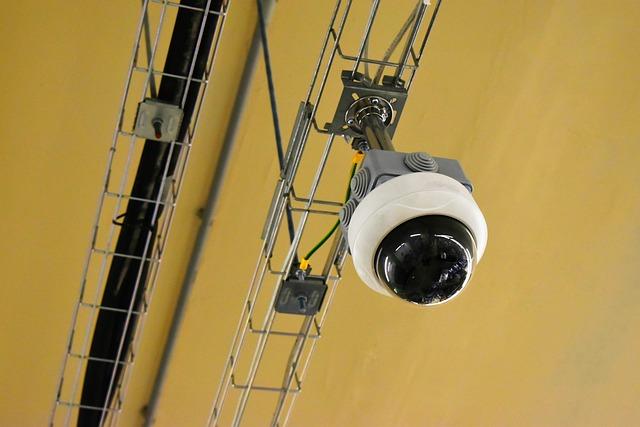
London is stepping up its fight against crime and antisocial behaviour with the rollout of mobile CCTV cameras across key hotspots in the capital. The move, part of a wider strategy to bolster public safety and reassure communities, will see rapidly deployable, high-definition units installed in areas identified as trouble zones by police and local authorities. Officials say the technology will not only help deter offenders but also provide crucial evidence for investigations, as London grapples with persistent concerns over street violence, vandalism and disorder.Critics, however, are already raising questions about privacy, accountability and the growing reach of surveillance in everyday life. This article examines how the new mobile CCTV network will operate, what it means for Londoners, and whether it can deliver on its promise to make the city’s streets safer.
Citywide rollout of mobile CCTV units aims to stem rising crime and antisocial behaviour in London
Dozens of rapidly deployable camera units are being installed on high streets, outside transport hubs and near nightlife hotspots, as authorities respond to a surge in reported street crime and late-night disturbances. Mounted on lampposts and temporary poles, the mobile systems can be moved within hours to follow emerging trouble spots, guided by real-time crime data and community intelligence. Officials say the technology is designed to back up visible policing, not replace it, with live feeds relayed to control rooms where officers can be dispatched immediately. Privacy campaigners,though,are pressing for clearer safeguards,warning that expanding surveillance risks normalising constant monitoring of public life.
- Priority zones: Transport interchanges, town centres, housing estates
- Primary aims: Deterrence, rapid evidence gathering, faster police response
- Key concern: Oversight of data storage and access
| Area | New Units | Main Focus |
|---|---|---|
| South London | 45 | Knife crime hotspots |
| East London | 38 | ASB around estates |
| West End | 30 | Night-time economy |
City Hall insists the expansion is being matched by strict governance rules, including time-limited deployments, autonomous audits and signage alerting passers-by when recording is in progress. Residents in some boroughs have welcomed the move, reporting a visible drop in street drinking, vandalism and moped-enabled theft in trial locations. Others remain uneasy, questioning how long footage is kept and whether commercial partners might ultimately gain access to the data. As the network grows, local councils are under pressure to publish clear criteria for where cameras go, how success is measured and what redress is available if the system is abused.
How redeployable camera technology is changing frontline policing surveillance and evidence gathering
Once confined to fixed poles and high streets, today’s mobile CCTV units can be lifted, relocated and brought online in a matter of minutes, giving officers a flexible lens on emerging trouble spots. These compact systems – frequently enough mounted on lamp posts, temporary masts or even vehicles – stream high-definition footage back to control rooms, where teams can zoom in, capture stills and tag clips for use in investigations. Because they can be moved as quickly as patterns of crime shift, they allow police to respond to community intelligence, follow repeat offenders across neighbourhoods and monitor public spaces during protests, night‑time economy flashpoints or persistent nuisance hotspots. Data overlays, such as timestamps and GPS coordinates, are automatically embedded, strengthening the evidential reliability of every frame.
- Rapid redeployment to new hotspots within hours, not weeks
- High‑quality imagery that supports clear suspect identification
- Remote control pan, tilt and zoom for targeted observations
- Integrated analytics to flag suspicious movements and behaviours
| Feature | Benefit to Frontline Officers |
|---|---|
| Battery & solar power | Longer deployments in parks and estates |
| 4G/5G connectivity | Live feeds to patrols and control rooms |
| On‑board recording | Secure evidence for court-ready case files |
| Fast mounting brackets | Minimal disruption to residents and traffic |
On the ground, this technology is reframing how evidence is gathered and preserved. Rather of relying solely on witness testimonies or static camera angles that miss key moments,officers can reposition units to capture crucial lines of sight and document an incident from the first sign of escalation to the final arrest. In practice, it means clearer timelines for prosecutors, fewer evidential gaps for defense teams to exploit and a more clear record of police actions in contested encounters. For communities demanding both safer streets and stronger accountability, redeployable surveillance offers a way to document antisocial behaviour and crime while leaving a verifiable, auditable trail of how officers respond.
Balancing public safety with privacy what Londoners need to know about data use oversight and civil liberties
Police insist that footage from roaming cameras is primarily used to deter and investigate crime, yet the same images can also map patterns of movement, association and protest. For Londoners,the key issue is not only where cameras are placed,but who controls the data and for how long. Clear rules are vital: how quickly non-evidential footage is deleted,what safeguards prevent live tracking of individuals without cause,and what happens when private contractors handle storage. Residents should be able to understand-in plain language-how video is processed, and have meaningful routes to raise concerns or challenge misuse. That means transparency dashboards, regular audits and an independent body empowered to scrutinise not just individual incidents, but the whole surveillance system.
Protecting civil liberties is not a barrier to safety; it is a condition of public trust. London communities are already asking pointed questions: Can cameras be redirected towards protests? Will facial recognition be quietly switched on? How easy is it for different agencies to pool footage and build detailed profiles of daily life? To navigate this, rights groups urge residents to push for:
- Strict data minimisation – capture only what is necessary, keep it only as long as needed.
- Independent oversight panels with community representation.
- Public impact assessments published before new technology is rolled out.
- Robust redress mechanisms when data is mishandled or rights are breached.
When oversight is weak, surveillance can quietly expand beyond its original scope. When it is indeed strong, mobile cameras remain tools for safety rather than instruments of unchecked monitoring.
Practical steps for communities and local authorities to work with mobile CCTV to prevent and report crime
Beyond simply mounting cameras on lampposts, partnership is key. Local authorities can map crime “hotspots” using recent incident data, then share these insights with residents through ward meetings, neighbourhood forums and hyperlocal online hubs. This allows communities to suggest precise locations for mobile units-outside problem alleyways, near late-night venues or alongside bus routes where harassment is common. Councils, Business Improvement Districts and housing associations can then coordinate deployment, ensuring that mobile CCTV overlaps with street lighting upgrades, youth outreach and targeted policing rather than operating in isolation.
On the ground, residents and frontline workers can help keep the system responsive and accountable. Community groups should be briefed on how footage is stored, who can access it, and how to request evidence when reporting incidents to the police. Simple,well-publicised reporting channels-such as QR codes on camera poles or local authority webforms-encourage witnesses to flag concerns quickly. Training for community wardens, shopkeepers and faith leaders can focus on spotting suspicious patterns and submitting time-stamped, location-specific reports that align with the cameras’ fields of view.
- Local CCTV liaison officers to act as a single point of contact for residents.
- Pop-up information stalls on estates and high streets explaining camera locations.
- Co-designed signage that clearly sets out privacy rights and complaint routes.
- Regular performance updates shared via newsletters and community apps.
| Action | Who Leads | Outcome |
|---|---|---|
| Hotspot mapping walks | Council & residents | Sharper camera placement |
| CCTV awareness sessions | Local police | Better evidence reporting |
| Monthly impact briefings | Ward councillors | Trust and transparency |
The Conclusion
As the Metropolitan Police Service steps up its reliance on mobile CCTV, London is once again testing how far technology can go in the name of public safety. Supporters argue the cameras offer a flexible, cost‑effective way to deter offenders and reassure communities; critics warn of “surveillance creep” and question whether the benefits justify the intrusion.
Over the coming months, the true impact of this latest rollout will be measured not just in arrest figures and crime statistics, but in how Londoners themselves respond. Whether these roving lenses become a trusted tool against antisocial behaviour or a flashpoint in the city’s ongoing debate over privacy and policing will help define what “feeling safe” means in the capital’s streets – and who gets to decide.