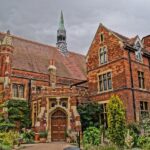
On a chilly evening by the Thames, the glow from the Half Moon in Putney spills onto the pavement, hinting at the decades of music history contained within its walls.For more than half a century, this unassuming corner pub has hosted everyone from emerging local acts to international names, becoming a fixture of London’s grassroots music scene. Yet as many of the capital’s small venues fall silent-squeezed by rising rents, changing nightlife habits and post-pandemic uncertainty-the Half Moon’s survival feels increasingly critically important, and far from guaranteed.
Across London, the number of independent live music venues has been shrinking, eroding the pipeline that once helped launch careers and sustain neighbourhood culture. In southwest London, the Half Moon stands as both a survivor and a symbol: a reminder of what these spaces offer their communities, and a case study in the pressures now threatening them.
This article explores how the Half Moon has endured where others have closed, what its story reveals about the broader decline of live music venues in the capital, and what might be needed to keep the amps switched on in Putney-and beyond.
Half Moon Putney a rare survivor in Londons shrinking grassroots music scene
In a city where rehearsal rooms are replaced by luxury flats and ticket offices by co‑working spaces, this corner pub on Lower Richmond Road stands out as an anomaly. While legendary rooms such as the Astoria, the Borderline and the Mean Fiddler have vanished from gig listings and local memory, this venue still packs in punters on weeknights, operating much as it did in the 1960s. Its survival is rooted in a stubborn commitment to live performance: the sound desk remains central, the stage sightlines are carefully guarded from encroaching décor trends, and the booking policy still prioritises risk‑taking over safe tribute acts. For musicians, it remains one of the few places left where a debut EP can be tested in front of an audience that actually listens, rather than chats over a background playlist.
- Regular live shows every week,from new acts to established touring artists
- Pub atmosphere that keeps entry prices relatively low and audiences close to the stage
- Community support through loyal locals,music fans and grassroots promoters
- Artist development via early evening slots and repeat bookings
| London Venue | Status | What Replaced It |
|---|---|---|
| London Astoria | Closed | Crossrail development |
| The Borderline | Closed | Bar & restaurant complex |
| Half Moon,Putney | Open | Still a working music pub |
Industry insiders quietly acknowledge that its modest capacity and low ceiling have become unexpected assets in an era dominated by arena tours and corporate sponsorship. Agents rely on its stage as a litmus test before committing acts to larger London shows, while broadcasters and podcasters value the room’s atmosphere for live sessions. More importantly,local residents continue to treat it as both a neighbourhood pub and a cultural institution,turning up not only for familiar names but for line‑ups they have never heard of. In a capital where so many stages have gone dark, its glowing gig posters in the window offer a tangible reminder that live music culture, while under threat, is still capable of evolving without surrendering its soul.
Rising rents licensing pressures and redevelopment behind venue closures
The story of London’s shrinking grassroots circuit is written in rent reviews, planning applications and late-night council meetings. In Putney and beyond, pub landlords whisper about 20-40% rent hikes, even as bar takings remain flat and energy bills soar. For a venue like the Half Moon, the equation is brutal: the room that once comfortably hosted a midweek unknown now has to justify every square meter at peak commercial value. Developers, circling high streets and riverside plots, see not a rehearsal space or a loyal local crowd, but “underused assets” ripe for conversion into luxury flats or co-working hubs. When a lease expires, the highest bidder is rarely a promoter.For many operators, survival means negotiating a patchwork of deals and compromises just to keep the stage lights on.
- Rising commercial rents outpacing ticket and bar revenue
- Licensing reviews triggered by noise complaints from new neighbours
- Developer interest in “regenerating” pub sites into housing or offices
- Higher compliance costs for security, soundproofing and insurance
| Pressure | Impact on venues |
|---|---|
| Rent increases | More gigs, less risk-taking, higher ticket prices |
| Stricter licensing | Earlier curfews, fewer loud shows, reduced bar trade |
| Redevelopment plans | Short leases, uncertainty, reluctance to invest in sound |
Overlaying this is a tightening web of licensing rules that can quietly strangle a room’s character. New residential blocks, squeezed ever closer to long-standing pubs, generate a steady stream of noise complaints from tenants who often had no idea they were moving next to an established music hub. Councils, wary of legal challenges, respond with tougher conditions: earlier curfews, extra door staff, mandatory sound limiters that shave the energy off a live set. The cost of compliance falls squarely on already-stretched operators. In this climate, the Half Moon’s continued focus on live performance looks less like tradition and more like resistance, as other South West London venues opt to drop bands altogether in favour of quiz nights, bottomless brunches and anything that doesn’t risk a licensing review.
How local communities and councils can protect their cultural landmarks
Protecting venues like the Half Moon demands more than fond memories; it requires joined-up action from neighbours, fans and councillors willing to treat live music as infrastructure, not a luxury. Residents’ associations can work with licensees to draft noise management plans that balance late-night sets with sleep, while local campaign groups can push councils to adopt “agent of change” policies, ensuring new developments soundproof rather than silence existing venues. Simple steps such as organising email drives to planning committees, lobbying ward councillors, and submitting evidence to consultations can turn passive concern into measurable political pressure.
- Support planning protections by responding to consultations and opposing developments that threaten venues.
- Form local music alliances linking residents, artists, promoters and businesses around shared goals.
- Use community assets legislation to list pubs and venues as Assets of Community Value (ACVs).
- Push for targeted grants and rate relief for culturally significant sites.
- Gather data on audience numbers, jobs and spend to prove a venue’s economic and social impact.
| Action | Who leads? | Impact |
|---|---|---|
| ACV listing | Community groups | Slows redevelopment |
| Business rate relief | Council finance teams | Cuts fixed costs |
| Music-friendly planning policy | Local planners | Shields venues from complaints |
| Cultural mapping | Council culture officers | Identifies priority sites |
Councils can go further by embedding music strategies into their regeneration plans, treating spaces like the Half Moon as anchor institutions that attract visitors and keep high streets alive. Ring-fenced funding for soundproofing, mentoring schemes for young promoters, and flexible licensing that rewards good operators rather than punishing them with red tape can all build resilience. When town halls use their convening power to broker agreements between developers, residents and venue owners-backed by clear data and legal tools-cultural landmarks stop being vulnerable curiosities and become fixtures of London’s future, not relics of its past.
Policy reforms and funding models to secure the future of live music in London
Behind every sold-out night at the Half Moon is a fragile economic equation, one that business rates, spiralling rents and opaque licensing rules are slowly tipping into the red. Campaigners argue that venues should be treated as cultural infrastructure,not just nightlife businesses,unlocking targeted relief similar to that given to theatres and galleries. That could mean rate rebates for programming emerging artists, late-night levy exemptions for well-managed premises, and planning reforms that strengthen “agent of change” protections, forcing developers to insulate new flats rather than silencing long-standing stages. A London-wide “music resilience fund”, jointly backed by City Hall, boroughs and private sponsors, could provide rapid grants for soundproofing, accessibility upgrades and digital streaming equipment that help small rooms stay competitive without hiking ticket prices.
Some in the sector are also pushing for hybrid funding models that mix public support with fan and artist ownership, spreading risk beyond the venue’s four walls. Crowdfunded community share offers, ticket levies on arena shows ring-fenced for grassroots clubs, and matched-funding schemes from arts councils could collectively build a safety net where individual bailouts have failed. Partnerships with universities and colleges might turn pubs like the Half Moon into live “campus satellites”, with subsidised rehearsal space and work placements baked into education budgets. The goal is not to fossilise London’s music scene, but to create a framework where landlords, councils, promoters and residents all have a stake in keeping the amps on.
- Business rates relief for accredited grassroots venues
- Ring-fenced ticket levies from arenas to small stages
- Agent of change enforcement in planning decisions
- Community ownership through shares and co-ops
- Education partnerships funding rehearsal and training space
| Model | Who Pays | Key Benefit |
|---|---|---|
| Rates Relief | Councils / Government | Lower fixed costs |
| Ticket Levy | Arena Audiences | Redistributes profits |
| Community Shares | Local Fans | Shared ownership |
| Education Deals | Universities | Talent pipeline |
Concluding Remarks
As the Half Moon continues to draw crowds to its modest corner of Putney, it stands as both a survivor and a warning.
Its story illustrates how fragile London’s live music ecosystem has become: a handful of resilient venues battling rising costs, changing habits and mounting pressure from property development. For every pub that adapts and endures, others fall silent, taking with them the informal networks that have long sustained the capital’s cultural life.
What happens next will depend not only on landlords and licensing committees, but on audiences, policymakers and residents deciding what kind of city they want to live in. If places like the Half Moon are to remain more than nostalgic footnotes, London will need to treat live music as infrastructure, not afterthought.
For now, the amps at Putney’s best-known corner pub are still switched on.The question is how many other stages will still be lit in ten years’ time – and whether London acts in time to stop the slow fade to black.