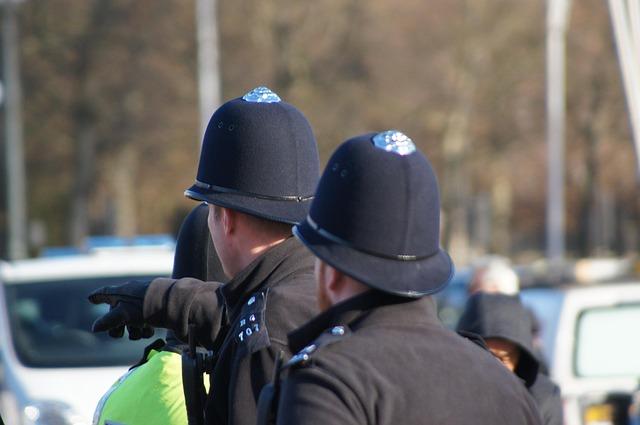
The Metropolitan Police is under renewed scrutiny over how it portrays crime in the capital,amid growing concerns that Londoners are being misled about the true scale of violence and disorder on their streets. In a sharply worded commentary for LBC, writer James Hanson argues that the Met is not merely spinning statistics or putting a positive gloss on its performance, but actively gaslighting the public-downplaying legitimate fears, dismissing lived experience, and obscuring uncomfortable truths behind selective data. As high-profile incidents dominate headlines and communities voice their unease, the question is no longer just whether London is becoming more risky, but whether those tasked with keeping the city safe are being honest about what is really happening.
Met Police messaging on crime under scrutiny as residents question reality on London streets
In recent briefings, Scotland Yard has leaned heavily on selective statistics and polished infographics to claim that crime is “stable” or even “falling”, while many Londoners report a very different lived experience. Commuters swap stories of phones snatched in seconds, shopkeepers complain of brazen thefts, and parents quietly reroute the school run to avoid certain streets after dark. The gap between the official line and what people see from their front doors is widening, and with it grows a corrosive sense that the capital is being managed by spreadsheet, not by sight and sound on the pavement. When residents are told that “perception does not match reality”, it can feel less like reassurance and more like a rebuke.
Distrust hardens when language is massaged to soften the edges of serious offences,and when high‑profile incidents are swiftly reframed as “isolated” before the facts are fully tested. Londoners are fast to notice what is downplayed or omitted: the frequency of visible low‑level offending,the impact on everyday routines,and the fear that certain hotspots are effectively lawless after dark. They hear upbeat press lines about “record neighbourhood engagement” while struggling to recall the last time they saw a familiar bobby on their estate. Against this backdrop, people are starting to ask not just whether the force can keep them safe, but whether it is indeed willing to speak plainly about what is happening on their streets.
- Residents report more open drug use and antisocial behavior.
- Shop owners say thefts are rising but rarely investigated.
- Commuters feel public transport has become a prime target zone.
- Families quietly adjust routines to avoid known trouble spots.
| Met message | Street reality |
|---|---|
| “Overall crime is stable.” | More incidents shared in local WhatsApp groups. |
| “High‑visibility patrols in key areas.” | Residents report rare sightings of officers on foot. |
| “Robbery hotspots under control.” | Regular phone snatches near busy stations. |
| “Improved public confidence.” | Growing reluctance to report “minor” crimes. |
Discrepancies between official statistics and lived experience fuel mistrust in law enforcement
In press conferences and neatly formatted crime dashboards, the numbers look reassuring: certain offences appear down, detection rates are spun as “improvements”, and spreadsheets suggest a city edging toward safety. Yet step outside the PowerPoint and into a night bus, a housing estate lift, or a high street after dark, and you hear a different story. Londoners talk about robberies that never get logged, threats that are “filed and forgotten”, and officers quietly discouraging victims from pursuing complaints. The gap between what communities witness and what the Met publishes is no longer a statistical quirk; it feels like a calculated narrative, curated to pacify the public and protect reputations rather than confront reality.
This tension deepens when residents compare official claims with what they see and share every day:
- Hyper-local social media feeds reporting assaults and muggings that never appear in borough stats.
- Shopkeepers logging repeat thefts while being told it’s “not worth” a formal report.
- Tenants’ groups mapping harassment and antisocial behaviour that remains marked as “no further action”.
- Parents recounting knife incidents outside schools dismissed as “youth disorder”.
| What Londoners See | What the Met Says |
|---|---|
| “No officers came, we gave up reporting.” | “Demand is stable and under control.” |
| Regular shoplifting on the same street. | Recorded thefts ‘slightly down’ year-on-year. |
| Viral videos of violent incidents. | “Isolated events, not a trend.” |
When the lived experience of danger is routinely contradicted by official messaging, it doesn’t just erode confidence in the figures; it corrodes faith in the institution itself. The sense that residents are being told not to trust their own eyes – or their own fear – is precisely what turns scepticism into profound mistrust of law enforcement.
Impact of perceived gaslighting on victims confidence and community cooperation with police
When residents are told that what they see and feel on their own streets is exaggerated, misremembered or “not supported by the data”, the effect is corrosive. Victims begin to doubt their own judgment, wondering if reporting an incident will lead to subtle ridicule or bureaucratic stonewalling rather than protection. Over time, that erosion of self-belief can look like withdrawal: fewer 999 calls, abandoned complaints, and a quiet decision to endure rather than speak up. In conversations with neighbours and on local WhatsApp groups, people start to use the same wary language: “Maybe I’m overreacting”, “The police said it’s just perception”. That doubt is not a private emotion; it reshapes how a community understands risk, safety and whose experiences are allowed to count.
This sense of being talked down to translates directly into a chill on cooperation with officers. Why assist a system that appears more eager to defend its statistics than its citizens? Locals who might once have been willing witnesses instead choose to disengage, or rely on informal networks and private security measures. The result is a quiet boycott of official channels,signalled in subtle ways:
- Lower reporting of “minor” offences that still define daily fear.
- Reluctance to share CCTV or statements after serious incidents.
- Shift to community-led alerts over police-led neighbourhood watch schemes.
- Growing belief that only public outrage,not routine reporting,prompts action.
| Community Response | Practical Impact |
|---|---|
| Fewer crime reports | Data underplays real risk |
| Closed doors to officers | Harder to investigate patterns |
| Reliance on private chats | Safety info stays fragmented |
| Spike in cynicism | Long-term damage to legitimacy |
Practical steps for transparent crime reporting and rebuilding public trust in the Met
Rebuilding credibility starts with stripping out the spin. The Met should publish raw incident data in near real-time, open-source the way crime is classified, and stop cherry-picking “success stories” while burying uncomfortable trends. That means public dashboards that show ward-level figures, comparisons with previous years, and clear explanations when counting rules change. Every press conference should be backed by a downloadable dataset, not just a glossy slide deck. Community scrutiny must be designed in, not treated as a nuisance.
- Open data: live crime maps, downloadable CSVs and APIs for researchers.
- Clear language: no euphemisms for serious offences or rebranding spikes as “anomalies”.
- Independent verification: regular audits by statisticians who do not report to the Met.
- Local briefing sessions: quarterly, ward-level meetings with officers and raw figures on the table.
| Measure | What Londoners See | Trust Impact |
|---|---|---|
| Unedited stats release | Full monthly data drop | Boosts confidence in honesty |
| Misconduct clarity | Named outcomes, clear timelines | Shows bad officers are held to account |
| Community reporting | Easy online and anonymous channels | Encourages victims to come forward |
Trust will not return through slogans or rebrands but through habitual candour. That means publishing stop-and-search data broken down by ethnicity, age and outcome; explaining, case by case, why allegations against officers are upheld or dismissed; and inviting local media, not just national outlets, into the briefing room. When the Met admits where it is indeed failing,listens when Londoners say they feel unsafe,and shows its workings rather than massaging the message,the charge of gaslighting starts to fall away – replaced,slowly,by a relationship built on evidence rather than assurances.
Key Takeaways
the question isn’t whether London has crime – it plainly does – but whether those tasked with confronting it are willing to present the reality without spin. When official statements downplay public experience,or insist that concern itself is the problem,trust erodes.
Londoners don’t need soothing words or selective statistics; they need candour, consistency and a police force that treats their fears as evidence, not as a nuisance to be managed. Until the Met stops trying to reframe the narrative and starts engaging honestly with what people see and feel on their own streets, the gap between its assurances and London’s lived experience will only widen.And that, ultimately, is a threat to public safety as serious as any crime trend the force would prefer not to acknowledge.