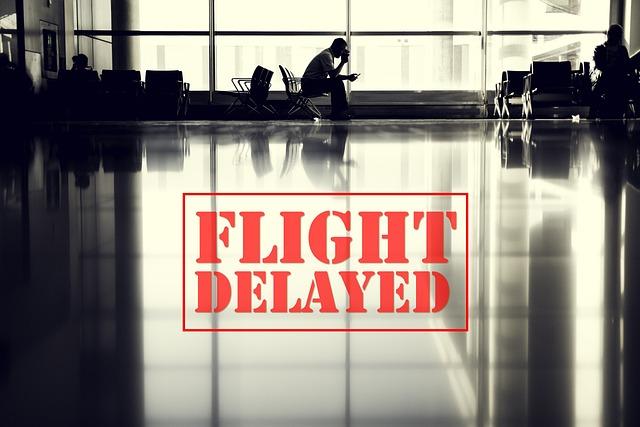
As flight disruption across the Middle East continues to ripple through global air travel, UK passengers are facing a summer of uncertainty. Cancellations,last‑minute rerouting and extended layovers have become a regular feature on departure boards at Heathrow,Gatwick and other major hubs,with knock‑on effects stretching far beyond the region itself.For business travellers and holidaymakers alike, navigating this turbulence now demands more than simply turning up at the airport on time.
From understanding your rights when flights are delayed or diverted, to managing complex itineraries and mitigating financial risk, knowing what to do – and what to avoid – can make the difference between a manageable inconvenience and a logistical nightmare. This article sets out the key do’s and don’ts for travellers caught in the ongoing chaos, offering practical guidance tailored to those flying from, to or via the Middle East as the disruption shows little sign of abating.
Preparing for disruption Essential steps for London travellers facing Middle East flight chaos
London passengers booked on routes that touch the Middle East need to act as their own operations manager long before they reach the terminal. That starts with creating a flexible itinerary: choose fully refundable fares where possible, avoid tight connections, and consider choice hubs such as Istanbul, Doha, or key European gateways if your usual route looks vulnerable to knock‑on disruption.Build in extra time for airport security queues and last‑minute gate changes, and keep digital copies of all key documents to hand. It also pays to know your rights under UK and EU regulations-especially compensation thresholds and duty-of-care provisions-so you can challenge decisions if you are fobbed off at the desk.
- Monitor airline apps and NOTAMs for airspace closures and reroutings.
- Prepare a “go bag” with chargers, medication, and basic toiletries for unexpected layovers.
- Protect yourself with insurance that explicitly covers geopolitical disruption and extended delays.
- Plan for remote working on the move with offline access to key files.
- Pivot to rail or ferry links from European hubs if onward flights are cancelled.
| Risk | Smart move for London travellers |
|---|---|
| Last‑minute reroute | Book through carriers with multiple daily departures |
| Overnight delay | Keep funds accessible for hotels, then claim back later |
| Missed connection | Travel on a single ticket, not separate legs |
| Dialog blackouts | Screenshot boarding passes and key emails in advance |
Navigating airline policies How to manage cancellations rebookings and refunds effectively
When routes across the Middle East are being redrawn overnight, the smartest travellers are those who understand that airline rules are a moving target, not a fixed promise. The fine print on your ticket suddenly matters: whether you booked a flexible fare, used air miles, or went through an online travel agency can decide if you’re offered a cash refund, a voucher, or simply a change fee waiver. Before you pick up the phone, check the carrier’s disruption page, app notifications and emails; airlines often publish temporary waivers and extended validity periods that don’t exist in their standard terms. Keeping screenshots of these advisories can be invaluable if call-center agents quote different options later. Simultaneously occurring, align your expectations with the realities of regional airspace closures and crew duty limits: rerouting via Europe or Asia might potentially be the only viable solution, even if it adds hours in the air and on the ground.
To avoid being bounced between operators, you need to know who actually owns your booking and which rules apply. A ticket issued by a codeshare partner might potentially be governed by one set of policies, even if you were due to fly on another airline’s metal. Always confirm, in writing where possible:
- Who issued the ticket (look at the first three digits of the ticket number).
- What disruption policy is in force for your route and travel dates.
- Whether you must rebook through the original point of sale (OTA, corporate travel desk, or airline direct).
- Deadlines for refunds or free changes, which can be as short as 24-72 hours.
| Scenario | Best Move | Typical Outcome |
|---|---|---|
| Airline cancels flight | Request reroute or refund via original issuer | Free rebooking or full refund |
| Major schedule change | Negotiate alternative dates or routing | One-time change fee waived |
| Passenger-initiated cancellation | Use any published waiver or travel credit | Voucher or partial refund only |
Airport strategy Smart timing luggage choices and security tips amid ongoing uncertainty
With schedules still in flux, business travellers are quietly redrawing their pre-flight routines. Arrive earlier than the standard two hours; staff shortages and extra document checks can turn security into a bottleneck with little warning. Build in “float time” for connections, favouring itineraries with longer layovers at major hubs that have multiple daily departures to your destination. Download and enable alerts on both your airline and airport apps, then act fast on rebooking options before queues form at service desks. At the terminal, think of yourself as operating on a contingency plan: keep your laptop and essentials accessible, passport and visas backed up digitally, and choose security lanes with experienced business travellers rather than holiday groups to minimise delays.
- Opt for carry-on only on shorter trips; checked bags are the first casualty when flights are rerouted.
- Use hard-shell luggage with TSA-approved locks and visible name tags, inside and out.
- Pre-pack security-friendly tech: cables in a clear pouch, minimal devices, and no loose batteries.
- Wear low‑metal clothing and slip-on shoes to move smoothly through scanners.
- Keep a 24-hour survival kit in your cabin bag: medication, chargers, work documents, and one change of clothes.
| Item | Where to pack | Reason |
|---|---|---|
| Passport & power bank | On-body (jacket) | Accessible during sudden gate changes |
| Work laptop | Top of cabin bag | Fast removal at security |
| Spare shirt & toiletries | Cabin bag | Cushions against overnight disruption |
| Non‑urgent documents | Checked luggage | Frees cabin space for essentials |
Staying safe and informed Assessing risk monitoring official advice and protecting your travel rights
Uncertainty in regional airspace means staying plugged into reliable facts channels is now as vital as packing your passport. Subscribe to airline alerts, enable push notifications in your booking app and cross-check with UK Foreign, Commonwealth & Development Office (FCDO) guidance before you fly and while in transit. Avoid relying solely on social media posts or unverified Telegram-style updates; rather,triangulate information from your airline,departure and arrival airports,and reputable news outlets. Keep copies-digital and printed-of your e-ticket, travel insurance, hotel confirmations and any airline correspondence, as these can be vital when arguing your case at a crowded service desk or via an online claim form.
- Check live flight status and airspace advisories on the day of travel
- Monitor FCDO country pages for sudden changes in risk level
- Document delays, rerouting and extra costs with receipts and screenshots
- Contact your insurer before accepting costly alternative transport
| Risk Area | What to Watch | Action for Travellers |
|---|---|---|
| Flight Safety | Airspace closures, diversions | Allow longer connections, avoid tight layovers |
| Legal Rights | Airline policy, UK/EU rules | Check EC261 eligibility, request written reasons |
| Financial Cover | War-risk and disruption clauses | Confirm if chaos-related claims are included |
In the current environment, knowing your contractual rights can be as protective as any insurance policy. For London-based passengers flying on UK or EU carriers, EC261/2004 may entitle you to care (meals, accommodation, rebooking) even when compensation is not payable as the disruption stems from extraordinary circumstances.Ask for re-routing “at the earliest possibility” and avoid signing away entitlements in exchange for vouchers unless you are certain they suit your plans. London travel lawyers also advise keeping a clear paper trail: log call times, names of agents and any promises made. When disruption spirals, the most informed travellers are frequently enough the ones who secure the fastest reroutes, fairer refunds and stronger protection for the rest of their journey.
Key Takeaways
As disruption across Middle East airspace shows little sign of easing, one message stands out for both leisure and business passengers: preparation is no longer optional, it’s essential. From monitoring airline updates in real time and understanding your rights, to building flexibility into itineraries and securing robust travel insurance, the most resilient travellers are those who treat risk management as part of the journey, not an afterthought.
Airlines, regulators and airports will continue to refine their responses to fast‑moving geopolitical events, but the onus is increasingly on passengers to navigate uncertainty with clear-eyed pragmatism. For London-based businesses in particular, that means revisiting travel policies, reconsidering routing strategies and ensuring staff are equipped to make informed decisions on the move.
The turbulence may be concentrated in the skies, but its impact is firmly grounded in the way we plan and conduct international travel. In an era where flight paths can change overnight, the smartest move for travellers is to stay informed, stay flexible and assume that agility, rather than certainty, is the new normal.