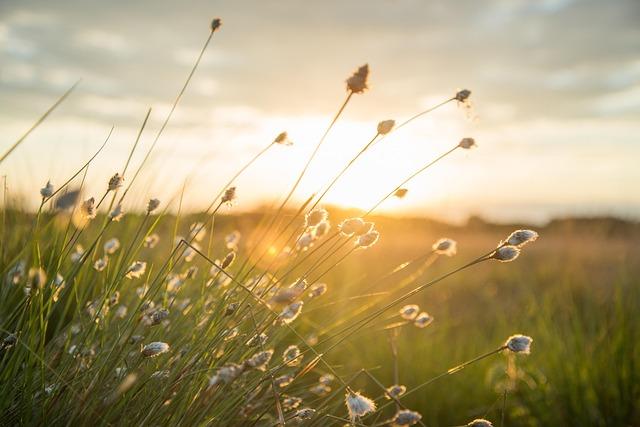
Londoners gazing skyward this evening could be in for an eerie spectacle, as meteorologists warn the capital’s skies are poised to turn a dramatic shade of blood red. A vast plume of dust sweeping up from the Sahara Desert is forecast to drift across the UK,scattering sunlight in a way that could transform an ordinary sunset into a vivid,almost apocalyptic scene. While the phenomenon may look unsettling, experts say it is indeed a well‑understood atmospheric event-though one that is becoming increasingly familiar to Britain’s skies.
Why London’s sky will glow blood red tonight as Saharan dust sweeps in
As warm air currents surge north from the Sahara, they’re carrying with them microscopic particles of desert sand, suspended high in the atmosphere like a veil over the city. When the sun dips towards the horizon,its light has to travel through a thicker slice of this dusty air. The shorter blue wavelengths are scattered out of sight,allowing the deeper oranges and crimsons to dominate the skyline,turning London’s familiar silhouette into something closer to a scene from a sci‑fi film. It’s the same optical phenomenon that gives us rosy sunsets, but tonight’s spectacle will be amplified by a far denser concentration of dust than usual.
While the spectacle will be most striking at sunrise and sunset, Londoners may notice a hazy, almost cinematic filter over the city throughout the day, with cars and windows sometimes gathering a fine, rust‑coloured film. For those planning to watch the show, experts suggest heading to high viewpoints and riverside paths for the clearest views.
- Best time to look up: Around sunset and sunrise
- Where to go: Parks, riversides, rooftops with clear western horizons
- What to expect: Deep reds, burnt oranges, and an eerie golden haze
- What causes it: Sunlight scattering through Saharan dust high in the atmosphere
| London Spot | View Type |
|---|---|
| Primrose Hill | Panoramic skyline |
| Greenwich Park | Historic river views |
| Parliament Hill | Wide western horizon |
| South Bank | Reflections over the Thames |
How Saharan dust transforms sunsets and air quality across the capital
As microscopic particles from North Africa drift thousands of miles on high-altitude winds, they scatter sunlight in highly specific ways, amplifying the reds and oranges that already linger at dawn and dusk. Over London, this creates a striking atmospheric filter: blue light is diffused, while longer red wavelengths punch through, turning the sky into a cinematic backdrop above the Thames and city skyline. Even landmarks like the Shard and St Paul’s can appear silhouetted against a deep, almost surreal crimson glow, giving the evening commute an otherworldly, almost apocalyptic feel that is nevertheless rooted in very ordinary physics.
But while the spectacle is mesmerising, the fine dust has a direct impact on what Londoners breathe at street level. As the plume mixes downward, particle concentrations can spike, especially for PM10 and PM2.5, exacerbating symptoms for people with asthma or other respiratory conditions. On days like these, health agencies often advise residents to tweak their routines:
- Limit intense outdoor exercise during peak evening colours when dust is most concentrated.
- Close windows on busy roads to reduce indoor infiltration of particulates.
- Use public transport over cycling if you’re pollution-sensitive.
- Check live air quality indexes before heading out to sunset viewpoints.
| Effect | What Londoners Notice |
|---|---|
| Light scattering | Deeper reds and pink halos at sunset |
| Higher particulates | Haze on the horizon and scratchy throats |
| Deposits overnight | Fine orange film on cars and windowsills |
What Londoners should do to stay safe and enjoy the rare sky spectacle
With a fine veil of Saharan dust expected to hang over the capital, Londoners should treat tonight like a cross between a stargazing party and a high‑pollution day. Those with asthma or other respiratory conditions would be wise to keep inhalers close and windows closed during the dust peak, especially in high‑rise flats where particles can linger. Opting for wraparound sunglasses can protect eyes from irritation during the evening commute, while light scarves or masks may help sensitive throats in breezier spots such as the South Bank or Primrose Hill. If the air feels heavy or you notice a metallic tang, it’s a cue to step indoors, swap the rooftop bar for a window seat, and enjoy the view from behind glass.
For everyone eager to capture the scarlet skyline without compromising safety, London’s elevated viewpoints and river paths will offer the most dramatic perspectives with room to spread out. Choose lower‑traffic vantage points, arrive early to avoid crowds, and check live air‑quality apps before heading out. Keep it simple:
- Best timing: 30-45 minutes before and after sunset.
- Where to stand: Face west or south‑west with a clear horizon.
- What to bring: Fully charged phone, lens cloth (dust builds quickly), light layers.
- How to travel: Prefer walking or cycling over long car journeys to keep local emissions down.
| Spot | Why it works | Crowd level |
|---|---|---|
| Primrose Hill | High, wide skyline views | Busy at sunset |
| Greenwich Park | Iconic city backdrop | Moderate |
| Alexandra Palace | Long westward sweep | Quieter |
Where and when to see the most dramatic views of tonight’s red sky in London
For front-row seats to tonight’s fiery spectacle, Londoners should make a beeline for the city’s natural high points and western-facing vantage spots, where the low sun will catch the incoming Saharan plume at its most intense. Head up to Primrose Hill, Greenwich Park, or Parliament Hill for big-sky panoramas, or watch the skyline ignite from riverside promenades like the South Bank and Victoria Embankment. Elevated terraces at Sky Garden, The Garden at 120, and rooftop bars in Shoreditch and the City will offer a dramatic contrast between glass-and-steel silhouettes and the deepening crimson sky. Wherever you go, aim for an unobstructed view of the horizon and be prepared to linger as the colours evolve from dusty orange to deep, saturated red.
- Best direction to face: West and south-west, where the setting sun meets the dust plume.
- Ideal time window: Around civil to nautical twilight, when the sun has just dipped below the horizon.
- What to bring: A camera or smartphone with night mode, a light jacket, and patience-the peak glow can be fleeting.
| Location | Suggested Time | Vibe |
|---|---|---|
| Primrose Hill | Sunset + 20 mins | Wide,cinematic skyline |
| Greenwich Park | Golden hour to dusk | Historic foreground,big skies |
| South Bank | Dusk | City lights vs. red sky |
| Sky Garden | Sunset slot | Glass-framed, weather-proof views |
Wrapping Up
As London braces for this fleeting but unforgettable spectacle, residents are reminded to look up-safely and responsibly-if conditions allow. Whether it’s a crimson-tinged sunset over the Thames or a muted red haze above the city’s skyline, tonight’s Saharan dust event offers a rare glimpse of the powerful forces at work in our atmosphere. It may last only a few hours, but for those who witness it, the memory of London’s blood-red skies is likely to linger far longer.