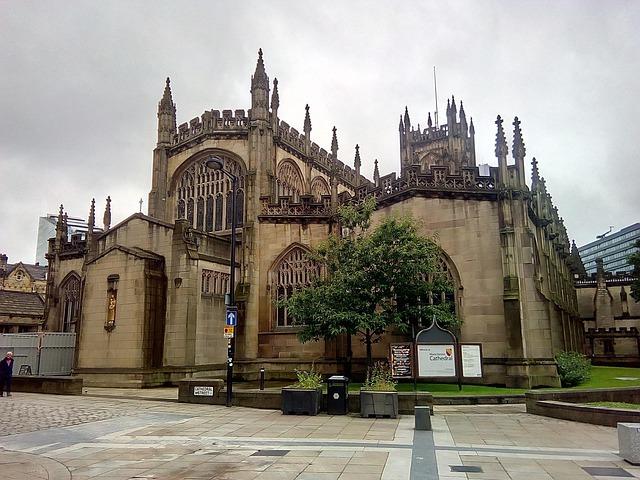
On a drizzly Tuesday in Manchester, the post-work pint looks deceptively simple: a rapid message in the group chat, a scramble for a table, and a round of whatever’s on tap. But behind that familiar ritual lies a web of choices shaped by class, culture and the changing geography of our cities. The parks we cut through, the pubs we gather in, even the bus routes we rely on all help determine who gets to unwind, where, and on whose terms.
From the pocket parks of south Manchester to the crowded green of London Fields, the politics of leisure are written into the spaces where we meet after clocking off. As hospitality venues fight to survive, city centres are reshaped by development, and working patterns splinter between office, hybrid and gig-economy shifts, the humble after-work drink has become a small but telling battleground in the story of urban life.
Manchester parks as urban living rooms How green spaces reshape postindustrial city life
In a city once defined by mills and warehouses, the afternoon drift into the park has become a quiet act of urban reinvention. Benches and picnic blankets now do the social work that corner pubs and factory gates once did,stitching together students,key workers,new arrivals and long-time Mancunians into fleeting communities of proximity. Here, the post-work pint or supermarket tinnie is no longer confined to a bar stool; it migrates to the grass, where the sky is the ceiling and the dress code is whatever survived the working day. Council investment, community campaigns and the simple scarcity of private outdoor space have turned these patches of municipal green into shared domestic backrooms where strangers borrow lighters, compare cans, and swap playlists.
- Picnics as dinner tables: Plastic tubs and paper bags stand in for plates, as households and house-shares spill out onto the lawn.
- Blankets as sofas: Groups arrange themselves in semi-circles, facing inwards like improvised living-room sets.
- Speaker corners: Battery-powered speakers replace televisions, broadcasting competing soundtracks across the grass.
- Dog walkers as regulars: Familiar faces trace the same loops each evening, forming a rotating cast of park “locals”.
| Park Moment | Old Industrial Equivalent |
|---|---|
| 5pm cans on the grass | Clocking off at the factory gate |
| Sunday kickabout | Works football team fixture |
| Yoga at sunset | Union hall social or chapel group |
| Food truck queues | Cafeteria lunch line |
This shift is not just aesthetic; it subtly rewrites the politics of who gets to occupy the city and on what terms. In these open-air lounges,the rules are softer,negotiated in side-eyes and shared bins rather than enforced by door staff or minimum spends. Yet access is still unequal: those with balconies and gardens can dip in and out, while renters in cramped flats rely on these spaces as their only extension of home. Tensions over noise, litter and drinking expose a deeper question about Manchester’s postindustrial identity-whether public green space is a civic utility, a lifestyle amenity for the professionalised city, or a last common room for people priced out of everywhere else.
From Ancoats to London Fields Tracing how neighbourhood identity is brewed in local pubs
Walk east from Manchester’s city center into Ancoats and the smell of hops mingles with sourdough and espresso. The old red-brick mills now house taprooms where brewers experiment with saisons and sours,but the real alchemy is social: bartenders remember names,cyclists lean muddy bikes against exposed brick,and post-shift hospitality workers pull stools into a loose circle. These spaces manufacture a sense of belonging with an almost industrial efficiency. On blackboards and Instagram stories, they curate a shared language of place: references to the Rochdale Canal, local bands, the Sunday market.In these rooms, a once-industrial neighbourhood is rebranded as a lifestyle – one poured by the pint, served with a side of reclaimed furniture and a carefully calibrated sense of authenticity.
- Design as soft power: concrete floors, communal tables and hanging plants that signal openness but filter who feels at home.
- Menus as manifestos: hyper-local beers named after side streets, mills and bus routes.
- Events as recruitment: quiz nights,zine launches,DJ sets that quietly sort regulars from visitors.
| Element | Ancoats Taproom | London Fields Pub |
|---|---|---|
| Signature Cue | Mural of former mill workers | Vintage Hackney Marshes photos |
| Core Crowd | Tech staff & creatives | Media freelancers & renters |
| Post-Work Ritual | Pints before gigs on Oldham St | Pints before park meet-ups |
Across the canal from Victoria Park,the same dynamics play out in a different key.Pubs spilling onto the streets act as informal annexes of the park: places where remote workers close laptops at four, where dogs are introduced before their owners, where the end of the working day is staggered and negotiated rather than fixed at five. Here, identity is brewed in the overlap between indoor and outdoor life – drinkers shuttle between the corner bar and the grass, their allegiances divided between a favorite landlord and a favourite patch of sun. The chalkboard outside might announce a new pale ale, but it is also a signpost for a much broader question: who gets to claim this square of the city as “ours” when the price of a round rises faster than wages, and when a postcode can be both a badge of pride and an eviction notice in waiting?
The politics of the post work pint Class gender and belonging at the bar
In the soft glare of early evening, the after-work crowd looks deceptively homogeneous: laptops zipped away, lanyards tucked into tote bags, branded water bottles swapped for hazy IPAs. Yet under the low murmur of small talk lies a quiet choreography of power. Who feels entitled to lean on the bar, to drag two tables together, to raise their voice without apology? Who instinctively offers to get the first round, and who is expected to stay late as “everyone’s going”? The rituals of drinking after work are rarely neutral; they reward those who already fit the imagined ideal worker – frequently enough white, male, middle-class – and gently punish those whose bodies, accents or caring responsibilities fall outside that narrow frame. The tab, the tip, even the choice of venue become ways of signalling who belongs in the room and whose presence is still under negotiation.
These hierarchies play out not just in conversations, but in the physical and economic architecture of the bar. Open-plan brewpubs with £7 pints and craft gin menus may dress themselves as democratic, but they are coded spaces where certain forms of masculinity and professional polish are quietly privileged. Class and gender shape how cozy you feel ordering a cheap lager instead of the IPA-of-the-month, whether you nurse a single drink or keep pace with colleagues, whether you can afford to say “I’m skipping this round.” The same corner table can function as an informal boys’ club, a networking hub, or a refuge for the underpaid and overstretched – often at the very same time.
- Who pays often mirrors pay gaps and promotion prospects.
- Who stays latest can influence who is seen as “committed.”
- Who opts out risks missing key data and opportunities.
| Role at the bar | Unspoken expectation |
|---|---|
| Senior male manager | Leads rounds, sets tone, tells stories |
| Junior woman | Joins in, laughs along, leaves “not too early” |
| Working-class colleague | Adapts language, manages cost of staying |
| Parent or carer | Explains early exit, risks being seen as less dedicated |
Where to drink and where to linger A guide to Manchester spots that turn clocking off into community time
Clocking off in Manchester increasingly means migrating towards places where the after-work drink melts into something slower and more communal. In the city centre, Stevenson Square, Cutting Room Square, and the cluster of arches around Deansgate-Castlefield have become outdoor living rooms: office lanyards mix with hospitality workers on split shifts, young parents park buggies next to stacked pint glasses, and students stretch out the last hour of daylight. The move is away from the conventional, sealed-off pub and towards hybrid venues – taprooms with benches spilling onto pavements, cafés that quietly morph into bars – where the boundary between private catch-up and public square is deliberately thin. Here,the drink is almost a prop: the real attraction is the sense that you can turn up alone and still be folded into the evening’s ambient conversation.
- For park-adjacent pints: Ancoats Marina, Whitworth Park edges, Alexandra Park café-bar
- For indoor lingering: Co-operative halls, community-owned pubs, arts-centre bars
- For late-but-low-key: Wine bars in the Northern Quarter, neighbourhood bottle shops
| Neighbourhood | Typical crowd | Best for |
|---|---|---|
| Chorlton | Remote workers, young families | Lazy, dog-heavy evenings |
| Ancoats | Creative freelancers, renters | Canal-side sundowners |
| Levenshulme | Long-term locals, newcomers | Market drinks and chats |
Further out, the city’s parks and playing fields are quietly rebalancing who gets to enjoy that end-of-day exhale. What London Fields did for east London – turning a patch of grass into an unofficial after-work club – you can now see echoed in Platt Fields, Alexandra Park, and the scrappy verges along the Rochdale Canal. People arrive with supermarket cans,picnic blankets,takeaway pizza boxes,and a tacit understanding that the post-work pint doesn’t need a £7 glass or a reservations system. These green spaces are contested, of course: residents’ WhatsApp groups bristle over litter and noise, and councils float alcohol bans. But as housing shrinks and formal hospitality gets pricier, these improvised outdoor lounges are becoming the most democratic rooms in the city – places where the politics of who can afford to linger play out in plain sight.
The Conclusion
the post-work pint is about far more than a drink. It is a ritual that helps define who belongs in a city and on what terms. As Manchester reshapes its parks and London Fields fills with office workers and freelancers alike, the battle lines are being drawn not just over green space, but over time, noise, and the right to linger after the working day.
What looks like a simple choice between the beer garden and the kitchen table is in fact a question about how we live together – whose evenings are protected, whose are commodified, and who is pushed to the margins when leisure collides with livelihood.The politics of the post-work pint are playing out in planning meetings, licensing hearings and residents’ WhatsApp groups, but also on benches, blankets and pub terraces across the city.
As Manchester grows and its public and semi-public spaces are squeezed, the quiet question beneath the clink of glasses is becoming harder to ignore: when the working day ends, whose city does it become?