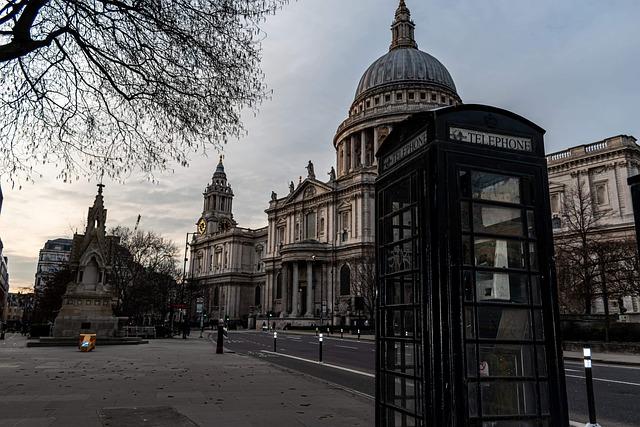
Sir Keir Starmer has moved to calm public fears after warning that Iranian missiles could one day be aimed at London, insisting that any such attack would be intercepted before reaching the capital. Speaking amid growing international tension and renewed concern over Iran’s ballistic capabilities, the Prime Minister sought to reassure Londoners that the UK’s air defences and military alliances are prepared to meet emerging threats. His comments, made in the wake of intensified scrutiny of Britain’s national security posture, underscore both the gravity of the geopolitical backdrop and the government’s attempt to project confidence in its ability to protect the city.
Starmer outlines UK air defence capabilities against potential Iranian missile threats to London
Speaking from Downing Street after a high-level security briefing, the Prime Minister set out how Britain’s multi-layered shield would respond to any unfriendly launch from Tehran, stressing that the UK is “not a soft target” and that defensive measures are tested regularly with allies. He highlighted the integration of RAF fighter jets, ground-based interceptor systems and cutting-edge radar and satellite networks, describing a “detect, track and destroy” sequence designed to neutralise incoming projectiles long before they approach the capital. Defence officials say this framework, refined through recent NATO exercises and lessons from missile attacks in the Middle East, is specifically calibrated to protect dense urban areas such as London and its critical infrastructure hubs.
- Early warning: Space-based sensors and over-the-horizon radar to spot launches within seconds.
- Rapid response: RAF Typhoons on quick reaction alert, supported by aerial refuelling tankers.
- Ground defences: Mobile missile batteries positioned to protect population centres and key sites.
- Allied coordination: Data-sharing with NATO partners and regional surveillance assets.
| Defence Layer | Core Asset | Primary Role |
|---|---|---|
| Detection | Radar & Satellites | Identify launch and trajectory |
| Interception | Fighter Jets & Missiles | Destroy threat mid-flight |
| Protection | Hardened Sites | Secure essential services |
Security chiefs detail interception systems and early warning measures protecting the capital
Behind the prime minister’s assurance lies a densely layered shield of radar, satellites and rapid-response interception units quietly operating above and around London. Security chiefs say the city is now plugged into a NATO-wide radar web that can spot a hostile launch within minutes, triggering an automatic cascade of alerts through military, intelligence and civil protection channels. From secure rooms beneath Whitehall to mobile command posts on the capital’s outskirts, officers monitor live feeds that track the trajectory of any incoming missile, calculate impact probabilities and assign the most effective interception assets in real time.The system is designed to be both fast and redundant: if one layer fails, another is already locked in.
To underline their confidence, officials outlined the key defensive tools now on standby around the clock, combining domestic capabilities with allied support. They say the priority is not just stopping a strike, but ensuring Londoners receive timely, accurate information while essential services stay online. That means pairing cutting-edge weapons platforms with public-safety protocols familiar from major terror and flood drills.
- Integrated radar and satellite tracking to detect launches beyond UK borders.
- Ground-based air defence batteries positioned to protect critical infrastructure.
- Fighter jet patrols able to scramble within minutes from multiple UK bases.
- Secure data links sharing live intelligence with NATO partners.
- Civil alert systems ready to push warnings to phones, broadcasters and transport hubs.
| Defence Layer | Role | Reaction Time |
|---|---|---|
| Early Warning Radar | Detects and tracks launches | Seconds |
| Command & Control | Threat analysis,engagement orders | Under 2 minutes |
| Interceptor Systems | Neutralises incoming missiles | Minutes before impact |
| Public Alerts | Warns residents,secures sites | Immediate once threat confirmed |
Experts assess realistic risk levels for Londoners amid rising Middle East tensions
Security analysts and former defence officials stress that,while rhetoric has intensified following Iran’s recent actions in the region,the probability of a direct missile strike on London remains extremely low.They point out that Iran’s strategic focus is still firmly centred on the Middle East, where it calibrates its actions through proxy groups rather than long-range assaults on NATO capitals. Intelligence assessments, they say, show no credible evidence of imminent targeting of the UK, with London rather facing a more diffuse spectrum of risks linked to cyber operations, disinformation and potential lone‑actor extremism inspired by overseas events. This more complex threat picture has prompted calls for calm but heightened vigilance, particularly around major transport hubs and high‑profile public gatherings.
Counter‑terrorism experts emphasise that London is already woven into a multilayered security architecture designed to respond to any escalation, from missile defence coordination with allies to rapid deployment of armed police and specialist units on the ground. They highlight several concrete realities that temper worst‑case fears:
- Robust early‑warning systems integrated with US and European partners.
- Enhanced cyber defences protecting critical infrastructure and financial services.
- Active community engagement to curb radicalisation and inter‑community tension.
- Regular live‑scenario drills preparing emergency services for fast, coordinated responses.
| Risk Type | Current Assessment | Main Response |
|---|---|---|
| Direct missile strike | Highly unlikely | Allied air & missile defence |
| Cyber attacks | Elevated | National Cyber Security Centre |
| Inspired extremism | Moderate | MI5 & Met Counter‑Terrorism |
| Public disorder | Localised | Police & community liaison |
Policy recommendations to strengthen civil preparedness and public communication in future crises
Experts argue that reassurance must be backed by visible, well-practised systems that citizens can understand at a glance. Authorities could invest in a layered alert framework that differentiates between routine monitoring, heightened vigilance, and imminent threat, with clear instructions for each stage delivered via SMS, broadcast media and official apps. Alongside this, local councils and emergency services should run regular public drills, particularly in high-density areas such as central London transport hubs, to normalise protective actions rather than provoke panic. Schools, workplaces and community centres can act as hubs for credible, pre-approved information, reducing the space for rumours and hostile disinformation when tensions spike.
To maintain trust in moments when ministers make stark assurances about national defence, communication needs to be transparent about both capabilities and limits. This could include publishing simplified defence-readiness snapshots, hosting open briefings with security officials and independent experts, and collaborating with grassroots groups who can tailor messages to diverse neighbourhoods.Such steps are most effective when paired with everyday resilience measures that feel tangible to residents:
- Clear, multilingual emergency messaging on public transport and in busy precincts.
- Pre-scripted broadcast segments ready to air within minutes of a major alert.
- Trusted local messengers – faith leaders, youth workers, GPs – integrated into official briefings.
- Regular myth-busting campaigns that explain how missile defence and shelter protocols actually work.
| Priority Area | Key Action |
|---|---|
| Civil Readiness | Annual citywide drills and updated shelter maps |
| Public Messaging | Unified alert system across TV, radio, apps and SMS |
| Community Trust | Co-designed guidance with local organisations |
Wrapping Up
As tensions in the Middle East persist and the spectre of escalation looms, Starmer’s message is calibrated as much for anxious Londoners as for international observers. His reassurances underline a twin track: that Britain remains tightly woven into Western defence structures and that the capital is not without protection in the unlikely event the conflict widens.
Whether those words will be enough to calm public unease is less clear. For now, ministers are banking on a combination of diplomatic pressure abroad and layered security at home. What is certain is that London, long a focal point in global crises, will continue to watch developments in Iran and the wider region with a wary eye – and look to Downing Street for both candour and concrete plans should the danger move any closer.