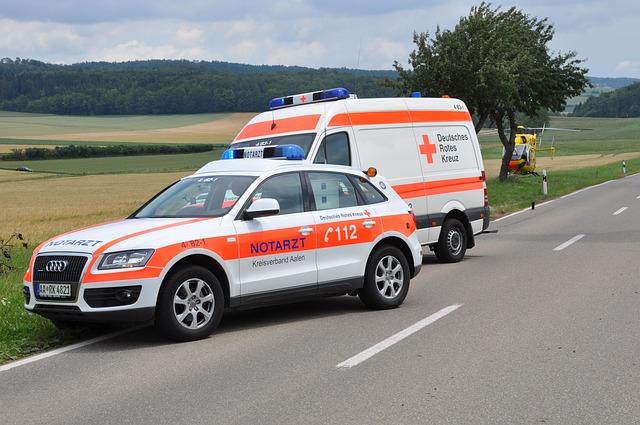
London’s emergency services have been left reeling after two ambulances were allegedly set on fire in what police are treating as a hate-motivated attack. Two men have been arrested following the incident, which occurred in the capital and has raised fresh concerns about the safety of frontline responders and the rise of hate crimes across the UK. As investigators probe the circumstances surrounding the blaze, officials and community leaders are calling for calm and urging the public to support those who risk their lives to protect others.
Police investigation into London ambulance arson attack treated as suspected hate crime
Detectives from the Metropolitan Police’s Counter Terrorism Command are now leading inquiries, examining whether the deliberate torching of emergency vehicles outside a London ambulance station was driven by hostility toward protected groups.Officers are trawling through extensive CCTV footage, cross-referencing number-plate recognition data and interviewing witnesses who reported seeing two men acting suspiciously shortly before the blaze erupted. Forensic teams have recovered fuel containers and charred fabric thought to have been used as improvised incendiary devices, while digital specialists are analysing social media accounts and encrypted messaging apps for any posts or messages that could reveal extremist motives or coordinated planning.
Investigators are working closely with community liaison officers and the London Ambulance Service to assess the wider impact on staff, patients and local residents, amid fears that the attack may have been intended to intimidate both emergency workers and minority communities. Police say they are keeping several lines of inquiry open, including possible links to previous anti-migrant and anti-LGBTQ+ incidents in the capital, but stress that the threshold to treat the case as a suspected hate crime has already been met. As part of this focus, officers are documenting patterns of abuse and vandalism against front-line responders, while urging anyone with details to come forward.
- Specialist units deployed to examine possible extremist links
- Forensic evidence collected from debris and ignition points
- Digital trails under scrutiny for hate-related content
- Community impact assessed through liaison teams
| Key Focus | Action Taken |
|---|---|
| Motivation | Review of hate-related statements and symbols |
| Suspects | Background checks and association mapping |
| Evidence | DNA, fingerprints and accelerant analysis |
| Public Safety | Enhanced patrols near emergency hubs |
Impact on emergency services response times and public safety in affected London communities
The deliberate targeting of frontline medical vehicles has immediate and chilling consequences for both emergency logistics and community trust. With two ambulances destroyed, already stretched crews face longer journeys to cover the same ground, possibly adding precious minutes to critical callouts. In areas of London where health inequalities are most acute, this disruption risks deepening existing vulnerabilities.Residents who rely heavily on rapid 999 responses may now experience delayed arrivals, diverted units and reduced on-scene resources. The incident also raises concerns about the psychological toll on paramedics returning to streets where their safety-and their equipment-has been threatened.
For local communities, the attack is not just an assault on property but a direct challenge to the sense of safety and cohesion in mixed and minority neighbourhoods. Community leaders report rising anxiety among vulnerable groups who already fear being singled out by hate-motivated violence. In response,authorities are examining contingency plans to maintain coverage,including:
- Repositioning nearby ambulances to plug gaps in coverage
- Short-term stationing of vehicles at option secure sites
- Increased coordination between police and ambulance control rooms
- Visible patrols around key NHS facilities to deter copycat attacks
| Area of Impact | Short-Term Effect | Public Risk |
|---|---|---|
| Response Times | Longer travel routes | Delayed critical care |
| Paramedic Safety | Heightened stress levels | Staff retention pressure |
| Community Confidence | Increased fear and mistrust | Lower incident reporting |
Community reactions and support for paramedics following the targeted ambulance fires
As news of the deliberate ambulance fires spread,local residents,patient advocacy groups and healthcare unions quickly rallied around emergency workers,condemning the attacks as an assault on public safety itself. Social media timelines filled with messages of gratitude to frontline crews, while community leaders urged Londoners to show visible solidarity with paramedics, from thank-you notes left at ambulance stations to coordinated applause outside hospitals. Faith groups and neighbourhood associations jointly issued statements calling for calm and unity, stressing that those who set the vehicles alight do not represent the values or diversity of the capital.
Practical support has also taken shape, with charities and grassroots organisers working together to ensure staff feel both protected and appreciated in the wake of the hate-motivated damage. Online campaigns have raised funds for wellbeing initiatives, and local businesses have offered discounts and free services to crews affected by the incident. The following snapshot illustrates how different sections of the community are responding:
- Local residents – organising vigils and handwritten thank-you cards for station crews.
- Healthcare unions – pushing for stronger protections, mental health support and clear hate-crime protocols.
- Faith and civic groups – hosting cross-community forums to counter division and misinformation.
- Small businesses – providing free meals, hot drinks and rest spaces for staff between shifts.
| Support Initiative | Who Leads It | Main Goal |
|---|---|---|
| Thank-You Card Drives | Schools & PTAs | Boost morale |
| Wellbeing Fundraisers | Health charities | Counselling access |
| Safe-Shift Pledges | Unions & NHS trusts | Improve security |
| Community Forums | Local councils | Address hate crime |
Policy recommendations for protecting emergency vehicles and strengthening hate crime deterrence
Targeted arson against lifesaving services demands a response that goes beyond routine vandalism charges. Lawmakers could introduce aggravated sentencing for attacks on emergency vehicles, placing them in the same protected category as hospitals and schools, while mandating minimum custodial terms where hate motivation is proven. Alongside this, funding for secure depot infrastructure-including CCTV with real-time monitoring, automatic number plate recognition and controlled access-would make it harder to carry out such attacks unnoticed. Insurance frameworks could also be revised so that trusts investing in enhanced security receive premium reductions, easing the financial impact on already stretched ambulance services.
Strengthening hate crime deterrence means tightening both the law and public awareness. Prosecutors should be equipped with clear guidelines on evidencing hate motivation in attacks on emergency workers and their equipment, and police forces should receive specialist training to recognize and record hate-fuelled incidents consistently. Public campaigns that highlight the human cost of torching an ambulance-delayed response times, cancelled callouts, lives put at risk-can reinforce the message that these are not victimless crimes. Paired with community reporting hotlines and anonymous digital tip tools, such measures would increase the likelihood of detection and conviction, sending a visible signal that hate-driven vandalism will be met with swift and serious consequences.
- Harsher penalties for hate-motivated attacks on emergency assets
- Investment in security tech at ambulance stations and parking bays
- Specialist hate crime training for frontline officers and prosecutors
- Public awareness drives showing real-world impact on patients
- Enhanced reporting channels to capture early warning signs
| Measure | Primary Goal |
|---|---|
| Aggravated sentencing | Deter high-impact attacks |
| Secure depots | Reduce vulnerability |
| Training & guidance | Improve prosecutions |
| Public campaigns | Shift social norms |
To Wrap It Up
As the investigation continues, the case serves as a stark reminder of the dangers posed when hate-fuelled rhetoric spills into real-world violence. For the NHS staff who rely on these vehicles to save lives, and for the communities that depend on them, the torched ambulances were not just damaged property but an attack on a vital public service.
Police and local leaders are urging anyone with further information to come forward, stressing that confronting hate crime requires a robust response not only from law enforcement but from society at large. The outcome of the forthcoming court proceedings will be watched closely, both as a measure of justice for this incident and as a signal of how seriously such offences are treated in the UK today.