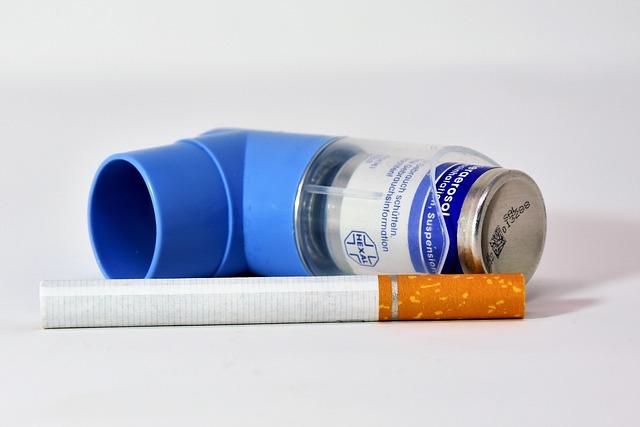
A teenage boy has been convicted of manslaughter after DNA from his asthma inhaler was linked to a cigarette butt found at the scene of a fatal attack, in a case that underscores the growing role of forensic science in modern policing. The landmark conviction, reported by Sky News, hinges on genetic material investigators extracted from the discarded cigarette, which matched DNA taken from the teen’s inhaler during the inquiry. Prosecutors said the breakthrough provided crucial evidence placing the youth at the crime scene, helping to secure a guilty verdict in a case that might otherwise have gone unsolved. The ruling has raised fresh questions about youth violence, the use of personal medical items in criminal investigations, and the expanding reach of DNA technology in the justice system.
How forensic DNA from an asthma inhaler linked a teenager to a fatal alleyway attack
Detectives initially struggled to trace the person behind a discarded cigarette butt found just metres from the victim’s body in a dimly lit backstreet. The breakthrough came when a routine search of the national DNA database flagged an unexpected match: a trace profile previously taken from the mouthpiece of a teenager’s asthma inhaler during an unrelated police encounter. What had been logged as a minor detail in a prior investigation suddenly became pivotal, with forensic scientists confirming that the same genetic fingerprint appeared on both the inhaler and the cigarette stub recovered at the scene of the fatal attack.
Investigators built their case by combining cutting-edge lab work with methodical scene reconstruction, transforming a single everyday medical device into a crucial evidential anchor.Key elements included:
- DNA transfer analysis showing the cigarette had been smoked shortly before the assault
- Chain-of-custody records confirming the integrity of the inhaler swab stored months earlier
- CCTV time stamps narrowing the window between the teen’s presence nearby and the victim’s final movements
- Contextual forensics linking the butt’s position, blood spatter patterns and footprint traces in the alley
| Forensic Step | Purpose |
|---|---|
| Inhaler swab re-test | Confirm DNA quality and match |
| Cigarette butt profiling | Identify single, clear contributor |
| Database comparison | Link suspect to crime scene |
| Context review | Support manslaughter charge |
Legal reasoning behind the manslaughter conviction and what distinguished it from murder
The court’s decision turned on how the teen’s intent was interpreted, with prosecutors unable to prove the level of premeditation and clear purpose to kill that is required for a murder conviction. Rather, jurors were persuaded that his behavior showed a reckless disregard for life rather than a deliberate plan to end it. Key factors included his age, the chaotic circumstances of the confrontation, and the absence of evidence that he brought a weapon or laid a calculated trap. The DNA tracing from the asthma inhaler to the cigarette butt made it unachievable to deny his presence,but it did not,on its own,establish that he formed the specific intent to kill.
Legally, manslaughter lay in the space between tragic accident and calculated homicide, and this case illustrated that gap with unusual clarity. The judge highlighted how his actions were unlawful and dangerous, and how any reasonable person would have realised the serious risk of harm, even if he did not consciously aim for a fatal outcome. In summarising the verdict, the court drew a sharp line between what could be proven beyond reasonable doubt and what remained speculation, underscoring that criminal liability rests on demonstrable mental states, not moral outrage.
- Intent: Recklessness proved, but no clear plan to kill
- Evidence: DNA link confirmed presence, not premeditation
- Risk: Foreseeable serious harm, not necessarily death
- Outcome: Fatal result from an unlawful act, short of murder
| Element | Manslaughter | Murder |
|---|---|---|
| State of mind | Reckless or negligent | Intent to kill or cause grievous harm |
| Planning | Often absent or minimal | May be deliberate or sustained |
| Proof threshold | Unlawful, dangerous act causing death | Clear evidence of intent beyond reasonable doubt |
Privacy, consent and the growing use of medical and incidental DNA in criminal investigations
The teenager’s conviction rests on a DNA trace originally collected for health reasons, raising stark questions about where medical confidentiality ends and criminal justice begins. When genetic material from an asthma inhaler is repurposed to match a discarded cigarette butt, the line between care and surveillance becomes blurred. Civil liberties groups warn that such practices risk turning every blood test, newborn screening, or hospital swab into a potential entry in an investigative database.For patients, this can erode trust in clinicians and deter people from seeking care or consenting to routine tests if they fear their genetic information could later be used against them.
Legal frameworks are scrambling to catch up with the speed and reach of forensic genetics. While supporters argue that reusing existing DNA records helps solve serious crimes,critics say consent is often implicit,vague,or absent altogether. Key concerns include:
- Purpose creep – samples taken for treatment quietly repurposed for policing.
- Informed consent gaps – patients rarely told their DNA could be shared or cross‑checked.
- Data retention – genetic profiles stored for years with unclear deletion policies.
- Disproportionate impact – marginalized groups facing higher levels of both policing and medical data collection.
| DNA Source | Original Purpose | Criminal Use Risk |
|---|---|---|
| Hospital records | Diagnosis & treatment | High if access rules are weak |
| Consumer test kits | Ancestry & health traits | Moderate via legal requests |
| Biobanks | Medical research | Variable,depends on governance |
Why this case demands clearer safeguards for young people in police questioning and evidence collection
When a teenager’s everyday medical device becomes the decisive link in a homicide investigation,it exposes how vulnerable young people are once they enter the criminal justice system. Adolescents are more likely to misunderstand their rights, overestimate the strength of evidence against them, and comply with authority even when confused or frightened. This makes robust protections during interviews and forensic procedures not just desirable, but essential. Yet in high-pressure cases, the safeguards that should buffer minors from these pressures – such as timely access to legal advice, the presence of an appropriate adult, and clear, age-sensitive explanations – can become fragile or inconsistently applied.
Scrutiny of this case raises urgent questions about how DNA from personal medical items is obtained, interpreted and presented, especially when the suspect is under 18. There is a pressing need for tighter protocols that ensure any consent is truly informed, any questioning is developmentally appropriate, and any scientific evidence is weighed alongside the young person’s capacity to understand and respond. Key elements that demand strengthening include:
- Access to legal support: Guaranteed, early legal representation tailored to youth.
- Appropriate adult presence: Trained adults who actively safeguard welfare, not just observe.
- Forensic transparency: Clear explanations of how DNA is collected, stored and used.
- Recording and review: Complete audio-visual recording of interviews and consent processes.
| Safeguard | Risk if Weak |
|---|---|
| Legal advice | Uninformed admissions |
| Adult support | Coercive pressure |
| DNA protocols | Misleading inferences |
| Recorded interviews | Disputed conduct |
In Conclusion
The case underscores how advances in forensic technology are reshaping modern criminal investigations, turning even the smallest trace of DNA into decisive evidence.For the victim’s family, the verdict brings a measure of resolution after months of uncertainty, while for legal and policing experts it will likely serve as a touchstone in debates over privacy, evidential standards and the expanding role of genetic material in the justice system.
As the teenager begins his sentence, questions remain over how such crimes can be prevented and what more can be done to address youth violence. But in the courtroom, at least, the message was clear: in an era of refined forensic science, there are fewer and fewer places to hide.


London mayor candidate ignites backlash with controversial ‘pity’ remark about the capital