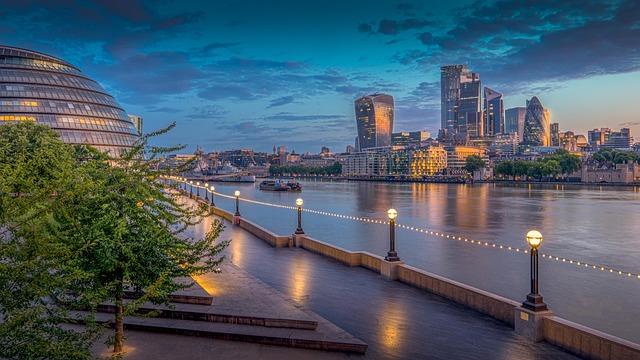
Once derided as one of London’s most unloved junctions, Elephant & Castle is in the midst of a radical transformation that is reshaping the skyline – and the story – of south London. A £4 billion regeneration program is sweeping away much of the post-war concrete and traffic-clogged chaos, replacing it with high-rise homes, a new town center, revamped public spaces and upgraded transport links. Long defined by its tired shopping centre and brutalist architecture, the area is being recast as a dense urban hub that developers and planners say will bring thousands of new residences, fresh retail and leisure destinations, and a more walkable, liveable neighbourhood. Yet as cranes dominate the horizon and glossy marketing hoardings promise a brighter future, questions over affordability, community displacement and who truly benefits from this so‑called “glow‑up” loom large.
Regeneration reshapes Elephant and Castle from concrete gyratory to connected neighbourhood
Once a car-choked island marooned by roaring traffic, this south London junction is being reimagined as a place to walk, linger and live. The former concrete tangle is giving way to tree-lined streets, human-scale blocks and new public squares that stitch together previously isolated estates and shopping parades. A new street network restores long-lost routes, prioritising pedestrians and cyclists over vehicles, while upgraded bus interchanges and entrances to the Northern and Bakerloo lines are designed to ease overcrowding and improve safety. At the heart of the plans is a push for everyday convenience: residents will be able to reach cafés, GP surgeries and green spaces within minutes, replacing flyovers and fumes with doorstep amenities and cleaner air.
Developers and City Hall insiders describe the shift as a move from roundabout to “15-minute neighbourhood”, underpinned by new homes and a more mixed local economy. Alongside student blocks and council housing, the pipeline includes build-to-rent towers and affordable units above revamped retail, aiming to balance commercial pull with long-term community roots. Cultural venues, pocket parks and co-working spaces are intended to keep people in the area after office hours, while small units are being marketed at independent traders to ensure global food stalls, family-run shops and creative start-ups are not priced out.
- New pedestrian links reconnect estates with rail, tube and bus hubs.
- Active travel routes promote cycling over short car trips.
- Mixed-use blocks blend homes, retail and workspace.
- Public squares host markets, performances and community events.
| Change | Then | Now |
|---|---|---|
| Street layout | Multi-lane gyratory | Calmed two-way streets |
| Public space | Underpasses & subways | Squares, pocket parks |
| Daily life | Drive-through junction | Walkable neighbourhood |
Affordable homes and community spaces at risk as private towers dominate skyline
Behind the glossy marketing suites and illuminated hoardings, long-time residents are watching the fabric of their neighbourhood thin out. As luxury schemes climb ever higher, the modest brick estates, bingo halls and youth clubs that once defined this patch of south London are increasingly treated as “meanwhile uses” rather than permanent fixtures. Community organisations say that while new plazas and pocket parks are being promoted in brochures, the everyday spaces where people actually gather – from Latin American cafés to tenants’ halls – are quietly being priced out or bulldozed. For many local families, the most visible outcome of the regeneration is not a shiny new square, but a letter announcing the end of an assured tenancy or a hike in service charges.
The tension is starkly illustrated in who can realistically afford to stay. While developers highlight headline-grabbing investment and “mixed tenure” blocks, the balance of homes often tilts towards high-end private sale and overseas investors. Campaigners argue that genuinely affordable options are being squeezed, with key workers and multi-generational households pushed to the outskirts. On the ground, residents point to a shrinking map of accessible places to meet, rehearse, trade and organize, even as corporate-branded “community hubs” open on the ground floors of glass towers. The emerging district, they warn, risks becoming a vertical enclave where lights stay off in many apartments at night, while the people who built the area’s cultural identity are left circling on the fringes, searching for an affordable door back in.
- Long-term tenants report rising rents and service charges.
- Local traders face shorter leases and higher business rates.
- Youth and cultural spaces struggle to secure permanent premises.
- New plazas often come with strict private management rules.
| Type of Space | Before Regeneration | Now |
|---|---|---|
| Social housing blocks | Secure, low-rent | Demolished or reduced |
| Community centres | Free or low-cost access | Relocated or commercialised |
| Independent cafés | Locally owned | Replaced by chains |
| Public squares | Council-managed | Privately controlled |
Local traders and Latin American community fight to retain cultural heartbeat of the area
In the shadow of glossy marketing hoardings and crane-studded skies, a loose coalition of stallholders, bar owners and dance teachers is quietly redrawing the battle lines for the soul of SE1. At the heart of the campaign are Latin American traders, many of whom first arrived in the 1980s, who now see their cafés, beauty salons and money-transfer kiosks squeezed by rising rents and shrinking floorspace. They have organised under tenants’ associations, staged salsa-led street protests and petitioned councillors to secure long-term, affordable leases, arguing that it is their empanadas, cumbia nights and Spanish-language services that turn a commuter junction into a community.
Behind closed doors and in public meetings, negotiations have shifted from abstract planning jargon to concrete guarantees. Community groups are pressing for:
- Rent protections for small, independent businesses
- Dedicated Latin American market space within new commercial units
- Cultural programming in public squares, funded by developers
- Language support in council consultations and business training
| Key Demand | Goal |
|---|---|
| Affordable units | Keep legacy traders on site |
| Cultural hub | Showcase Latin American arts |
| Night-time uses | Protect music, dance and bars |
Developers and the local authority insist that “inclusivity” is baked into the masterplan, but for those on the ground, the proof will be measured not in glossy brochures but in the number of familiar shopfronts still trading once the last scaffold comes down.
Transport upgrades cultural venues and public realm improvements that should guide future London schemes
As the Bakerloo line upgrade inches closer and new step-free interchanges knit together Tube, rail and bus routes, Elephant & Castle is quietly becoming one of London’s best-connected cultural crossroads. Wider pavements, dedicated cycle lanes and simplified bus stands are not just smoothing the daily commute; they are channelling people towards independent galleries, rehearsal spaces and late-night venues that once languished behind unfriendly gyratories and cluttered crossings. The emerging blueprint is clear: when transport is treated as civic infrastructure rather than a mere conduit, it can incubate a street-level arts scene, support pop-up performance and make room for the kind of informal public life that gives a district its identity.
- Integrated stations that open directly onto plazas, pocket parks and café terraces.
- Active frontages at ground level, prioritising studios, bookshops and live-music bars over blank façades.
- Night-time routes with clear sightlines, good lighting and late-running services to sustain evening audiences.
- Flexible squares designed for markets, film screenings and outdoor exhibitions.
| Design Move | Benefit for Londoners |
|---|---|
| New station plaza | Safer, legible meeting point before and after events |
| Car-lite streets | More room for street performance and café seating |
| Mixed-use podiums | Affordable units for artists alongside everyday shops |
To Wrap It Up
As cranes continue to punctuate the skyline and hoardings promise a new era, Elephant & Castle stands at a pivotal crossroads between its past and its future.The £4 billion regeneration programme is reshaping not just the physical landscape, but the identity of this once-overlooked corner of south London-bringing with it new homes, cultural spaces and commercial clout, alongside searching questions about affordability, heritage and who ultimately benefits.
Whether the “glow-up” becomes a model for inclusive urban renewal or a case study in displacement will only become clear in the years ahead. For now, Elephant & Castle is a live experiment in how London reinvents itself: a district in transition, whose next chapter will be watched closely far beyond the Walworth Road.