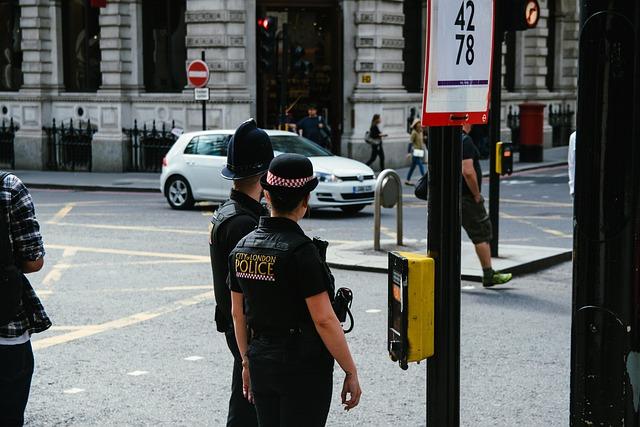
London Mayor Sadiq Khan has called for a concerted pushback against what he describes as a “disinformation blizzard” surrounding crime in the capital, warning that misleading narratives are distorting public debate and undermining trust in official data. His intervention comes amid heightened political tensions over law and order, with opponents seizing on high-profile violent incidents and social media content to paint a picture of a city spiralling out of control. Speaking to LBC, Khan argued that selective use of statistics, viral clips taken out of context and organised online campaigns are fuelling fear, drowning out evidence-based assessments of crime trends and policing performance.As Londoners head towards a pivotal mayoral election,the clash over how crime is reported,measured and portrayed has become a central battleground – raising questions about the role of media,politicians and tech platforms in shaping perceptions of safety on the streets.
Sadiq Khan calls for tougher action against social media disinformation on London crime
Warning of a “disinformation blizzard” swirling across major platforms, the Mayor is pressing ministers and tech giants to clamp down on misleading posts that distort the reality of offending in the capital. City Hall officials say false narratives about knife attacks,robbery hotspots and police response times are being shared thousands of times before fact-checkers can intervene,fuelling public anxiety and eroding trust in both officers and communities. Campaigners argue that a tighter framework is needed to force swift removal of content that deliberately misrepresents crime data or recycles old footage as current incidents, while still protecting legitimate criticism and freedom of expression.
Proposals now being discussed between City Hall, social media firms and regulators focus on a blend of transparency, verification and rapid-response tools, including:
- Real-time myth-busting hubs run by trusted bodies, prominently surfaced in search and feeds.
- Stronger labelling for outdated or context-free crime clips that are recirculated as “breaking news”.
- Partnerships with community groups to flag harmful rumours before they spread across neighbourhoods.
- Clearer penalties for repeat offenders who knowingly post fabricated crime claims.
| Platform step | Intended impact |
|---|---|
| Dedicated London crime fact page | Quickly counters viral falsehoods |
| Priority flag from Met Police accounts | Faster review of misleading posts |
| Data dashboards with verified stats | Gives users a reliable baseline |
How misleading crime narratives distort public perception and undermine trust in policing
Selective footage, sensational headlines and decontextualised statistics can turn isolated incidents into supposed “proof” of a city spiralling out of control. When false or exaggerated claims ricochet across social media feeds faster than official corrections, residents are left navigating a fog of half-truths. This distortion blurs the line between perception and reality, with dramatic narratives often eclipsing quieter data about long-term trends or triumphant interventions. As anxiety rises, so too does political pressure for quick fixes over evidence-based policy, creating a cycle in which emotional stories trump measured analysis. The gap between what people feel and what the figures show becomes fertile ground for polarisation, scapegoating and knee-jerk solutions.
For policing, the consequences are profound.Officers operating under a cloud of viral misinformation may find communities less willing to cooperate, report incidents or act as witnesses. Trust erodes when people believe crime is being covered up,or conversely,when they feel they are being policed in response to a media storm rather than genuine local need. Misleading narratives often ignore the complexity of crime patterns, stripping away context such as deprivation, youth services or mental health provision.Instead,they cast policing as either failing or oppressive,with little room for nuance. This dynamic is sharpened when political actors and commentators amplify dubious content, turning public safety into a proxy battlefield. In this climate, clear dialog and rigorous fact-checking are not optional extras but essential tools for maintaining democratic oversight and public confidence.
- Emotion-first stories crowd out data-led analysis.
- Social media virality accelerates unverified claims.
- Political amplification entrenches false narratives.
- Community-police relations suffer from growing suspicion.
| Claim Type | Typical Source | Impact on Trust |
|---|---|---|
| Out-of-context video | Social media | Sharp, immediate distrust |
| Inflated crime figures | Partisan commentary | Long-term fear and cynicism |
| Unverified “whistleblower” posts | Anonymous accounts | Rumour-driven suspicion |
The role of tech platforms regulators and local authorities in tackling online falsehoods
While political figures trade blows over crime statistics, the real power to slow the spread of misleading narratives about London’s safety lies with those who control the digital infrastructure behind them. Tech giants can no longer hide behind the fiction of being “neutral platforms” when their algorithms actively prioritise outrage and fear. They are being pressed to introduce clearer flagging tools, expand rapid-response teams to address obviously fabricated crime claims, and share anonymised data with researchers so independent experts can map how narratives spiral from fringe forums into mainstream feeds. In parallel, Ofcom and other UK regulators are expected to move from soft guidance to firmer enforcement, including transparent penalties for platforms that repeatedly allow demonstrably false crime stories to go viral without intervention.
City Hall and local councils, meanwhile, are discovering that rebuttals on official websites are not enough in the face of a fast-moving “disinformation blizzard.” They are experimenting with targeted digital campaigns,community briefings and closer cooperation with trusted neighbourhood voices to correct falsehoods before they harden into political talking points.Effective coordination demands clear roles:
- Platforms: adjust algorithms, label disputed claims, provide rapid takedown routes.
- Regulators: set standards, audit compliance, levy sanctions where needed.
- Local authorities: supply verified data,respond quickly,engage directly with affected communities.
| Actor | Main Tool | Risk if Inactive |
|---|---|---|
| Tech platforms | Algorithmic demotion of false posts | Viral panic and mistrust |
| Regulators | Statutory codes and fines | Rules seen as optional |
| Local authorities | Real-time fact briefings | Vacuum filled by rumours |
Recommendations for transparent crime data public education and responsible political communication
Building resilience against misleading narratives starts with making raw evidence both understandable and easy to challenge. City authorities, newsrooms and independent researchers should collaborate on clear, regularly updated dashboards that show key crime indicators, trend lines and margin-of-error notes, using visual cues that non-specialist audiences can grasp at a glance. Alongside this, every update ought to include methodology explainers that clarify how crimes are recorded, why figures are sometimes revised and what counts as a statistically significant change. To anchor public trust, these platforms can incorporate:
- Plain-language glossaries for complex policing and statistical terms.
- Side‑by‑side charts contrasting short-term spikes with long-term patterns.
- Downloadable open data so journalists and citizens can replicate analysis.
- Fact-check panels addressing viral claims about crime in the capital.
| Tool | Main Purpose | Public Benefit |
|---|---|---|
| Crime Trends Map | Show local shifts | Context for neighbourhood fears |
| Methodology Hub | Explain counting rules | Reduces data misinterpretation |
| Claim Checker | Test political statements | Exposes spin and disinformation |
Political figures, campaign teams and commentators carry a particular duty to avoid turning legitimate anxieties into clickable panic. Parties should adopt and publish crime-data conduct codes that bar selective cherry-picking of figures,mandate links to original datasets and require that every alarming statistic is paired with its past backdrop and demographic caveats. Media outlets can reinforce this by flagging when quotes misstate causality, for example, blaming one mayoral term for trends rooted in a decade of national policy. Responsible communication means prioritising:
- Independent pre-broadcast fact-checking for high-profile debates and interviews.
- On-air corrections when crime numbers are shown to be inaccurate or distorted.
- Balanced framing that recognises both safety concerns and areas of improvement.
- Transparent sourcing whenever crime is used to justify major policy shifts.
To Conclude
As the debate over crime and perception intensifies, Khan’s intervention underscores a broader struggle over who defines reality in Britain’s capital: elected officials, the media, or a fast-moving online ecosystem frequently enough indifferent to nuance.
With a general election on the horizon and London’s safety record set to remain a political battleground, the clash between data and narrative is unlikely to recede. Whether City Hall’s pushback can cut through what the mayor calls a “disinformation blizzard” may help determine not only how Londoners feel about their city, but also how they vote – and whom they ultimately trust.