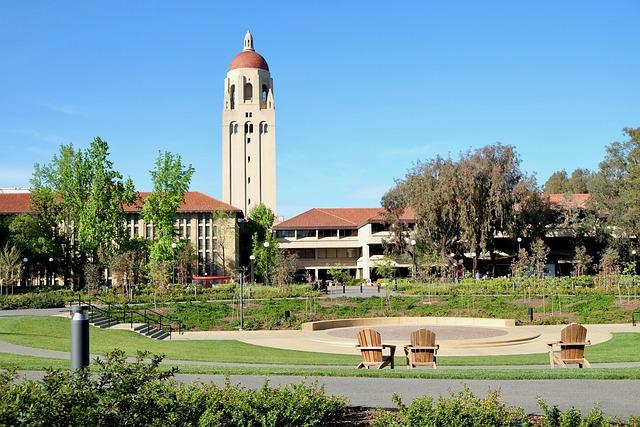
The University of London is set to establish its first offshore campus in Hyderabad, marking a significant milestone in the city’s emergence as a global education hub. In a move that underscores India’s growing importance in the international higher education landscape, the prestigious institution will offer a range of undergraduate and postgraduate programmes from its new base in the Telangana capital. The initiative, reported by The Siasat Daily, is expected to deepen academic collaboration between the UK and India, expand access to world-class degrees for Indian students, and further cement Hyderabad’s reputation as a center for knowledge, technology and innovation.
University of London chooses Hyderabad for its inaugural offshore campus expansion
In a move that underscores India’s rising profile as a global education hub, the University of London has zeroed in on Hyderabad as the launchpad for its international campus strategy. The city’s growing reputation for tech innovation, research culture and cosmopolitan student population reportedly tipped the scales in its favour over other Asian contenders. Key factors that influenced the choice include policy support for foreign universities, access to a large English-speaking talent pool and Hyderabad’s well-established ecosystem of higher education institutions. The campus is expected to host a mix of undergraduate and postgraduate programmes, with a strong push towards interdisciplinary learning and industry-linked curricula.
- Focus Areas: law, business, data science, public policy
- Target Students: Indian and South Asian students seeking UK-standard degrees at lower cost
- Strategic Partners: local industry bodies, research parks, and incubators
| Planned Feature | Details |
|---|---|
| Campus Location | Knowledge corridor near IT and pharma hubs |
| Initial Intake | Limited seats to maintain selective admissions |
| Teaching Model | UK-designed syllabi with local academic inputs |
| Industry Linkages | Internships with leading tech and research firms |
Education observers say the decision could serve as a template for other global universities evaluating India as a base for transnational education. Hyderabad officials are positioning the project as a catalyst that will deepen the city’s international profile and attract more knowledge-based investment. For students, the promise lies in obtaining a globally recognised degree without the steep costs of relocation, while still accessing London-level academic standards, visiting faculty and collaborative research opportunities. The development also aligns with India’s New Education Policy, which aims to actively encourage the presence of reputed foreign institutions through clearer regulatory pathways and academic autonomy.
Academic collaboration and research opportunities set to reshape higher education landscape
The new Hyderabad campus is poised to become a strategic hub where Indian and UK scholars can jointly pursue cutting-edge inquiries in fields ranging from AI and data science to public policy, law, and climate resilience. Beyond traditional exchange programmes, the partnership is expected to drive co-authored publications, shared laboratories, and dual-supervised PhD projects, enabling students to work with international faculty without leaving the country. This shift from simple mobility to deep,project-based cooperation could substantially accelerate the pace at which globally benchmarked research is produced and applied within India’s evolving knowledge economy.
University leaders indicate that the institution will actively seek consortia-based projects, bringing together local universities, start-ups, and industry partners to tackle region-specific challenges such as urban governance, health tech, and sustainable infrastructure. To operationalise this vision, the campus is expected to host joint research centres and thematic networks, supported by targeted funding calls and innovation grants.
- Joint research labs focused on technology, public health, and climate action
- Dual-degree and co-tutelle PhD pathways with shared supervision
- Industry-linked projects offering live case studies and funded internships
- Policy think-tanks to inform governments and multilateral agencies
| Focus Area | Key Outcome |
|---|---|
| Digital Innovation | Co-developed AI tools for public services |
| Public Health | Joint studies on urban healthcare models |
| Climate & Sustainability | Regional resilience and green policy briefs |
| Legal & Governance | Comparative frameworks for digital regulation |
Economic impact projected through jobs, innovation hubs and global talent inflow
The new campus is expected to act as a powerful economic multiplier for Hyderabad, generating a surge in direct and indirect employment across education, research, technology and support services. From faculty and administrative roles to facility management, hospitality and allied services, the ripple effect is highly likely to anchor thousands of new jobs over the next decade. Local businesses-from co-working spaces to student housing and transport providers-are also poised to benefit as the university ecosystem deepens its footprint in the city and surrounding districts.
Hyderabad’s ambition to position itself as a global learning and innovation hub is further strengthened by the university’s strong international network and research collaborations. The campus is expected to attract highly skilled professionals and students from across India and abroad, accelerating knowledge transfer, startup formation and industry-academia partnerships.
- High-value jobs in teaching, research, and edtech support
- Innovation hubs around AI, fintech, health-tech and climate tech
- Global talent inflow through visiting scholars, international students and joint degree programmes
- Stronger startup pipeline via incubators and accelerators linked to the campus
| Key Driver | Projected Impact |
|---|---|
| Academic & support staff | Steady creation of skilled and semi-skilled jobs |
| Research centres | New patents, industry projects and spin-off ventures |
| International enrolments | Higher foreign exchange inflows and cultural capital |
| Startup collaborations | Access to mentors, labs and early-stage funding |
Policy priorities and infrastructure upgrades recommended to maximise long term benefits
To translate this landmark campus into sustained gains for Hyderabad’s knowledge economy, policymakers must focus on a coordinated mix of higher education reform, urban planning and digital connectivity. Key priorities include streamlined visa and work-permit regimes for international faculty and students, predictable research funding frameworks, and incentives that reward industry-academia collaboration over isolated academic output. Urban authorities, meanwhile, will need to synchronise estate planning with enrolment growth, ensuring that student housing, public transport and social infrastructure keep pace with institutional expansion.This alignment can prevent the emergence of educational enclaves and instead embed the campus within the wider civic and economic fabric of the city.
- Academic policy: Fast-track approvals for joint degrees, micro-credentials and online-offline hybrid programmes.
- Talent pipelines: Scholarships and tax incentives to retain high-performing graduates in local industry.
- Innovation ecosystem: Dedicated R&D zones, start-up incubators and IP-sharing frameworks with partner firms.
- Urban mobility: Upgraded Metro links, safe pedestrian corridors and last-mile connectivity around the campus.
- Digital backbone: Campus-wide 5G,secure data centres and interoperable edtech platforms.
| Focus Area | Key Upgrade | Long-Term Payoff |
|---|---|---|
| Research & Innovation | Joint labs with local industry | High-value patents, deep-tech jobs |
| Transport | Integrated campus transit hub | Reduced congestion, better access |
| Digital | Secure high-speed networks | Global-class online learning |
| Community | Mixed-use student districts | Vibrant urban culture, safety |
In Conclusion
As plans move from announcement to implementation, the proposed offshore campus in Hyderabad will be closely watched by policymakers, academics, and students alike. For the University of London, the venture represents a strategic expansion into one of the world’s fastest-growing education markets; for India, it signals a new phase in its ambition to become a global knowledge hub.
If successfully executed, the Hyderabad campus could serve as a blueprint for future international collaborations, reshaping how foreign institutions engage with Indian students and how Indian cities position themselves on the global education map. The coming months-marked by regulatory clearances, formal agreements, and curriculum planning-will determine whether this initiative becomes a symbolic milestone or a transformative shift in cross-border higher education.