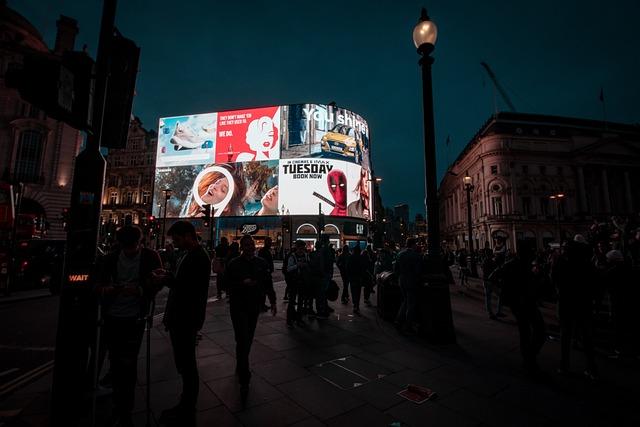
London likes to think of itself as a city that belongs to everyone: a patchwork of neighbourhoods, cultures and communities layered over two millennia.But beneath the bustle of markets and the glow of streetlights lies a very different map – one drawn not in borough boundaries,but in balance sheets. From Mayfair mansions held through offshore shell companies to docklands skyscrapers owned by distant holding firms,vast swathes of the capital are controlled by a tiny global elite whose names rarely appear on the deeds.
This examination peels back that secrecy. Using land registry documents, company filings and leaked data, it traces the hidden chains of ownership that link some of London’s most familiar addresses to billionaires in Moscow, Doha, Hong Kong and beyond. It asks who really owns the streets we walk on, the homes we can no longer afford, and the skyline that now doubles as an international asset portfolio. And it explores what that concentration of wealth and power means for a city grappling with a housing crisis, hollowed-out communities and a growing sense that London is being sold off, piece by lucrative piece.
Mapping the hidden empires how billionaire wealth shapes London’s streets skyline and daily life
From Mayfair’s hushed cul‑de‑sacs to the glass canyons of Nine Elms, the city is increasingly choreographed by a small circle of ultra‑rich power brokers whose names rarely appear on doorbells. Their influence is etched into the capital through opaque offshore companies, luxury developments marketed overseas, and trophy assets that sit dark for most of the year. Behind familiar shopfronts and heritage façades, layers of shell firms, family offices and private equity vehicles quietly dictate what gets built, who can afford to live there, and even which businesses survive on the ground floor. The result is a capital where the map of ownership no longer matches the map of everyday use, and where public life often unfolds in spaces that are, in practise, privately controlled.
On the surface, these fortunes manifest as shimmering penthouses and landmark towers; beneath that sheen, they shape the price of a pint, the route of your commute and the chances of your local café outlasting the next rent review. Billionaire landlords are redefining entire neighbourhoods as branded enclaves, while land‑banking and long‑term speculation push homes and high streets further out of reach for ordinary Londoners. Their imprint can be traced in:
- Soaring commercial rents that squeeze out independent traders.
- “Ghost” luxury flats left empty as safe‑deposit boxes in the sky.
- Privately policed plazas that look public but restrict protest and assembly.
- Infrastructure‑driven value boosts where new stations or river links seem to appear right on cue beside flagship projects.
| Area | Typical Billionaire Footprint | Everyday Impact |
|---|---|---|
| Mayfair | Discrete townhouses, art collections | Rents price out long‑standing boutiques |
| Kensington | Empty “investment” apartments | Dark windows, hollowed‑out community |
| Canary Wharf | Corporate towers, private estates | Heavily managed, camera‑dense streets |
| Nine Elms | Branded riverside super‑blocks | Luxury enclaves adrift from local needs |
Behind the shell companies lifting the veil on offshore structures trusts and secrecy jurisdictions
At the center of London’s property puzzle is a maze of entities that exist largely on paper: private foundations in Liechtenstein, discretionary trusts in Jersey, and brass‑plate companies in the British Virgin Islands. These structures serve a simple purpose – to put legal distance between a billionaire and the townhouse, penthouse or office block they control.In many cases,the beneficial owner is hidden several layers deep,buried beneath nominee directors and “orphan” trusts. Investigations into prime postcodes such as Belgravia, Knightsbridge and Mayfair repeatedly lead to the same small cluster of secrecy hubs, each offering bespoke packages that promise confidentiality, tax optimisation and, above all, invisibility.
Documents obtained by reporters reveal how these arrangements are carefully assembled by law firms and wealth managers who specialise in opacity. A single mansion can be broken into a network of entities,each holding a sliver of ownership,making it tough for regulators – or the public – to follow the money.Common features include:
- Layered ownership: multiple offshore companies stacked across several jurisdictions.
- Discretionary trusts: assets held “for the benefit of” unnamed family members or associates.
- Nominee services: front directors and shareholders who appear in public filings rather of the real owner.
- Mailbox headquarters: dozens of London properties traced back to a handful of anonymous office suites.
| Jurisdiction | Typical Role | Key Attraction |
|---|---|---|
| British Virgin Islands | Shell holding companies | Minimal disclosure |
| Jersey | Property trusts | Flexible trust law |
| Luxembourg | Investment vehicles | Favourable tax rulings |
| Dubai IFC | Family offices | Secrecy and speed |
Who really benefits examining the impact on housing prices local businesses and community cohesion
With each record-breaking penthouse sale and discreet off-market deal, the ripple effects spread far beyond the estate agents’ windows. In boroughs from Kensington to Hackney, everyday Londoners face rising rents, shrinking stock and a skewed market where luxury developments lie half-lit while key workers commute in from ever-further zones. Local councils, desperate for revenue, often welcome deep-pocketed buyers, yet the promised trickle-down of investment rarely matches the glossy brochures. Rather, we see inflated land values, speculative “buy-to-leave” apartments and a widening gap between those who can leverage property as a global asset and those who simply need a place to live.
On the ground, the consequences are stark for shopfronts and social ties alike. Long-standing cafés, corner shops and family-run restaurants are priced out by premium chains tailored to the tastes – or assumptions – of ultra-wealthy residents who may only visit a few weeks a year. Streets that once buzzed with familiar faces risk becoming polished but hollow corridors of wealth. The winners in this quiet reshaping are clear:
- International investors converting central London homes into safety-deposit boxes in the sky.
- Developers and luxury brands capitalising on prestige postcodes and global demand.
- Advisers and intermediaries who structure, manage and market these opaque property portfolios.
| Group | Short-Term Gain | Long-Term Cost |
|---|---|---|
| Global Billionaires | Asset growth, privacy | Minimal local engagement |
| Developers | High margins, rapid sales | Reliance on speculative demand |
| Local Residents | Occasional jobs, new amenities | Displacement, weaker community ties |
| Small Businesses | Higher-spend customers (for some) | Rising rents, loss of diversity |
What London must do now policy fixes transparency tools and citizen actions to reclaim the city
City Hall and Westminster can no longer pretend that secrecy is a harmless quirk of global finance.They must hard‑wire sunlight into the system: expand the public register of beneficial ownership to cover all high‑value property, force shell companies to disclose their ultimate controllers, and give enforcement agencies the budget and teeth to prosecute false declarations. Planning rules could be rewritten so that luxury developments trigger automatic transparency checks, while councils get new powers to levy escalating charges on homes kept empty for speculative gain. Alongside this, London needs open‑data dashboards, updated in real time, showing who owns what, where, and how it’s taxed – turning today’s patchwork of filings into a searchable civic map, not a maze for specialists.
- Mandatory ownership registers for all properties above a set value
- Open APIs and city dashboards so journalists and residents can interrogate the data
- Stronger anti‑money‑laundering teams embedded in planning and land registry offices
- Civic tech tools that let neighbours flag suspicious vacancies and rapid flips
- Citizen coalitions pressuring councils, developers and MPs for cleaner money
| Tool | What Londoners Can Do |
|---|---|
| Ownership map | Check who owns local blocks and share findings with media |
| Vacancy tracker | Log long‑dark homes and press councils to act |
| Lobby platforms | Coordinate emails and surgeries with MPs on reform bills |
Residents are not spectators in this story. They can join tenants’ unions, push pension funds to divest from opaque property vehicles, and back candidates who pledge to end the city’s role as a secrecy haven. Local campaigns are already winning: community groups are crowd‑sourcing data on offshore landlords, using freedom‑of‑information requests to unpick cosy deals, and demanding that any public subsidy for development is tied to full transparency, fair tax and lived‑in homes. Reclaiming London from anonymous billionaires will not come from one law or one tool, but from thousands of small, relentless acts of public scrutiny.
Concluding Remarks
the story of who really owns London is not just about a handful of billionaires and shell companies; it is about what kind of city we want this to be. Behind every anonymous holding company lies a street where rents are rising, a family priced out, or a long‑standing community under pressure.Shining a light on these ownership networks does not,on its own,rebalance the scales. But it does strip away the comforting fiction that the forces reshaping the capital are abstract or unavoidable. They are the product of choices: political choices that set the tax rules and disclosure thresholds, planning choices that prioritise certain types of development over others, and financial choices that treat homes as assets first and shelter second.
Those choices can be made differently. Greater transparency over property registers, tighter regulation of offshore structures, and a planning system that gives real weight to social need rather than speculative value are all within reach, if there is the will to pursue them.
For now, London remains a city whose skyline and streetscapes are increasingly dictated in private boardrooms and discreet family offices, far from the boroughs whose futures they shape. Provided that ownership can be obscured and accountability avoided, that imbalance will persist.
What happens next depends on whether Londoners, and the politicians who claim to represent them, are prepared to confront the power behind the postcodes-and to insist that a global city should not be run as a private estate.