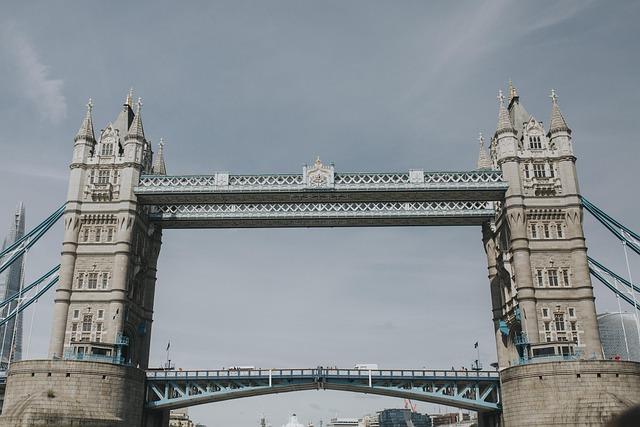
London might potentially be Britain’s capital, but whether it is indeed still an English city is increasingly up for debate. Once the political and cultural heart of the nation, it now stands apart: younger, more diverse, more global – and, some argue, more detached from the values and voting habits of the rest of the country. Rising resentment toward “London rule” has become a persistent theme in national politics, fueling calls for levelling up, devolution, and even English self-assertion. As regional identities harden and trust in Westminster erodes,many outside the M25 no longer see the capital as theirs at all. This raises an uncomfortable question: has England, in effect, disowned London – and what does that mean for the future of the Union?
Historical roots of Londons English identity and how they unravelled
For most of its history, the capital functioned as a magnified version of the nation around it: a city of guilds, parishes and pubs where power, trade and Protestant piety fused into a recognisably English civic culture. Its river carried coal and wool rather than concepts like “global capital flows”, and the institutions along the Thames – from the Inns of Court to the livery companies – were animated by a vocabulary of duty, locality and class rather than diversity metrics or lifestyle brands. Even empire, frequently enough invoked as proof of London’s cosmopolitan destiny, once sat atop a moral story that was told in decidedly English terms: monarchy, common law, the King James Bible, the village green exported at imperial scale.The city’s self-understanding was provincial in origin, even when it was ruling half the globe.
What frayed this inheritance was not a single rupture but the steady erosion of the social and economic ligaments that tied the capital to the country beyond the M25. Deindustrialisation hollowed out shared working-class experiences; the Big Bang of the 1980s rewired the Square Mile from national bank to global command center; and successive waves of migration, while enriching London’s culture, arrived just as traditional institutions – church, union, party, regiment – were waning, leaving thinner channels for absorption into an older English story. The result is a city increasingly oriented towards:
- Global finance rather than regional manufacturing
- Transnational elites rather than county networks
- Fluid identities rather than inherited allegiances
- Rental churn rather than rooted neighbourhoods
| Old London | New London |
|---|---|
| Guilds and parishes | Start-ups and co-working hubs |
| Local pubs and unions | Brand chains and networking events |
| English civic rituals | Global cultural festivals |
Demographic transformation and the rise of a city apart from its nation
Where once the capital mirrored the country’s social pyramid, it has become a separate demographic experiment: younger, poorer on paper yet plugged into global wealth, and strikingly more diverse. The post-war pattern of provincial migration to the metropolis has given way to a two-way churn: graduates and global workers pour in, while families and long-term residents filter out to the commuter belt or beyond. The result is a metropolis whose electoral map, cultural tastes and everyday assumptions increasingly diverge from those of the shires.In many boroughs, the idea of an “average English household” now feels almost theoretical, replaced by overlapping communities whose shared reference points are as likely to be Lagos, Warsaw or Lahore as Leeds or Worcester.
- Age: A city of renters and under‑40s in a country that is rapidly ageing.
- Origin: Nearly every street an atlas, in a nation where many towns remain overwhelmingly local.
- Values: Socially liberal majorities contrasted with conservative-leaning small cities and towns.
- Economy: High incomes for the few, precarious service work for the many, both dependent on global capital.
| Feature | London | Rest of England |
|---|---|---|
| Median age | Low, early 30s | Higher, 40s+ |
| Birthplace mix | Global majority | Predominantly local |
| Political tilt | Firmly progressive | Mixed to conservative |
| Housing pattern | Transient renting | Long-term ownership |
Political and economic centralisation driving resentment in the English shires
The sense that everything of outcome must pass through the capital has hardened into a quiet fury beyond the M25.Local councils are stripped of powers yet blamed when services fail; housing, transport and planning policy are dictated by ministerial whim, not local need. What was once irritation at “Whitehall knows best” has become a feeling that provincial England is being administered rather than represented. In village halls, market towns and former industrial cities, people watch as decisions about their hospitals, bus routes and high streets are taken by officials who commute on the Tube and rarely travel further than Zone 6. The charge is simple: too much power, money and attention flow one way – in to London – and never return.
This imbalance is visible not just in emotion but in hard numbers and everyday trade-offs:
- Infrastructure projects fast-tracked for the capital while regional rail and roads decay.
- Arts and media funding clustering in a few postcodes, despite national licence fees and taxes.
- Corporate headquarters orbiting the City, draining skilled jobs from smaller cities.
- Policy pilots tested in London and rolled out nationwide, nonetheless of local conditions.
| Region | Share of UK Public R&D | Share of UK Population |
|---|---|---|
| London & South East | ~40% | ~27% |
| Rest of England | ~45% | ~63% |
| Devolved Nations | ~15% | ~10% |
Such disparities feed a belief that the capital is not merely privileged but structurally protected, while the shires are left to compete over scraps. The result is a brittle politics in which resentment is no longer just cultural but fiscal and constitutional, with voters questioning not only who governs them, but from where – and in whose interests.
Reconnecting London with England policy fixes to bridge the capital country divide
Repairing the relationship starts with refusing the lazy assumption that the only direction of travel is inward migration to the capital and outward resentment from everywhere else. That means shifting real power – not just funding scraps – beyond Zone 2 while hard-wiring England back into London’s institutions. A rebalanced settlement would see Whitehall departments relocated, civil service fast-streams opened up through regional campuses, and transport spending criteria rewritten so that per-head investment outside the M25 is no longer a rounding error. At the same time, London’s cultural giants – from museums to media – could be required, as a condition of public support, to maintain permanent, co-created programmes with towns and small cities that rarely make the news cycle.
- Move decision-makers out of SW1, not just back-office staff.
- Treat northern and coastal routes as national arteries,not provincial branch lines.
- Link arts funding to partnerships with overlooked English places.
- Reward businesses that base HQ functions in cheaper, non-London locations.
| Policy lever | London’s role | Benefit to England |
|---|---|---|
| Shared civic networks | City Hall twinning with county councils | Direct voice in capital debates |
| Fiscal devolution | Capital backs wider tax autonomy | Local control over growth plans |
| Media dispersion | Newsrooms split between regions | National stories told beyond London |
Underlying all of this is the need to reframe London as a shared asset, not a rival state. That requires emotional as much as economic repair: getting more London schoolchildren out to former industrial towns and rural England, and more English teenagers into the capital’s galleries, courts and newsrooms on serious, long-term exchanges rather than token day trips. By designing policies that make careers,culture and political influence flow in both directions,the capital stops feeling like a place that merely extracts value from the country,and starts to resemble what it should always have been: the front door through which England meets the world.
In Retrospect
the question “Is London an English city?” is less about geography than belonging. The capital still sits, unmovable, on the Thames; it still houses Parliament, the monarchy and the machinery of the British state. But the emotional, cultural and political ties that once bound it to the rest of England have frayed.
Whether you see London as a global asset or an alien enclave, the current estrangement carries a cost. A country whose capital is viewed with suspicion – or indifference – by much of its own population cannot indefinitely pretend that all is well. Either London finds new ways to speak to the nation beyond the M25, or England will continue to look at its capital and see not a mirror, but a foreign city on its own soil.If London is to be English again in more than name, it will not be enough for the provinces to reconcile themselves to the metropolis. London,too,will have to decide whether it wants to belong to England – and if so,on what terms.