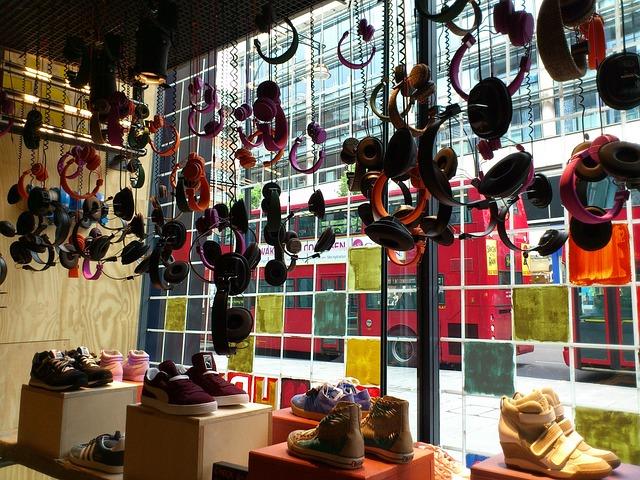
Once the undisputed heart of London‘s retail scene, Oxford Street now stands at a crossroads. From empty storefronts and candy shops to stalled regeneration plans and mounting public frustration,the capital’s most famous shopping boulevard has become a battleground for competing visions of the city’s future. At stake is far more than where people buy their clothes. It is a test of who holds power in London’s public spaces, how political decisions shape everyday life, and whether one of the world’s best-known streets can be remade around the needs of pedestrians rather than the demands of traffic, developers and global brands. As arguments rage over car bans, business rates and “Americanisation”, the future of Oxford Street reveals a wider struggle over the identity of the modern city.
Shifting power behind the pavements How political decisions shape Oxford Streets destiny
Few London streets are as dependent on the mood swings of politics as this one. Behind every bus reroute,pop-up parklet and pedestrianisation trial lies a patchwork of authorities pulling in subtly different directions: Westminster councillors seeking re-election,mayoral teams chasing climate targets,and national ministers wary of being blamed for “killing the high street”. The result is a public realm where shopfronts change faster than the regulatory framework, and where short-term pilot schemes often stand in for the long-term settlement retailers and residents crave. In smoky committee rooms and late-night strategy calls, this clash of mandates decides who gets priority on each square meter of tarmac: buses, bikes, delivery vans or the millions of people on foot.
These power struggles filter down into tangible choices about the street’s future, from the width of a crossing to the fate of the last surviving department store. Compromise is hard-wired into the process, and the winners and losers are rarely accidental:
- City Hall pushes for cleaner air, fewer cars and a flagship walking corridor.
- Westminster Council balances local traders’ fears with residents’ complaints about congestion.
- Whitehall guards transport budgets and national retail policy.
- Business lobbies demand certainty on loading, signage and tourist access.
| Power Broker | Main Priority | Street-Level Impact |
|---|---|---|
| Mayor of London | Net-zero and mode shift | Fewer cars,more space for people |
| Westminster Council | Local economy & amenity | Compromises on traffic and trading hours |
| Retail coalitions | Footfall & spending | Seasonal events,longer opening times |
| Transport planners | Network efficiency | Bus routes,cycle links,loading bays |
From buses to benches Rethinking transport and public space for pedestrians
On London’s most famous shopping artery,the contest for curb space has shifted from timetables to tempo: how quickly people can move,pause and gather. Buses once dictated the rhythm, funnelling commuters through narrow pavements and exhaust-heavy air; now, planners are imagining a slower choreography where walkers, wheelchairs and prams set the pace. That shift demands more than simply removing vehicles – it calls for a redesign of the street’s social infrastructure: seating clusters that invite conversation, sheltered niches for phone calls and meetings, and micro‑landscapes that cool and calm a notoriously hectic strip. The stakes are high: each square metre can either serve as a fast corridor of consumption or as a civic room in which people actually want to linger.
- Street furniture as social infrastructure, not clutter
- Slower crossings and wider corners for safe turning and lingering
- Green buffers between walkers, cyclists and remaining traffic
- Quiet pockets for rest, reflection and informal work
| Feature | Old Oxford Street | Emerging Vision |
|---|---|---|
| Primary user | Bus passengers | Pedestrians and residents |
| Public seating | Scattered and limited | Frequent, shaded clusters |
| Noise & air | Traffic‑dominated | Quieter, greener buffers |
| Street role | Transport corridor | Everyday city square |
This subtle rebalancing of priorities is reshaping local power dynamics. Retailers want footfall, residents demand liveability, and transport officials guard bus reliability, yet each group now has to negotiate around a common metric: the quality of time spent at street level.Benches become miniature stages for political debates about who belongs; planting schemes reflect decisions over whose comfort is valued; even the placement of a bin or bollard hints at whether safety or speed has won the day. As Oxford Street edges away from its identity as a rolling bus lane towards something more like an open‑air concourse, the politics of movement are being rewritten underfoot – one resting place at a time.
Retail revival or residential retreat Strategic choices for Oxford Streets economic future
Behind every new café awning and “To Let” sign lies a stark choice: double down on retail, or embrace a quieter, more residential future. City planners, landlords and campaigners are weighing whether flagship fashion and tech brands can still anchor the street, or whether a mix of homes, offices and cultural spaces would create a more resilient ecosystem. The emerging consensus is that a single-use shopping district is no longer viable. Instead, stakeholders talk about a layered high street where people might live, work and linger, not simply spend. This shift is already visible in planning applications that swap megastores for mixed-use blocks and rooftop terraces.
Competing visions come with competing winners. A retail-led revival promises footfall for chains and independents, but risks higher rents and further homogenisation. A pivot toward residential and community use could soften the night-time economy and stabilise local life, though it may dilute the street’s global brand. The trade-offs are clear:
- Retail intensity: More flagship stores, higher tourist spend, greater commercial risk.
- Residential mix: New homes, steadier local demand, pressure on affordability.
- Cultural anchors: Galleries, venues and learning hubs adding purpose beyond shopping.
- Public realm first: Wider pavements, greenery and safer crossings to keep people on foot.
| Option | Main Benefit | Key Risk |
|---|---|---|
| Retail-focused | Boosts visitor spending | Vulnerable to online shocks |
| Mixed-use urban quarter | Spreads activity throughout the day | Complex planning and ownership |
| Residential-led | Creates a stable local community | May weaken global draw |
What must happen next Concrete steps for councils businesses and commuters to share the street
Turning a slogan into a workable street demands decisions that bite. Councils must move from consultations to binding timelines, publishing exactly when bus diversions, loading bay relocations and new crossings will go live, then tracking progress in public dashboards. Retailers and office landlords, simultaneously occurring, can be required through planning conditions and Business Improvement District agreements to co-fund wider pavements, extra benches and better lighting, tying rent incentives to measurable gains in footfall and dwell time. For their part, transport authorities will need to redraw bus routes, cap private deliveries during peak hours and enforce low-speed, camera-controlled zones so that walking is not simply encouraged, but clearly prioritised.
- Councils: lock in street design codes, live data dashboards, and strict loading windows.
- Businesses: consolidate deliveries, sponsor street stewards, open up lobby space as public “waiting rooms”.
- Commuters: shift to off-peak journeys where possible, adopt cargo-bike and pick-up lockers, respect new priority crossings.
| Stakeholder | Today | Next 12 Months |
|---|---|---|
| Councils | Fragmented trials | Street-wide, enforced plan |
| Businesses | Van-by-van deliveries | Shared hubs & timed slots |
| Commuters | Default to buses and taxis | Walk-first, micro-mobility mix |
These shifts will only stick if they are stitched into everyday behavior. That means apps showing live crowding and alternative routes, workplace policies that reward low-impact commuting, and clear on-street messaging that explains not just what is changing but who benefits. With fines for illegal parking, discounts for shared deliveries, and real-time feedback from pedestrians built into consultation tools, the balance of power on the kerb can be renegotiated in plain sight. The street then becomes a negotiated commons rather than a traffic funnel: a place where traders move goods efficiently, commuters move calmly, and the act of simply walking down Oxford Street no longer feels like a contest for survival.
Wrapping Up
Whether Oxford Street ultimately becomes a cleaner,calmer civic spine or remains a congested commercial thoroughfare will depend on decisions being made now in committee rooms,council chambers and corporate board meetings. What happens here will be watched far beyond London: a test case for who really controls the future of city centres – politicians or planners, retailers or residents, drivers or pedestrians.
For all the competing interests, one thing is clear. As pressures on high streets mount and the climate crisis bears down, doing nothing is no longer a neutral choice. Oxford Street’s next chapter will not just reshape a famous shopping district; it will help define what 21st‑century urban life looks like, and who it is ultimately for.