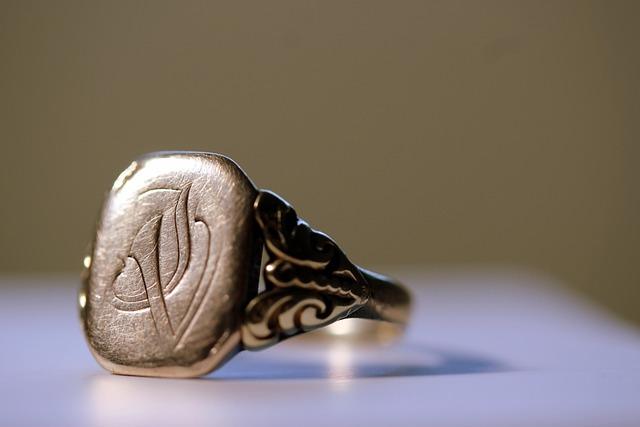
John Wayne’s unmistakable persona helped define an era of Hollywood-now, a rare piece of his personal history is heading under the hammer in London. The legendary actor’s own signet ring, a modest yet powerful emblem of his off-screen identity, is set to go up for auction, drawing intense interest from collectors and film enthusiasts alike. As memorabilia prices for Golden Age icons continue to climb, this intimate artifact offers a tangible link to the man behind the myth, raising questions about value, legacy, and the enduring pull of cinema’s most enduring cowboy.
Provenance and symbolism of John Wayne’s iconic signet ring
Forged in heavy gold and engraved with a bold family crest, the ring is more than a collector’s trinket; it is a personal emblem that followed Wayne from backlot dressing rooms to film premieres and private family gatherings. Archivists point to production stills, candid set photographs and studio costume logs to trace its history, noting that the ring appears consistently from the late 1950s through the final decade of his career. Its journey from a closely guarded possession to a headline-making lot in a London saleroom speaks to the way Hollywood relics now function as modern heirlooms, carrying with them layers of memory, myth and market value that extend far beyond the original owner.
For fans, the ring captures the frontier virtues Wayne projected on screen and cultivated off camera. Its design elements evoke themes that defined his public persona:
- Heritage: A stylised crest suggests lineage and continuity, echoing the family sagas that ran through many of his Westerns.
- Authority: The solid, squared face of the ring mirrors the no-nonsense leaders he portrayed, from cavalry officers to small-town sheriffs.
- Resilience: Visible wear on the band hints at decades of daily use, reinforcing the image of a working actor rather than a distant movie idol.
| Detail | Symbolic echo |
|---|---|
| Gold setting | Old Hollywood permanence |
| Crest engraving | Family, loyalty, duty |
| Visible patina | Life lived in the spotlight |
How the London auction market is valuing Hollywood memorabilia
On the rostrum of London’s salerooms, cinema history is increasingly being priced like fine art, with marquee names commanding premiums once reserved for Old Masters. Collectors are no longer just buying props; they are chasing stories, provenance and a direct line to the mythology of the silver screen. In this climate, Wayne’s gold signet, worn in countless publicity shots and off-duty photographs, is being weighed against a booming market that has recently seen capes, lightsabers and Oscar-worn gowns smash estimates. Auction specialists say demand is being driven by a new wave of global bidders who value these pieces as alternative assets-tangible, display-ready and culturally resonant.
Behind the gavel,a new pricing language has emerged,built around a handful of clear markers:
- Provenance: Documented ownership,screen-matched images and studio paperwork can double or triple estimates.
- Iconicity: Items tied to instantly recognisable roles, posters or quotes draw the fiercest bidding wars.
- Condition: Gentle wear that reflects real use is desirable, but heavy damage can clip the final price.
- Scarcity: One-off personal pieces, such as bespoke jewelry, regularly outperform mass-produced props.
| Item | Star | Estimate (GBP) | Market Signal |
|---|---|---|---|
| Cowboy hat | John Wayne | 150,000-200,000 | Western icons trending up |
| Lightsaber prop | Mark Hamill | 120,000-180,000 | Sci-fi premiums holding |
| Screen-worn tuxedo | Sean Connery | 80,000-120,000 | Spy-era nostalgia steady |
What collectors should examine before bidding on personal celebrity items
Prospective buyers eyeing the Duke’s ring should look beyond the glitter of celebrity and interrogate its journey. Provenance is paramount: request documentation that links the piece to John Wayne directly, such as studio correspondence, estate inventories, or photographs of him wearing the ring. Examine maker’s marks, metal purity stamps, and any engraving that might corroborate its history, and consider commissioning an autonomous appraisal rather than relying solely on the auction house’s estimate. A measured approach helps distinguish a genuine personal relic from a studio prop or later reproduction.
- Provenance papers – estate records, letters, studio archives
- Photographic evidence – stills, publicity shots, candid images
- Condition report – wear, repairs, alterations over time
- Independent valuation – third-party gemologist or historian
- Resale considerations – long-term collectability and liquidity
| Factor | Why It Matters |
|---|---|
| Authenticity | Separates a true personal item from generic memorabilia. |
| Rarity | Fewer comparable items can boost long-term value. |
| Cultural impact | Links the piece to iconic roles or turning points in a career. |
| Market timing | Affects how aggressively others are likely to bid. |
Equally crucial is weighing emotional pull against financial reality.Many collectors are drawn in by the romance of Hollywood myth-making, but should still assess the ring as an asset: how its value compares to similar celebrity pieces sold in recent years, whether its price is being driven by momentary hype, and if insurance costs and storage requirements make sense. By dissecting the intersection of sentimental allure and market logic, bidders can decide whether raising a paddle reflects a sound investment or a fleeting rush of star-struck impulse.
Expert tips for preserving and insuring high value film artefacts
Specialist dealers in Hollywood memorabilia say the first rule is simple: treat cinematic relics as you would fine jewellery. That means stable temperature and humidity, no direct sunlight, and minimal handling with bare hands. Archival-grade boxes,acid‑free tissue and microfibre cloths are no longer the preserve of museums; serious collectors use them as standard,along with discreet home safes or bank deposit boxes. Many also log a digital “passport” for each piece, storing high‑resolution photographs, provenance documents and expert valuations in the cloud to protect against loss or dispute.
- Keep documentation together – bills of sale, studio letters and certificates of authenticity add enormous value.
- Arrange professional cleaning – jewellery specialists can polish and inspect settings without erasing age and patina.
- Update valuations regularly – prices for marquee names such as Wayne, Monroe or Hepburn can rise sharply after major anniversaries or biopics.
- Use tailored insurance – standard home cover rarely reflects auction‑room realities.
| Item Type | Key Risk | Insurance Tip |
|---|---|---|
| Jewellery & rings | Theft, loss in transit | Schedule individually on a fine‑art policy |
| Costumes & hats | Light and fabric damage | Insist on climate‑controlled storage clauses |
| Props & scripts | Fire, water, misplacement | Require detailed inventories and photo records |
Specialist brokers now offer cover that mirrors museum practice, with policies written on an agreed value basis rather than book price, and add‑ons for international loans to exhibitions or temporary display in galleries. Underwriters are increasingly sensitive to the “story premium” surrounding star‑owned pieces, and may insist on third‑party authentication before accepting a valuation. For collectors chasing the next headline‑making item,the message is clear: invest as much care in paperwork,preservation and insurance as in the dazzling provenance that first caught your eye in the auction catalog.
The Conclusion
As John Wayne’s personal signet ring goes under the hammer in London, it offers more than a rare chance for collectors to acquire a piece of Hollywood history; it serves as a tangible reminder of an era when larger‑than‑life stars helped define the cultural imagination. Whether it ultimately finds its way into a private collection or a public display, the modest gold band carries with it decades of screen legend and personal mythology.
the value of the ring will not be measured solely in pounds sterling,but in the stories it evokes-of the man who wore it,the roles that made him an icon,and the enduring interest with the artifacts that survive long after the final credits roll.