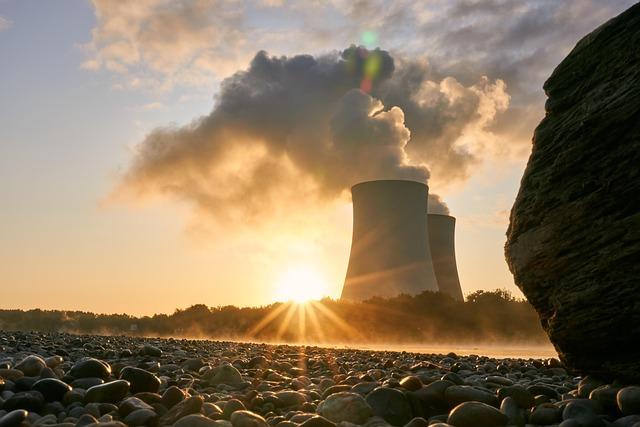
A drone strike on the Zaporizhzhia nuclear power plant has reignited global fears over the safety of Europe’s largest atomic facility, intensifying concerns that the war in Ukraine is edging ever closer to a radiological disaster. The incident, which prompted a fresh nuclear safety alert from international watchdogs, underscores the growing vulnerability of critical infrastructure in active conflict zones and raises serious questions about the adequacy of existing safeguards.
For businesses and investors in London and beyond, the attack is a stark reminder that geopolitical risk is no longer confined to energy prices and supply chains-it now extends to the physical integrity of the systems that power Europe’s economies. As markets weigh the implications of any potential disruption at Zaporizhzhia, regulators, governments and industry leaders are being forced to confront an uncomfortable reality: nuclear facilities, long considered among the most secure assets in the energy mix, are now on the front line of modern warfare.
This article examines what is known about the latest strike, the response from nuclear authorities, and the broader ramifications for energy security, market stability and corporate risk management across Europe.
Assessing the nuclear safety risks after the Zaporizhzhia power plant drone strike
Initial assessments from European and UK nuclear experts stress that the immediate risk of a large-scale radioactive release remains low, but not negligible. The critical point is that the reactors at Zaporizhzhia have been largely shut down or operating at reduced capacity for months, substantially lowering the heat output in the core. However, the incident has intensified focus on “secondary vulnerabilities” – the infrastructure that keeps a dormant plant safe. This includes cooling ponds, backup power lines and diesel generators, all of which could become single points of failure in a prolonged conflict zone.In nuclear safety terms, the latest drone strike is less about an imminent meltdown and more about a creeping erosion of safety margins.
- Cooling systems must remain functional to prevent fuel overheating.
- External power supply and on-site backup are crucial for reactor stability.
- On-site staff access and rotation affect error rates and response times.
- Structural integrity of spent fuel storage areas is under renewed scrutiny.
| Risk Area | Current Status | Short-Term Outlook |
|---|---|---|
| Reactor cores | Shut down / low power | Stable if cooling maintained |
| Spent fuel | Secured but exposed to conflict | Vulnerable to targeted damage |
| Power supply | Redundant lines & generators | At risk from repeated strikes |
| Site operations | Under military pressure | Higher chance of human error |
For regulators and insurers in London and other European capitals, this evolving risk picture is reframing nuclear safety as a geopolitical exposure rather than a purely technical one.Each successful or attempted strike chips away at confidence that international conventions can shield critical energy infrastructure from the battlefield. The International Atomic Energy Agency has called for a demilitarised safety perimeter around the plant, but enforcement remains elusive. Until such protections are in place and verifiable,financial markets,energy planners and public safety officials will continue to operate under a scenario where the greatest danger is not a single catastrophic blast,but the gradual normalisation of high-risk operations in a live war zone.
How international regulators are responding to the latest Ukrainian nuclear incident
Global watchdogs have moved swiftly, issuing coordinated messages that mix caution with calculated reassurance. The International Atomic Energy Agency (IAEA) has expanded its on-site monitoring team and is demanding “unfettered access” to damaged facilities, while European nuclear regulators are holding emergency briefings to stress-test existing safety assumptions.In parallel, the UN Security Council has been pressed to revisit long‑stalled proposals for demilitarising nuclear sites in conflict zones, amid renewed calls from non‑aligned states for a binding framework that treats attacks on nuclear infrastructure as a red line in international law.
- Continuous remote monitoring and satellite imagery analysis increased
- New incident‑reporting thresholds for military activity around nuclear sites
- Joint EU-IAEA task forces to evaluate cascading cross‑border risks
- Revisions to emergency evacuation plans for neighbouring countries
| Body | Immediate Action | Focus Area |
|---|---|---|
| IAEA | Expanded inspection team | Site integrity & transparency |
| EU Regulator Network | Risk reassessment | Cross‑border fallout scenarios |
| UN Security Council | Emergency briefings | Legal status of nuclear sites |
Behind the scenes, regulators are wrestling with the precedent this strike sets for civilian nuclear infrastructure in active war zones.Policy drafts circulating in Brussels and Vienna hint at a tougher regime of mandatory resilience upgrades, including hardened air‑defense perimeters and redesigned backup power systems that assume periodic loss of off‑site electricity. Financial regulators are also being drawn in, exploring whether capital markets should price in a conflict‑risk premium for nuclear operators, a move that could accelerate investment in safety but also reshape the economics of nuclear energy across Europe.
Implications for European energy security and market stability
For policymakers and investors in London and across the Continent, the strike on Europe’s largest nuclear facility is more than a localised security incident; it is a stress test of the region’s entire energy architecture. Any perception that a key Ukrainian plant could be forced offline-even temporarily-feeds into pricing models for gas, power and carbon, amplifying volatility on hubs such as TTF and the UK’s NBP. Markets are already factoring in a higher geopolitical risk premium, with traders closely tracking capacity reports, grid-balancing updates and emergency planning by European TSOs. In this climate, hedging strategies, cross‑border interconnector flows and strategic stock levels become critical levers for managing short‑term shocks.
Strategically, the incident sharpens the debate over how quickly Europe can pivot its energy mix without sacrificing resilience. Governments are under growing pressure to accelerate investment in renewables, grid flexibility and backup thermal capacity, while reassessing the role of nuclear in long‑term decarbonisation plans. Key risk mitigation measures now at the forefront include:
- Reinforced protection of critical nuclear and grid infrastructure in conflict‑adjacent regions.
- Diversification of gas and LNG supply routes, including expanded UK-EU interconnector use.
- Strategic reserves of gas and key power equipment to buffer unexpected outages.
- Market reforms to curb extreme price swings and improve transparency in capacity margins.
| Risk Area | Short-Term Impact | Policy Response |
|---|---|---|
| Nuclear disruption | Higher power price spikes | Enhanced site security & inspections |
| Gas dependence | Increased LNG competition | New contracts & storage build‑out |
| Market volatility | Unpredictable wholesale costs | Revised pricing and capacity rules |
Policy recommendations to strengthen nuclear plant protection against emerging aerial threats
Security experts argue that the first line of defence must shift from fences and cameras to a layered airspace shield. Governments are being urged to mandate geofenced no-fly zones around nuclear sites, backed by real-time drone detection using radar, acoustic sensors and AI-enabled tracking. Regulators could require operators to integrate counter‑UAV systems capable of jamming, spoofing or safely capturing antagonistic devices, with clear legal authorisation to act quickly. To avoid fragmented standards, international bodies such as the IAEA and NATO are also being pushed to develop shared threat intelligence platforms and harmonised technical benchmarks for aerial risk management.
- Mandatory aerial threat audits in annual safety reviews
- Dedicated drone-response units on-site, trained with local law enforcement
- Hardened critical structures and redundant control systems
- Joint civil-military drills simulating coordinated drone swarms
- Vendor vetting rules for any drones operating legally near facilities
| Priority Area | Key Action | Timeframe |
|---|---|---|
| Regulation | Update nuclear licences with drone clauses | 0-12 months |
| Technology | Deploy integrated detection & jamming suites | 1-3 years |
| Training | Embed aerial-attack scenarios in safety drills | Ongoing |
| Diplomacy | Negotiate cross-border drone incident protocols | 1-2 years |
Alongside hardware and rules, policy specialists highlight the need for a new culture of pre-emptive transparency. Operators could be required to publish non-sensitive summaries of aerial incidents and near-misses, creating public pressure to maintain robust defences while feeding anonymised data into a global risk picture. Insurance markets are also expected to play a sharper role: higher premiums for weak counter-drone postures,and discounts for plants that meet elevated aerial resilience standards. Together, these measures aim not only to repel the next rogue drone, but to hardwire nuclear safety into a fast-changing sky.
in summary
As investigations continue into the circumstances and impact of the drone strike at the Zaporizhzhia nuclear power plant, the incident serves as a stark reminder of the fragility of critical infrastructure in active conflict zones. While immediate safety risks appear contained for now, international agencies have renewed calls for greater protection of nuclear sites and stricter adherence to existing security protocols.
For businesses, regulators and policymakers in London and beyond, the episode underscores the growing intersection of geopolitical tension, energy security and technological threats such as unmanned aerial systems. How governments and institutions respond in the coming weeks-through diplomacy, regulation and investment in resilience-will help determine not only the safety of Europe’s largest nuclear facility, but also the credibility of global nuclear safety frameworks in an increasingly volatile world.