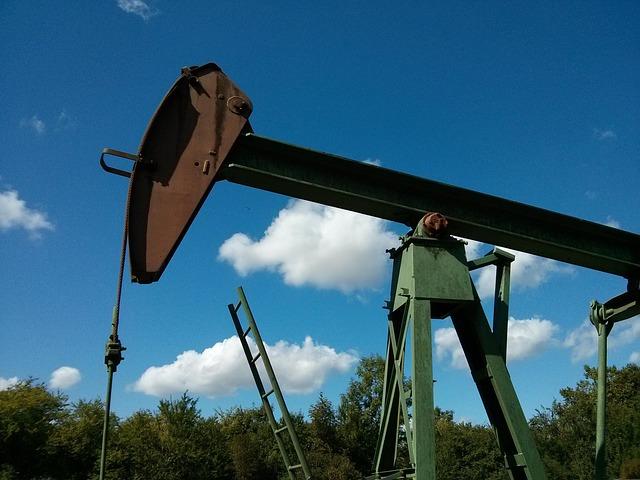
Oil prices continued their downward trajectory on Thursday, as signs of easing geopolitical tensions tempered fears over supply disruptions and shifted investor focus back to global demand uncertainties.Benchmark crude futures slipped for a third consecutive session,with traders responding to growing hopes of de-escalation in key flashpoints that had recently underpinned a risk premium across energy markets. The retreat comes amid a fragile economic backdrop, where concerns over slowing growth, tighter monetary policy and uneven demand recovery are reshaping sentiment in London and beyond. As volatility ripples through commodity markets,the latest moves in oil are set to have wide-reaching implications for inflation,corporate costs and consumer prices,making the trajectory of crude a critical barometer for the wider business landscape.
Market reaction to de escalation hopes and the drivers behind the latest oil price slide
Traders are peeling back risk premiums as diplomatic channels show tentative progress, prompting algorithmic and discretionary funds alike to unwind recent bullish bets. This shift is visible in thinner options skews, softer backwardation and a rotation into perceived safe havens such as high-grade credit and short-duration sovereigns. In intraday dealing rooms, the tone has moved from defensive hedging to opportunistic short-term selling, with desks highlighting that headline sensitivity remains high but no longer one-sided. As volatility cools, positioning is being recalibrated around more moderate demand expectations and a tightening cycle that appears closer to its peak, rather than fresh supply shocks.
- Improved diplomatic signals reducing war-risk premiums
- Resilient non-OPEC supply from US shale and Brazil
- Softer manufacturing data in Europe and parts of Asia
- Stronger dollar weighing on commodity-importing nations
| Driver | Market Impact |
|---|---|
| De-escalation headlines | Lower geopolitical premium in crude benchmarks |
| US inventory builds | Signals looser balances, caps upside moves |
| China demand doubts | Tempers expectations for a robust H2 rebound |
| Stricter financial conditions | Curbs speculative length in oil futures |
How extended oil weakness could reshape inflation trajectories and central bank policy paths
With crude drifting lower on the back of de‑escalation hopes, the inflation outlook is quietly being re-written. A softer energy complex filters through to headline indices first, pulling down fuel and utility costs and narrowing the gap with more stubborn core components. For policymakers, this changes both the timing and the texture of disinflation: what once looked like a slow grind may now resemble a glide path, especially in import‑dependent economies. Yet central banks will be wary of “false dawns”, mindful that volatile commodities can reverse quickly and that services prices remain sticky, especially where wage growth is still robust.
As energy’s contribution to price growth fades, the policy narrative could pivot from emergency firefighting to fine‑tuning. Rate‑setting committees are likely to reassess: how quickly they can ease without reigniting inflation, and how far they must go to support slowing activity. This recalibration is already visible in market pricing, with traders sketching out new rate‑cut timelines and altered risk premia across assets. Key questions for the months ahead include:
- Depth of oil weakness – whether prices stabilise at lower levels or slip into a more pronounced downturn.
- Pass‑through to consumers – the speed at which cheaper energy shapes household bills and expectations.
- Central bank tolerance – how much residual inflation risk officials are willing to accept to shore up growth.
| Scenario | Oil Price Trend | Inflation Effect | Policy Bias |
|---|---|---|---|
| Soft Landing | Gradual drift lower | Headline eases, core stable | Measured, data‑driven cuts |
| Disinflation Shock | Sharp, sustained slide | Broad cooling in prices | Faster, deeper easing |
| Whiplash | Short‑lived dip, rebound | Volatile, uneven path | Cautious, on‑hold stance |
Sector winners and losers from cheaper crude and what investors should watch next
Falling benchmark prices are rapidly redrawing the performance map across equities. Airlines,logistics groups and energy‑intensive manufacturers are poised to enjoy margin relief as fuel and input costs ease,while consumer‑facing sectors such as retail and leisure may benefit from improved disposable incomes and sentiment. Conversely,integrated oil majors,shale producers and oilfield service firms face pressure on cash flows,capex plans and dividend cover,particularly those with higher lifting costs or aggressive share buyback programmes. Banks with heavy exposure to commodity lending also merit closer scrutiny as collateral values adjust.
| Likely Beneficiaries | Potential Laggards | Key Investor Focus |
|---|---|---|
| Airlines & transport | Exploration & production | Hedging and break-even prices |
| Chemicals & heavy industry | Oilfield services | Capex revisions and project delays |
| Retail & discretionary | High‑yield energy debt | Credit spreads and refinancing risk |
- Watch earnings guidance: Management commentary on fuel costs, pricing power and demand elasticity will be more telling than headline price moves.
- Track balance‑sheet resilience: Leverage in cyclical names, particularly smaller producers, could amplify volatility if the downtrend in crude accelerates.
- Monitor policy and geopolitics: Any shift in OPEC+ strategy, sanctions regimes or strategic reserve policy could quickly reverse the current narrative.
- Assess dividend sustainability: Income investors should examine payout ratios and breakeven assumptions in energy stocks now exposed to a lower price deck.
Strategic guidance for energy traders and portfolio managers navigating a softer oil market
As geopolitical risk premia unwind and crude benchmarks trade with a downward bias, trading desks are shifting from headline-chasing to disciplined structure analysis.Volatility remains elevated intraday, but the broader tape now rewards those who can distinguish cyclical softness from structural inflection. This is prompting a renewed focus on time-spread dynamics, product cracks and cross-commodity correlations rather than outright flat-price bets. In practice, that means rebalancing books towards strategies that monetise curve shape-contango storage plays, roll-optimised ETFs, and calendar spreads-while keeping tight gamma hedges around key macro data prints and OPEC+ communications.
- Reassess hedge ratios against more subdued demand assumptions and slimmer refinery margins.
- Prioritise liquidity by concentrating risk in the most actively traded maturities and benchmarks.
- Exploit relative value between grades, products and regions rather than doubling down on directional exposure.
- Stress-test scenarios for a faster-than-expected demand slowdown or a surprise supply disruption.
| Market View | Trading Focus | Risk Control |
|---|---|---|
| Mildly bearish | Short deferred spreads | Tighter VaR limits |
| Range-bound | Options strangles | Dynamic delta hedging |
| Event-driven | Crack spreads & arb | Intraday stop discipline |
Portfolio managers overseeing diversified energy books are also rotating from pure beta to factor-aware exposure,blending oil with gas,power and carbon to smooth drawdowns while preserving upside to any renewed supply shock. That shift is reinforcing demand for systematic overlays-volatility targeting, drawdown triggers and macro-hedge baskets tied to the dollar and rates.With the market increasingly sensitive to micro-signals such as inventory surprises and refinery turnarounds,robust data pipelines and real-time analytics are becoming as valuable as barrels in storage,allowing decision-makers to act pre-emptively when the soft patch in prices begins to collide with the next geopolitical headline.
In Conclusion
As markets continue to weigh shifting geopolitical risks against a fragile global recovery, oil’s latest pullback underscores just how sensitive sentiment remains. For now, the prospect of de-escalation is offering some relief to import-dependent economies and energy-intensive industries, while central banks eye any easing in price pressures as a potential tailwind in the fight against inflation.
Yet with supply dynamics still tight and the geopolitical backdrop far from settled, few analysts are prepared to declare a sustained downtrend in crude. In the weeks ahead, traders will be watching both the political rhetoric and the data screens with equal intensity, knowing that any renewed flare-up could swiftly reverse the current trajectory.For London and other financial centres, the message is clear: volatility in energy markets is likely to remain a defining feature of the landscape.