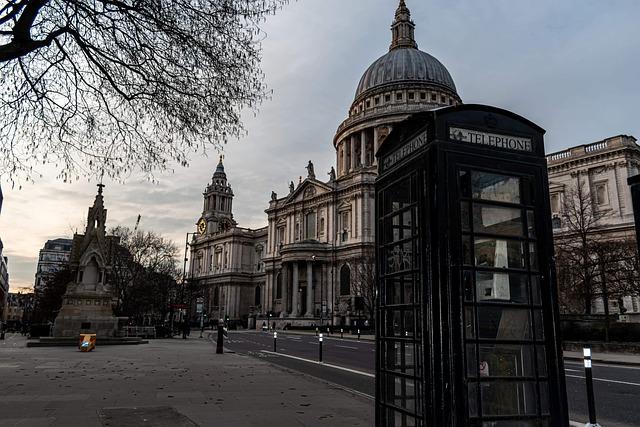
Tens of thousands of demonstrators converged on central London on Saturday in rival protests that underscored deep divisions over the war in Gaza and the politics surrounding it. Far-right groups and counter-protesters gathered near the Cenotaph and government buildings, while pro-Palestinian marchers filled major thoroughfares calling for a ceasefire and an end to Israel’s military campaign. The large and highly charged mobilisations, unfolding under a heavy police presence, turned the British capital into a focal point of competing narratives on nationalism, free speech and the limits of public dissent.
Clashing narratives on London streets how far right and pro Palestine groups frame the conflict
On opposite sides of the same London avenues, rival demonstrators cast themselves as guardians of fundamentally different values. Far-right groups deploy a language of “law and order”, “taking back our streets” and the defence of a vaguely defined “British way of life”, branding pro-Palestine crowds as a security threat and a test of the state’s resolve.Pro-Palestine organisers, by contrast, frame the day as an assertion of human rights, anti-war solidarity and opposition to what they describe as collective punishment in Gaza, insisting their presence is a moral counterweight to both government policy and nationalist rhetoric. Between flares,flags and police lines,these competing storylines turn pavements into parallel newsfeeds,each side convinced it is indeed documenting – and not distorting – reality.
- Far-right framing: focuses on nationalism, perceived cultural erosion and a zero-sum view of security.
- Pro-Palestine framing: emphasises international law, civilian casualties and historical injustice.
- Shared tactic: both rely on emotionally charged imagery and slogans to dominate headlines and social media.
| Group | Key Message | Core Fear |
|---|---|---|
| Far-right blocs | “Protect Britain now” | Loss of national identity |
| Pro-Palestine marchers | “Ceasefire and justice” | Unchecked civilian suffering |
Media crews moving between these clusters encounter not just two demonstrations, but two incompatible narratives about who is vulnerable and who is violent.Far-right spokespeople highlight skirmishes, arrests and controversial placards to argue that mass pro-Palestine rallies normalise extremism, while Palestinian and solidarity activists point to chanting crowds, families with children and organised stewards as evidence of a broad, legitimate civic movement. In this clash of portrayals, even the visible presence of police lines, transport closures and barricades becomes raw material: for one side, proof that the capital is under siege; for the other, a reminder of how state power is deployed when marginalised voices grow too loud.
Policing protest lessons from the Met response to simultaneous mass demonstrations
The Metropolitan Police‘s handling of two ideologically opposed crowds converging on the capital exposed both operational strengths and glaring blind spots. Officers were tasked with together safeguarding a large, largely peaceful march and containing smaller, more volatile far-right groups seeking confrontation. In practice,this meant rapid redeployments,layered cordons and a visible reliance on public order units,but also inconsistent use of stop-and-search and dispersal powers. Civil liberties groups have questioned whether the higher-profile crackdown on certain demonstrators reflects a pattern of uneven enforcement. Behind the numbers, the challenge was to maintain neutrality in a charged information habitat where missteps were amplified in real time across social media.
Senior commanders will now face pressure to refine doctrines for overlapping protests that differ sharply in tone and risk profile. Future strategies are likely to stress:
- Clearer risk assessment frameworks for simultaneous events.
- Stricter separation of rival groups using dynamic cordons.
- Transparent interaction about arrests,use of force and conditions imposed.
- Enhanced liaison with protest organisers and community leaders.
| Operational Focus | Observed Outcome |
|---|---|
| Neutrality of policing | Perception disputes and bias claims |
| Public order | Containment achieved, tensions high |
| Public confidence | Mixed, split along political lines |
Social media echo chambers fueling turnout misinformation and radicalisation risks
On both sides of London’s streets, organisers and influencers leaned on tightly curated online feeds to shape expectations, often inflating projected numbers and stoking a sense of historic urgency. Within these closed circles, emotionally charged clips, cropped photos and partisan infographics circulated faster than corrections or context, turning estimates of crowd sizes and police tactics into markers of loyalty rather than facts to be verified. As posts were liked, shared and stitched across platforms, nuance evaporated: anyone questioning exaggerated turnout claims or highlighting peaceful counter-narratives risked being branded a traitor, a bot, or part of a opposed media establishment. In that vacuum, the line between mobilisation and manipulation blurred, leaving many demonstrators arriving in central London with a perception of crisis shaped more by algorithms than on-the-ground reporting.
What emerged online around the marches was less a conversation than a competition between sealed-off camps,each reinforcing its own fears and certainties. Pro-Palestine activists and far-right networks alike elevated fringe voices as authentic representatives of “the people”, while demonising mainstream institutions as censors. That dynamic intensified radicalisation risks, particularly for younger users consuming rapid-fire content on short‑video platforms where moderation is patchy and context almost non-existent. Patterns frequently seen across feeds included:
- Selective framing of clashes to suggest either total chaos or total victimhood.
- Misleading turnout graphics comparing the London crowds to historic protests without clear sourcing.
- Cross-platform dog-whistles that normalise extremist slogans via memes and inside jokes.
- Targeted calls to action urging followers to “defend the streets” or “reclaim the city”.
| Online Pattern | Offline Effect |
|---|---|
| Inflated crowd numbers | Heightened expectations, anger at “under-reporting” |
| Viral confrontation clips | Impression of constant violence |
| Echo-chamber endorsements | Reinforced belief that “everyone” agrees |
| Extremist memes | Gradual normalisation of radical rhetoric |
Policy responses needed to protect free expression while curbing extremist mobilisation
As London streets fill with sharply opposing chants, policymakers face a delicate balancing act: confronting incendiary organising without criminalising dissent. One approach is to move away from blunt bans and towards behavior-based regulation, targeting concrete acts of intimidation, harassment or incitement rather than the political causes people rally behind. This requires better-resourced policing units trained to distinguish between offensive speech and unlawful mobilisation, alongside independent oversight to guard against politically motivated crackdowns. Key safeguards might include:
- Clear, narrow definitions of incitement and hate speech in law, resisting vague wording that can be used against minorities or critics of government.
- Real-time legal observers at major marches, with powers to record and challenge questionable arrests or dispersal orders.
- Mandatory openness on protest restrictions, with published risk assessments and post-event reviews.
| Policy Tool | Main Aim | Risk if Misused |
|---|---|---|
| Targeted surveillance | Track violent plots | Mass monitoring of activists |
| Protest conditions | Protect public safety | Chilling effect on turnout |
| Online content rules | Limit extremist reach | Over-removal of dissenting views |
Digital spaces, where far-right networks and extremist currents often coalesce long before they appear on the streets, demand similarly calibrated responses. Governments are pressing platforms to remove harmful content faster, but any framework that leans on opaque algorithmic takedowns risks sweeping up legitimate political advocacy, including speech from marginalised groups. A more accountable model would combine:
- Time-bound content review focused on explicit calls for violence, with public reporting on takedown volumes and appeals.
- Tiered sanctions for organisers who repeatedly use online channels to coordinate violence, from demonetisation to account suspension.
- Independent appeal panels including civil liberties and minority-rights experts to review disputed removals and protest-related bans.
Closing Remarks
As the crowds disperse and the streets of London return to their usual rhythm, the day’s marches leave behind a complex afterimage: competing narratives, clashing symbols, and a city once again cast as a stage for global grievances. The far-right and pro-Palestine protests did not resolve the deep divisions they exposed, nor were they expected to. But they underscored how conflicts far beyond Britain’s borders are being argued, contested, and reimagined in its public squares.In the weeks ahead, the questions raised on London’s streets – about free expression, community safety, political accountability and the boundaries of acceptable dissent – are likely to sharpen rather than fade. For authorities, activists and ordinary citizens alike, the challenge will be to navigate those tensions without allowing them to harden into open and enduring fault lines.