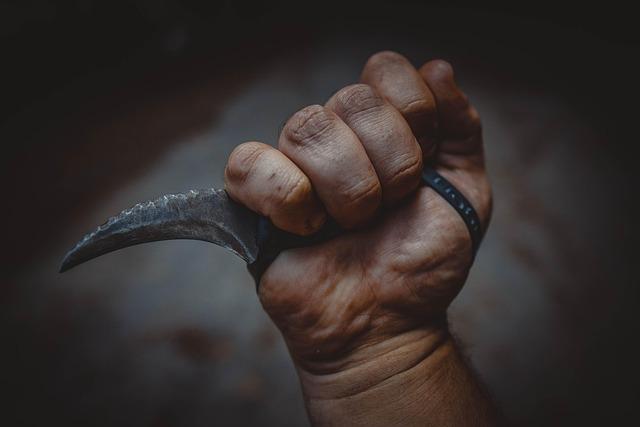
Children barely out of primary school are arming themselves on London’s streets. Police,teachers and youth workers say they are encountering 10- and 11‑year‑olds carrying knives,not as would‑be gangsters,but out of a deep‑rooted fear for their own safety. As headlines about stabbings become grimly routine, a growing number of young Londoners believe a blade in their pocket is the only protection they have. This article examines how fear, social media and cuts to youth services are converging to push ever younger children into hazardous decisions-and asks what it will take to break the cycle.
Understanding the rise of knife carrying among children in London
Across estates, bus stops and school gates, many young Londoners describe a climate where conflict feels unpredictable and adults appear either absent or powerless. In this environment, some children come to see knives less as weapons and more as a twisted form of reassurance – a way to feel less vulnerable on the walk home or in stairwells where rival groups might appear. Peer pressure, the lure of online bravado, and the fear of being the only one “without protection” all feed into the decision to carry. For some, especially those groomed into low‑level roles in the drugs economy, a blade is framed as just another “tool of the job,” normalised by older teens who are themselves repeating patterns they once experienced.
Yet this rise cannot be separated from deeper structural pressures shaping children’s lives. Years of cuts to youth services, stretched school pastoral teams and rising poverty have eroded the safety nets that once intercepted risky behavior early. Community workers point to a pattern in which unresolved trauma, exclusion from mainstream education and exposure to violence at home or online combine to make carrying feel like the “least bad” option. Common drivers reported by practitioners include:
- Fear of victimisation on the way to and from school
- Pressure from peers or gangs to prove loyalty or “status”
- Lack of safe, supervised spaces after school and at weekends
- Social media amplification of threats, rumours and conflicts
- Distrust of authorities and a belief that police cannot protect them
| Factor | Impact on Children |
|---|---|
| Youth center closures | Fewer safe places, more time on the street |
| School exclusions | Increased isolation and contact with risky peers |
| Online conflicts | Arguments escalate faster, spill into real life |
| Local violence | Normalises carrying and heightens anxiety |
Fear peer pressure and the local conditions driving young people to arm themselves
In estates where sirens are the bedtime soundtrack, children talk about “getting caught lacking” the way previous generations talked about missing homework. The logic is grim: if everyone else is armed, going out empty-handed feels reckless, not responsible. In cramped tower blocks and neglected alleyways, status is a form of survival currency, and a blade can seem like the quickest way to earn it-or at least avoid becoming a target. Older teens, sometimes already linked to postcode rivalries or low-level drug dealing, act as gatekeepers of this street culture, mocking anyone who refuses to “hold something” for the crew. For a 10-year-old desperate to belong, ridicule can feel as dangerous as any rival gang.
- School journeys become high-risk corridors through rival territories.
- Lack of youth spaces pushes kids onto streets policed by older gangs.
- Housing overcrowding means disputes spill out into public view.
- Limited police trust leaves young people feeling they must protect themselves.
| Pressure Point | How Kids Explain It |
|---|---|
| Reputation | “If you look soft, you’re a target.” |
| Safety | “I’d rather get stopped than stabbed.” |
| Belonging | “Everyone in my group carries.” |
This mix of social shaming, territorial fear and everyday deprivation creates a climate where carrying a knife feels less like a criminal decision and more like a defensive reflex. When the walk to the corner shop can cross three invisible borders, and support services close before dusk, the street becomes an arena in which children are forced to choose between the fear of the law and the fear of each other-and, increasingly, they see the latter as the greater threat.
How schools families and communities are responding to youth knife concerns
Across London, classrooms are becoming frontline spaces for prevention as much as education. Headteachers are partnering with youth workers, trauma specialists and former offenders to deliver reality-based workshops that move beyond scare tactics, unpacking why a 10-year-old might feel safer with a blade than without one. Many schools now run confidential reporting systems, anonymous “safe boxes” and restorative justice circles to defuse conflicts before they spill onto the streets.Simultaneously occurring, PSHE lessons are being rewritten to confront social media bravado, postcode rivalries and the pull of older peers. Teachers quietly admit they are learning too – undergoing specialist training in spotting early warning signs, from withdrawal and coded language to sudden changes in friendship groups.
- Schools – awareness assemblies, searches based on risk, therapeutic support
- Families – monitoring online activity, setting firm boundaries, seeking early help
- Community groups – mentoring projects, late-night youth hubs, sports diversion schemes
- Local authorities – public health violence strategies, data sharing, targeted outreach
| Initiative | Who Leads It | Purpose |
|---|---|---|
| Knife Amnesty Bins | Community & Police | Safe disposal without arrest |
| Parent Peer Circles | Local Charities | Share signs, strategies, support |
| Street Mentors | Ex-offenders | Offer credible alternatives |
Parents and guardians, often terrified but resolute, are organising WhatsApp groups to track flashpoints in real time, arranging shared school runs and coordinating with neighbourhood watch schemes. Faith leaders are opening doors after hours, turning halls into safe spaces where young people can talk frankly about fear, reputation and loyalty away from peer pressure. Community organisations, many operating on shoestring budgets, are filling the gaps left by youth centre closures by offering targeted mentoring, boxing clubs and music studios that trade the currency of the street – status and belonging – for something less lethal. Together, these responses are piecemeal and imperfect, but they reveal a city refusing to normalise the idea of a child gripping a knife on the way to school.
Evidence based strategies to reduce child knife carrying and rebuild trust in public safety
Research from UK public health, policing and youth justice bodies repeatedly points to early, community-based intervention as the most effective way to keep children away from weapons. Evidence-backed approaches include trauma-informed mentoring, targeted school programmes that teach conflict resolution, and “reachable moment” interventions in hospitals when a young person arrives with a stab wound.These are most successful when paired with visible but procedurally fair policing-officers trained to explain stop-and-search decisions, gather consent where possible and treat young people with respect are markedly more likely to earn cooperation and reduce the sense that knives are a necessary form of self-defense. In parallel, local authorities are using data-led hotspot mapping to deploy youth workers, not just patrol cars, into the streets and estates where young people report feeling most at risk.
Trust is further strengthened when families and communities see a clear, consistent offer of support rather than sporadic crackdowns. Partnerships that bring together youth services, schools, housing officers and faith or community leaders are showing promising results where they deliver tangible, everyday alternatives to street exposure-safe spaces open late, credible role models, and rapid help with crises at home. These strategies become more powerful when underpinned by transparent metrics and public reporting, allowing residents to track progress and hold institutions to account.
- Trauma-informed outreach in hospitals and youth clubs
- Fair and transparent stop-and-search protocols
- Safe late-night spaces in schools, libraries and leisure centres
- Parent support programmes linked to local schools
- Data-sharing panels joining police, councils and youth workers
| Strategy | What changes for children? |
|---|---|
| Hospital-based youth workers | Support offered at the moment of crisis, reducing repeat violence |
| Restorative school policies | Fewer exclusions, less time on the street, more trusted adults |
| Neighbourhood trust forums | Direct dialog with police, more confidence to report threats |
Key Takeaways
As London grapples with the reality of children carrying knives out of fear rather than malice, the city faces a choice: accept this as an inevitable feature of urban life, or confront the social, economic and emotional pressures driving young people to arm themselves.
Tackling the issue will demand more than police crackdowns or headline‑grabbing crackdowns on youth crime. It will require long-term investment in youth services, mental health support, education and community-led initiatives that rebuild trust and offer young people alternatives to violence. It will also mean listening to the voices of those most affected: the children who say they feel safer with a blade in their pocket than walking the streets unarmed.
If London is to protect its next generation, it must first understand why a 10-year-old ever felt the need to pick up a knife-and then show, in practical and sustained ways, that their safety does not have to come at the point of a blade.