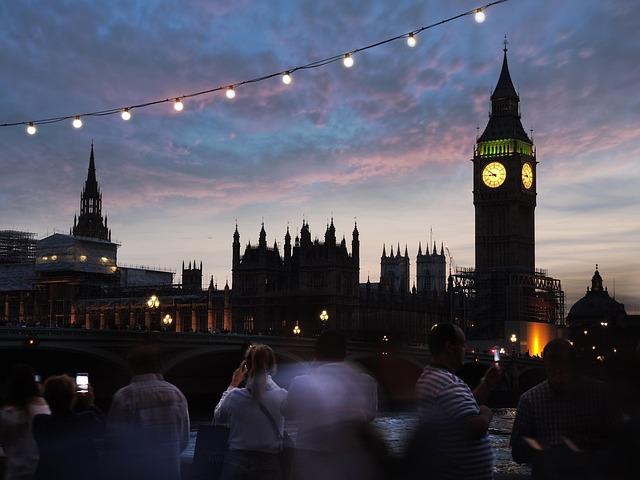
For generations, the London Eye and Tower Bridge have stood as emblems of the capital: one a feat of Victorian engineering, the other a symbol of millennial ambition turned tourist magnet. Yet in recent years,both have undergone a quiet conversion. Where once they were celebrations of civic pride and architectural daring,they are now at the center of a booming trade in selfie spots,souvenir stalls and branded “experiences” that leave some Londoners wincing. This article explores how two of the city’s most recognisable landmarks – fixtures of postcards, film backdrops and royal pageantry – have drifted from icons of a world city to exhibits in a theme-park version of London, and what that shift reveals about the pressures reshaping public space in the capital today.
Tracing the journey from architectural marvels to tourist traps
Once conceived as bold statements of civic pride and engineering ambition, these landmarks emerged from drawing boards and dusty building sites with an almost utopian promise: to elevate the skyline and the city’s global reputation simultaneously. Architects spoke of sightlines, symmetry and the drama of steel and stone; planners dreamed of public plazas that would feel like shared living rooms for Londoners as much as photo backdrops for visitors. For a while, the reality matched the rhetoric. Locals visited out of curiosity, critics wrote rhapsodic columns about proportion and daring, and the early tourist crowds felt like respectful guests at a cultural debut.
Then the logic of mass tourism and merchandising crept in, inch by inch. Security cordons pushed people into tightly managed funnels, and blank walls filled with branding, screens and selfie prompts.The grand atria and riverfront walkways became corridors for commerce, dominated by:
- Branded photo booths that reduce sweeping views to Instagram frames
- Pop-up souvenir stalls selling the same plastic trinkets found in every capital
- High-markup cafés designed more for throughput than atmosphere
- Scripted “experiences” that leave little room for quiet observation
| Era | Focus | Visitor Role |
|---|---|---|
| Opening years | Design, civic identity | Curious observer |
| Peak popularity | Views, symbolism | Eager guest |
| Tourist trap phase | Retail, photo ops | Captive consumer |
Inside the commercialisation machine reshaping Londons historic icons
The transformation from revered heritage to relentless retail has been anything but accidental; it is indeed the engineered product of a finely tuned marketing and licensing apparatus. Behind every souvenir stand and selfie-ready backdrop lies a network of brand consultants,rights managers and data analysts,each focused on monetising every square foot of history.Once-sacrosanct spaces are now mapped like shopping centres, with “high-yield” zones reserved for premium concessions and branded experiences. Audio guides speak less of architectural nuance and more of sponsored stories, while ticketing algorithms dynamically nudge visitors towards pricier time slots and bundled “VIP” packages that add little beyond a coloured lanyard and the illusion of exclusivity.
This shift is underpinned by a playbook that treats cultural heritage as a lifestyle product, optimised for shareable moments and frictionless spending. Visitor routes are redesigned to funnel crowds through retail gauntlets; heritage narratives are trimmed and glossed to fit merchandise ranges and global brand partnerships. The result is a subtle but pervasive tilt from civic stewardship to commercial extraction,evident in:
- Curated congestion – queues engineered to pass by branded kiosks and impulse-purchase displays.
- Sponsored storytelling – corporate logos woven into exhibitions, guides and even restoration plaques.
- Merch-first decision-making – product lines influencing which eras and figures are celebrated.
- Price-tiered access – historic viewpoints and quiet chapels rebadged as add-ons and “premium zones”.
| Strategy | Historic Aim | Commercial Outcome |
|---|---|---|
| Immersive tours | Context and education | Upsold “experience” tickets |
| Night openings | Broader public access | High-margin events & bars |
| Gift ranges | Support conservation | Brand-led product pipelines |
How cheap thrills and photo ops eclipsed heritage and authenticity
The slow drift from living monuments to entertainment backdrops can be traced in the way these sites now choreograph every moment for maximum shareability. Where visitors once lingered over stone carvings or wartime scars in the masonry, they are now funnelled towards neon-lit kiosks, branded “experiences” and kiosks selling identical keyrings. The architecture has become a frame for the real attraction: purchasable memories. Guided tours pause not at the most historically significant points, but at spots with the best lighting; interpretation panels compete for attention with QR codes promising filters and augmented crowns. Heritage has been repackaged as a prop, squeezed into the margins of a day out built around queue-free thrills and limited-edition merchandise.
Curators and conservationists speak increasingly of “compromise”, yet the ledger is clear: commercial spectacle now outweighs cultural depth. What was once a conversation with the past has turned into a themed set, lit, branded and scored for a global audience on fast-forward. The new priorities are written into every corner of the visitor journey:
- Speed over substance: shorter tours, fewer stories, more attractions per hour.
- Sets over spaces: heritage rooms dressed for photos rather than reflection.
- Logos over lore: gift-shop slogans eclipsing historical detail.
- Noise over nuance: amplified soundtracks masking the building’s own echoes.
| Then | Now |
|---|---|
| Guides telling stories | Hosts selling upgrades |
| Time to wander | Timed photo slots |
| Architecture as focus | Architecture as backdrop |
What London must do to rescue its landmarks from tackiness
To restore dignity to these overexploited icons, the city must reassert the principle that public space is not just a backdrop for branded experiences.That means tightening planning rules on intrusive advertising, limiting the density of souvenir stalls and low-rent attractions, and enforcing design codes that privilege heritage over hype. City Hall and borough councils could establish heritage impact reviews for any commercial proposal within a defined radius of key sites, giving conservation officers and local communities greater power to veto gimmicks. London’s cultural institutions, simultaneously occurring, should be invited to curate temporary installations and performances around the landmarks, replacing plastic tat with programming that has intellectual and artistic weight.
Equally crucial is shifting the business model away from volume tourism and towards value,so that operators have an incentive to offer quality rather than spectacle. A dynamic pricing structure, strict caps on visitor numbers at peak times and reinvestment of ticket revenue into conservation would rebalance expectations.Collaboration between Transport for London, local businesses and residents could create “quiet culture zones” near major monuments, with controls on amplified music, roaming mascots and aggressive touting.
- Reinforce planning controls to curb visual clutter.
- Prioritise cultural programming over pure commercial promotion.
- Cap visitor numbers and introduce smarter ticketing.
- Ringfence revenue for restoration and public realm upgrades.
| Problem | Current Impact | Proposed Fix |
|---|---|---|
| Over-commercial signage | Visual noise, lost character | Strict ad design codes |
| Low-quality stalls | Clogged pavements | Curation and licensing limits |
| Mass tourism queues | Crowding and frustration | Timed entry and caps |
| Neglected fabric | Erosion of heritage | Dedicated repair funds |
To Conclude
the journeys of these two landmarks are less about architecture than about appetite: for spectacle, for profit, for a speedy photo that proves we were there. Their transformation from symbols of civic pride into backdrops for consumption reflects a broader tension in modern cities, where heritage must compete with the demands of the visitor economy.
London will not stop selling itself; nor will the crowds thin anytime soon. But whether these monuments remain little more than lucrative stage sets or recover some measure of their original dignity now rests with the institutions that run them – and with the public that continues to queue, pay and post. What kind of city London wants to be will be written, as ever, in the story of what it chooses to do with its most famous views.