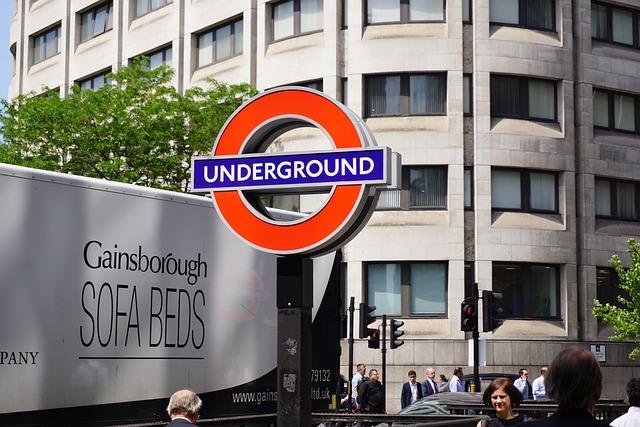
In a bid to brighten the most utilitarian corners of the city’s transit network,eight London Underground restrooms have undergone striking transformations,trading tired tiles and harsh lighting for bold color and richly illustrated ceramics.The refits, documented by art and design site This Is Colossal, turn once-overlooked facilities into unexpected galleries, where commuters encounter hand-drawn narratives and playful patterns between train journeys. Part of a broader push to humanize public infrastructure, the project marries practical renovation with visual storytelling, suggesting that even the briefest stop on the Tube can offer a moment of aesthetic surprise.
Transforming commuter spaces with illustrated tile design in London Underground restrooms
Once-ignored corridors and washrooms across the network have been recast as miniature galleries, where illustrated tiles turn routine visits into fleeting encounters with art. Vivid motifs echo the character of each station-nautical blues and stylised waves near riverside stops, sharp geometric patterns in financial districts, and flora-inspired mosaics where parks sit overhead-creating an immediate visual cue that commuters have stepped into a distinct pocket of the city. The rhythm of the tiling follows the flow of foot traffic, guiding passengers from entrance to basin to exit through bands of color and finely drawn line work that soften hard surfaces without compromising durability.
Transport officials and designers worked together to ensure the installations serve both aesthetics and function, integrating wayfinding symbols, subtle accessibility prompts, and maintenance-friendly glazing into the artwork itself. The result is a series of washrooms that double as cultural touchpoints, reinforcing a sense of place and offering moments of respite from the timetable rush. Key themes driving the redesign include:
- Local storytelling: Icons, landmarks, and historic references are woven into tile illustrations.
- Passenger wellbeing: Calming palettes and playful imagery reduce the institutional feel of high-traffic spaces.
- Longevity and upkeep: Hard-wearing materials and modular tile layouts simplify cleaning and repair.
- Civic identity: Consistent visual language links the upgraded restrooms to the broader Underground brand.
| Station | Tile Theme | Commuter Impact |
|---|---|---|
| Camden Town | Bold music posters & neon lines | Amplifies the area’s live-gig energy |
| South Kensington | Scientific sketches & fossils | Extends the nearby museum experience |
| Brixton | Patterned textiles & market stalls | Celebrates local trade and culture |
| King’s Cross | Rail diagrams & abstract maps | Echoes constant movement and connection |
How bold color palettes and custom murals enhance daily rider experience
Stepping off a packed train into a wash of saturated teal, vermilion, or citrus yellow instantly disrupts the monotony of a commute. These refurbished restrooms trade anonymous beige for assertive palettes that act like visual caffeine, sharpening spatial awareness and subtly lifting mood. Psychologists have long noted how color can affect perceived cleanliness, safety, and even wayfinding; here, bright tiles and crisp contrasts turn corridors into intuitive guides, helping riders locate sinks, stalls, and exits at a glance. When the journey between platforms and street level is punctuated by vivid tones and illustrated tiles, the underground feels less like a holding zone and more like a curated public interior.
The new murals build on this chromatic strategy by threading narrative and locality directly into the architecture. Rather than generic motifs, each installation leans on neighborhood lore, flora, and transit iconography, transforming walls into storyboards that commuters can read in fragments over multiple visits. This approach:
- Reduces visual fatigue by breaking up flat surfaces with pattern and illustration.
- Encourages repeat engagement as riders notice new details over time.
- Signals care and investment in spaces often dismissed as purely functional.
- Supports orientation through distinctive, station-specific artwork.
| Design Element | Rider Impact |
|---|---|
| High-contrast color bands | Quicker navigation in busy periods |
| Local landmark motifs | Sense of place beyond the platform |
| Playful illustrated tiles | Momentary pause, reduced stress |
Collaborating with artists and transit authorities to balance creativity and durability
Transforming the city’s most utilitarian spaces into visual landmarks required designers to work hand-in-hand with engineers, maintenance teams, and station managers. Artists proposed bold palettes, playful motifs, and narrative scenes, while Transport for London‘s specialists scrutinized each concept for slip resistance, fire safety, and ease of cleaning. Early sketches were revised around practical constraints-like tile dimensions, grout lines, and harsh cleaning agents-so that every illustrated character, abstract pattern, or architectural detail would survive years of daily use. This constant negotiation ensured that the installations remain visually rich without compromising the tight operational rhythms of one of the world’s busiest transit systems.
Workshops and site visits turned sterile specification meetings into creative labs where stakeholders could test glazes, finishes, and installation methods in real lighting conditions.The process often hinged on small, decisive choices:
- Glaze selection: matte surfaces to reduce glare, high-fired finishes to withstand repeated scrubbing.
- Color strategy: saturated hues that remain vivid under fluorescent light and through heavy wear.
- Layout planning: imagery positioned away from high-impact zones near doors, bins, and corners.
| Partner | Key Focus |
|---|---|
| Illustrators | Visual storytelling and character |
| Transit Engineers | Durability, safety, and cleaning |
| Station Managers | User flow and daily practicality |
Design lessons from the refurbishment for public infrastructure projects worldwide
The overhaul of these underground facilities offers a compact blueprint for cities seeking to humanize transit hubs without sacrificing durability or safety. By treating restrooms as micro-galleries, planners demonstrated how visual storytelling can clarify wayfinding, calm crowds and subtly reinforce local identity. Rather of defaulting to industrial monotony,the designers experimented with bold palettes,tactile grout lines and illustrated tiles that withstand heavy use yet still feel curated. Public agencies elsewhere can borrow several principles: design for speedy legibility,plan for vandal-resistance without hostility,and use art not as decoration tacked on at the end,but as a structural part of the architecture.
- Embed local narratives into surfaces commuters actually touch and see.
- Standardize formats (tile size, fixtures) while varying color and illustration per site.
- Design for maintenance with wipe-clean finishes and replaceable tile panels.
- Use light and contrast to increase perceived safety in enclosed spaces.
- Test accessibility by checking sightlines, signage icons and color contrast in real conditions.
| Design Move | Public Benefit |
|---|---|
| Illustrated tile walls | Memorability & easier wayfinding |
| Robust materials | Lower lifecycle costs |
| Consistent layouts | Faster user orientation |
| Site-specific motifs | Stronger neighborhood identity |
Closing Remarks
As Londoners and visitors continue to navigate the capital’s vast underground network, these newly refurbished restrooms offer more than a practical pit stop. They signal a growing recognition that public infrastructure can also be a site of visual culture, storytelling, and civic pride. Whether encountered in passing or sought out by design enthusiasts, the illustrated tiles transform overlooked corners of the Tube into unexpected galleries-small but vivid reminders that art can thrive even in the most utilitarian spaces.