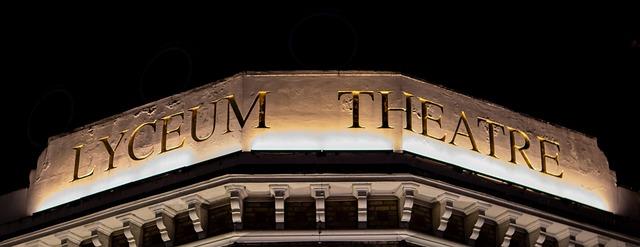
As the eagerly anticipated London production of the Tony Award-winning musical Kimberly Akimbo prepares to open, all eyes are on its director, Maria Friedman-a theater artist whose name has long been synonymous with musical excellence on both sides of the Atlantic. Best known to many for her acclaimed collaborations with Stephen Sondheim and her award-winning performances on the West End and Broadway, Friedman has steadily built a second, equally formidable career behind the scenes as a director and interpreter of complex, character-driven work.
From her early days as a rising West End performer to her evolution into one of the UK’s most respected musical theatre directors, Friedman’s career traces the changing landscape of modern musical theatre itself. As she brings Kimberly Akimbo to London audiences for the first time,her journey offers a revealing lens through which to understand not only this new production,but the craft,resilience,and artistic curiosity that have defined her path.
Tracing a West End icon Maria Friedmans journey from performer to visionary director
Long before she ever called the shots from the front of the rehearsal room, Maria Friedman was a fixture under the lights, carving out a reputation as one of the West End’s most emotionally incisive performers. Her breakout roles in shows by Stephen Sondheim, Jason Robert Brown and Andrew Lloyd Webber showcased a rare blend of technical precision and raw vulnerability, turning her into a trusted interpreter of complex scores. Producers knew that if a role demanded nuance, wit and vocal stamina, Friedman could shoulder it. That authority onstage gradually shifted her vantage point: she became the cast member who instinctively understood structure, rhythm and character arcs, often serving as an informal dramaturg long before she had the director’s title. Along the way she developed a toolkit that now shapes her rehearsal rooms:
- Actor-first approach – creates space for performers to discover their own emotional logic.
- Musical storytelling – prioritises clarity of lyrics, orchestration and narrative beats.
- Collaborative leadership – balances authorial intention with contemporary perspectives.
- Sondheim fluency – a deep understanding of intricate musical theatre writing.
| Key Phase | Representative Work | Impact |
|---|---|---|
| Acclaimed Performer | Major Sondheim & Lloyd Webber roles | Built trust with composers and creatives |
| Transitional Mentor | Leading roles with strong ensemble focus | Became a de facto coach within casts |
| Visionary Director | Revelatory revivals and new stagings | Reframes classics for modern audiences |
As she moved fully into the director’s chair, Friedman brought with her a performer’s microscopic eye for truth. Instead of imposing flashy concepts, she mines scripts and scores for emotional subtext, stripping away theatrical clutter until the story feels urgent and contemporary. Her productions are characterised by clean visual lines, precise musical direction and an almost forensic attention to character detail, allowing familiar titles to land with newfound clarity. It’s this blend of craft and curiosity – honed over decades in rehearsal rooms and onstage – that positions her not just as a respected director,but as a visionary reshaping how modern audiences encounter musical theatre narratives in London and beyond.
Defining roles and landmark productions How Maria Friedman reshaped contemporary musical theatre
Long before she stepped into the director’s chair, Maria Friedman was quietly redrawing the blueprint for what a modern musical theatre leading lady could be. Her performances in shows like “Passion”, “Ragtime”, and “The Witches of Eastwick” combined a vocal precision prized by traditionalists with an emotional transparency that felt startlingly contemporary.Rather than playing archetypes, she delved into psychological nuance: women who were conflicted, flawed, and fiercely human. Directors and writers began to recognize that Friedman didn’t just “fit” a role – she reframed it, pushing material toward greater specificity and truth. That approach helped usher in a generation of performers expected not only to sing impeccably, but to excavate character with the rigor of screen acting.
As her career expanded into direction and dramaturgy, Friedman’s legacy crystallised in a series of benchmark productions that revealed just how elastic the musical form could be. In rehearsal rooms she became a catalyst for collaboration, frequently enough focusing on:
- Text-first interpretation – treating lyrics and book scenes with the forensic care usually reserved for plays.
- Actor-centred staging – building visual worlds around character journeys, not the other way round.
- Re-orchestrated intimacy – favouring musical arrangements that highlight storytelling over volume.
| Key Production | Friedman’s Impact | Lasting Influence |
|---|---|---|
| Passion | Redefined “romantic lead” as complex, unsettling, and unsentimental. | Opened the door for darker, character-driven musicals. |
| Ragtime | Balanced epic storytelling with intricate emotional detail. | Model for socially conscious large-scale productions. |
| Merrily We Roll Along | Clarified a notoriously tricky narrative through clean, emotional arcs. | Proof that radical revivals can become definitive. |
Behind the scenes of Kimberly Akimbo What to expect from Friedmans London staging
Friedman’s rehearsal room is famed for its mix of rigor and play, and this production looks set to lean into both the show’s offbeat comedy and its quiet emotional detonations. Expect a lean, actor-focused staging, with fluid transitions rather than flashy scene changes, allowing the cast to slip between suburban absurdity and raw vulnerability in a single breath. Her long collaboration with world-class musical directors suggests that vocal clarity and sharp comic timing will be front and center, while the score’s quirkier textures are likely to be foregrounded rather than softened. London audiences can look forward to a production that treats the material with the same seriousness Friedman has previously brought to Sondheim, even as it revels in the show’s very modern, very awkward sense of humour.
- Intimate design: a focus on close-up character detail over spectacle.
- Ensemble precision: tight, cinematic pacing between scenes.
- Nuanced casting: performers chosen for emotional range as much as vocal firepower.
- Quiet visual wit: subtle sight gags woven into an everyday New Jersey setting.
| Creative Element | Friedman’s Likely Approach |
|---|---|
| Staging | Minimal, kinetic, story-led |
| Comedy | Dry, character-driven, precise |
| Music | Text-first, emotionally textured |
| Design | Everyday realism with stylised edges |
Behind the scenes, Friedman is known for fostering an atmosphere where actors can interrogate every beat of a scene, and that depth of process tends to show in the finished work.Collaborations with a design team attuned to subtle shifts in tone mean audiences are likely to see a production that moves seamlessly from teenage chaos to existential reflection without ever losing its pulse. Expect rehearsals to hone in on the show’s central paradox – a heroine racing the clock even as everyone else drifts through life – and for that urgency to ripple through the performances, the onstage relationships and the visual language of the London staging.
How to experience Maria Friedmans work Essential recordings revivals and performances to watch now
Before she shapes the offbeat world of Kimberly Akimbo for London, there’s a rich catalog of Maria Friedman’s work to dive into. Her solo albums showcase the precision and warmth that have made her a definitive interpreter of musical theatre, especially her Sondheim-focused recordings, which offer a masterclass in emotional intelligence through song. Pair those with cast albums from productions she has headlined or directed, and you begin to trace how her approach to text and storytelling has evolved from performer to visionary creative. For newcomers, starting with a curated selection of tracks and landmark shows can be the quickest route to understanding why she commands such respect in the industry.
- Listen to her Sondheim tribute recordings to hear her narrative phrasing at its most incisive.
- Revisit cast albums from major revivals she has directed to track her interpretive signature.
- Stream filmed concerts and gala performances where she often reimagines familiar material.
- Search for archival TV and radio appearances that reveal her process in interviews and live numbers.
| Project | Type | Why it matters now |
|---|---|---|
| Key solo recordings | Albums | Capture her vocal style that informs her directing choices. |
| Major revivals | Cast albums | Reveal how she reshapes classic scores for new audiences. |
| Filmed concerts | Streaming | Show her instinct for pacing, tone and audience connection. |
| Gala nights & tributes | Clips | Offer glimpses of her collaborative work with leading creatives. |
To Wrap It Up
As Friedman prepares to bring Kimberly Akimbo to London, her trajectory from acclaimed performer to visionary director underscores just how integral she has become to contemporary musical theatre. Her involvement signals not only a major creative endorsement for the show, but also an evolution in how West End audiences encounter new work: through the lens of an artist who has consistently balanced emotional truth with theatrical innovation. Whatever surprises Kimberly Akimbo may hold, one thing is clear-under Maria Friedman’s guidance, its London debut will be watched as closely as her remarkable career has been for decades.