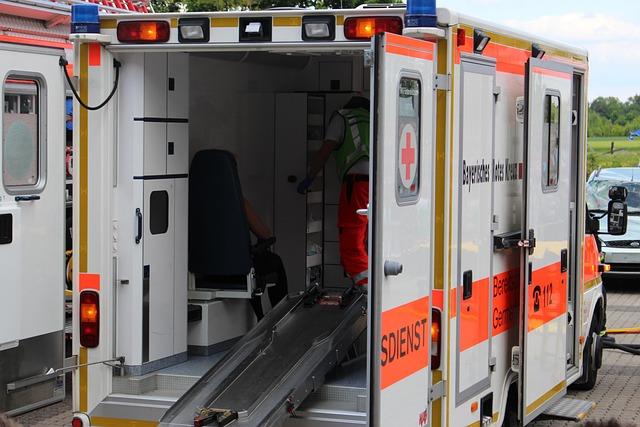
London Ambulance Service has reported its busiest year on record for life-threatening emergencies, as soaring demand places unprecedented pressure on frontline crews and control room staff. New figures released by the London Ambulance Service NHS Trust reveal a sharp rise in 999 calls categorised as immediately life-threatening-such as cardiac arrests, strokes and severe breathing difficulties-highlighting the mounting strain on the capital’s urgent and emergency care system. The surge comes amid ongoing challenges across the NHS, including hospital capacity issues and staff shortages, raising concerns about how services will cope if demand continues to climb.
Rising demand and critical pressures facing London Ambulance Service
In the last year, London’s medics have faced a surge in 999 calls that would once have been considered extraordinary. Crews are now responding to more immediately life-threatening incidents than at any point in the service’s history, from cardiac arrests and strokes to severe breathing difficulties and major trauma. This rising tide is driven by a complex mix of factors: an ageing population, increasing numbers of people living with multiple long‑term conditions, and mounting pressures on GP and community services that leave emergency care as the only open door. Call handlers report that what used to be a “busy shift” is now simply a normal day.
- Higher call volumes stretching vehicles and crews to their limits
- More clinically complex patients requiring longer on‑scene care
- Hospital handover delays that keep ambulances queuing outside A&E
- Staff fatigue and vacancies exacerbating response times
| Pressure Point | Impact on Patients |
|---|---|
| Record 999 demand | Longer waits at peak times |
| Crew shortages | Fewer ambulances on the road |
| Busy emergency departments | Delays transferring to hospital care |
Against this backdrop, leaders warn that London’s safety net is under sustained strain. While clinicians are innovating with telephone triage, community referrals and better coordination with hospitals, they stress that demand is now outpacing the system’s ability to expand. The service is balancing the need to reach the sickest patients within minutes with the reality of limited crews, finite vehicles and a city whose health needs are growing faster than its emergency infrastructure. Without wider reforms across health and social care, the front line is highly likely to remain under critical pressure.
Inside the control room how call handlers triage record levels of life threatening emergencies
Behind the glass screens and glowing monitors, call handlers sift through a constant stream of flashing alerts, turning raw panic into a structured, clinical response. Every 999 call is rapidly coded using national triage tools, but experience and instinct still play a crucial role when seconds matter. Operators listen for subtle cues in a caller’s voice, background noises and incomplete sentences that may signal a hidden cardiac arrest, stroke or catastrophic bleed. Within moments, they must decide whether to dispatch the closest ambulance, divert a specialist trauma team, or guide bystanders through lifesaving interventions before help arrives. The room moves in pulses: long stretches of relentless concentration punctuated by sudden surges when multiple critical calls land at once.
To stay ahead of record demand,the team relies on tightly choreographed processes and live data dashboards that track pressure across London.At any given minute they are:
- Balancing Category 1 calls against rapidly rising urgent cases
- Coordinating with advanced paramedic and air ambulance crews
- Identifying high-risk locations such as major junctions or transport hubs
- Adjusting deployment patterns in real time as incidents escalate
| Priority | Example Emergency | Target Response |
|---|---|---|
| Category 1 | Cardiac arrest, not breathing | Fastest possible dispatch |
| Category 2 | Stroke symptoms, chest pain | Rapid clinical assessment |
Each decision is logged in real time, creating an auditable timeline from the first ring to the moment a crew reaches the patient. Under sustained pressure, those in the control room work with a shared understanding: every call on their screen represents a life balanced on the edge of time.
Impact on patients response times and frontline staff wellbeing
As call volumes reached unprecedented levels, crews faced mounting pressure to reach the sickest patients as quickly as possible. While Category 1 response times were prioritised and closely monitored, the sheer demand inevitably led to harder choices about how resources were allocated across London.To help protect the most critically ill, control room teams introduced more dynamic dispatching and real-time clinical triage, ensuring that ambulances were sent first to those at immediate risk of death. This sharpened focus meant that some lower-acuity calls waited longer, but it enabled clinicians to keep survival chances as high as possible for patients in cardiac arrest, severe breathing difficulties or major trauma.
- Enhanced clinical triage to identify life-threatening emergencies faster
- Dynamic deployment of ambulances to shifting demand hotspots
- Increased use of specialist teams for complex critical incidents
- Closer coordination with hospitals to speed up handovers
| Focus Area | Impact on Patients | Impact on Staff |
|---|---|---|
| Peak demand shifts | Longer waits for non-urgent cases | More intense, prolonged shifts |
| Critical case prioritisation | Faster help for highest-risk patients | Higher emotional load after serious incidents |
| Staff support measures | More consistent care delivery | Access to wellbeing hubs and counselling |
Behind every response time metric is a workforce operating under sustained pressure. Crews and control room staff reported increased fatigue, emotional strain and moral distress, particularly when delays were unavoidable. In response, the Service expanded wellbeing initiatives, including peer-support programmes, on-call psychological support after traumatic incidents and quiet “reset” spaces in busy stations. Leadership teams also encouraged more flexible rostering and regular check-ins, aiming to retain experienced clinicians while maintaining safe, compassionate care at the frontline.
Policy changes funding priorities and practical steps to stabilise urgent and emergency care in London
Senior health leaders are now calling for a recalibration of national and regional policy so that resources follow need, not postcode. That means guaranteed multi‑year funding for ambulance trusts, ring‑fenced investment for clinically led call handling and dispatch, and a fresh focus on preventing avoidable 999 demand through integrated primary and community care. In London, this could include targeted support for boroughs with the highest deprivation, greater flexibility over how winter pressures money is spent, and a shift in performance metrics that value patient outcomes and safety alongside response times. Practical levers such as expanding “hear and treat” clinical advice lines, enhancing data‑sharing between services, and incentivising hospitals to reduce ambulance handover delays are seen as central to stabilising the system.
- Protected funding for frontline crews, call handlers and fleet renewal
- Integrated urgent care hubs linking 999, 111, GPs and community services
- Stronger discharge pathways to free beds and reduce hospital crowding
- Real-time data dashboards to coordinate city-wide surge responses
| Priority Area | Action | Impact |
|---|---|---|
| Frontline capacity | Extra crews at peak times | Faster life-saving responses |
| Emergency departments | Time‑limited handover standards | More ambulances back on the road |
| Community care | Rapid home visiting services | Fewer avoidable 999 calls |
Alongside funding, London’s urgent and emergency care network is looking to redesign how and where care is delivered. Ambulance clinicians are increasingly being trained to treat more patients safely at home, with direct referral routes into specialised teams for frailty, mental health and palliative care. Commissioners are exploring joint workforce plans so paramedics, GPs, nurses and advanced practitioners can be deployed flexibly across services, backed by incentives to work in the busiest areas of the capital. To lock in improvements, NHS organisations are pressing for streamlined governance that allows faster decision‑making in a crisis, supported by clear public messaging on when to call 999, when to use 111 and how to access same‑day care in the community.
Wrapping Up
As demand on the London Ambulance Service continues to hit record highs, the stakes have rarely been clearer. The figures underline both the capital’s growing reliance on its emergency crews and the mounting pressure faced by a service tasked with reaching patients at their most critical moments.
Leaders insist that investment in staff, technology and new ways of working will be essential if response times are to be protected and care standards maintained. But beyond the statistics, the message is equally stark: the future resilience of London’s emergency care will depend not only on system-wide reform, but also on how the city supports those who stand on its front line.For now, the service is navigating an unprecedented workload while attempting to transform for the long term – striving to ensure that, even as the numbers rise, Londoners can still count on help arriving when every second counts.