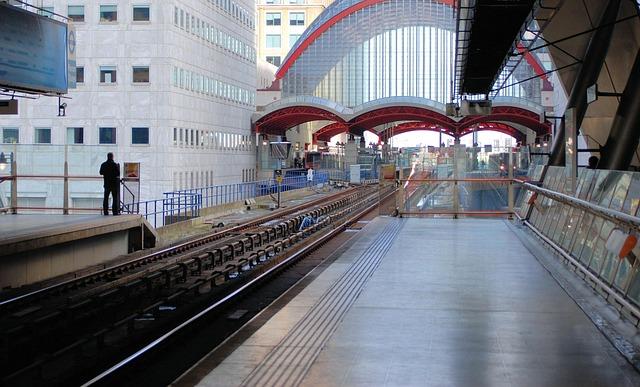
Two of London’s busiest railway stations are set to shut down for more than three weeks this summer, in a move expected to cause widespread disruption for commuters, tourists and regional travellers alike. The 22‑day closure,announced by Network Rail and reported by specialist outlet RailAdvent,will enable extensive engineering works deemed essential for maintaining and upgrading key parts of the capital’s rail infrastructure. While officials insist the planned shutdown will deliver long‑term benefits, including improved reliability and capacity, passengers are being warned to prepare for significant changes to their usual routes, longer journey times and crowded alternative services.
Impact on commuters as key London termini shut for 22 days and how services will be reshaped
Regular travellers into the capital are bracing for nearly a month of altered routines, as thousands of daily journeys are diverted away from two of London’s busiest rail gateways. Peak-hour crowding is expected to intensify at alternative hubs, with passengers funnelling through Clapham Junction, Farringdon, Waterloo and Stratford as operators re-route services and extend some trains to spread demand. Commuters are being urged to allow extra time, check revised timetables carefully and prepare for changing patterns of interchange, particularly where Underground and Elizabeth line connections will act as pressure valves for displaced main line traffic.
- More interchanges at intermediate stations as terminus-bound trains are curtailed
- Earlier departures on certain routes to preserve arrival times in central London
- Short-term timetable overlays replacing some stopping services with semi-fast alternatives
- Increased reliance on TfL modes, especially buses and the Underground, for final-mile journeys
| Route | Old Pattern | Temporary Pattern |
|---|---|---|
| Surrey commuter belt | Direct into central terminus | Terminate at Clapham, change for city |
| Essex & east London | Fast into London terminal | Diverted via Stratford with extra stops |
| Thames Valley | Mix of fast and stopping | Fewer fasts, longer dwell times at hubs |
Engineering works behind the closures what Network Rail is doing and why this window matters
Behind the temporary shutdown lies a tightly choreographed program of heavy engineering that simply cannot be squeezed into overnight possessions or weekend blocks. Network Rail’s teams will be stripping out worn track, replacing complex junctions and renewing miles of signalling cables that have quietly kept services moving for decades. Access to key approach lines and throat areas is being seized to carry out switches and crossings renewals, structural inspections and waterproofing of bridges and tunnels, along with power supply upgrades that pave the way for more reliable, higher-capacity timetables. Much of this work involves machinery and safety zones that require clear, uninterrupted access – a level of intrusion that is incompatible with even a skeleton passenger service.
The choice of a 22‑day block is not arbitrary; it is designed to compress years’ worth of disruptive interventions into one coordinated hit. By aligning civils, signalling, track and telecoms teams, Network Rail aims to minimise the number of future closures while building in resilience against extreme weather, higher train frequencies and growing passenger demand. In practice, this means:
- Faster delivery of multiple projects in a single possession window
- Reduced long‑term disruption compared with repeated weekend closures
- Lower whole‑life costs through bundled contracts and shared access
- Improved reliability thanks to modern, low‑maintenance components
| Key Focus Area | Main Benefit |
|---|---|
| Track & junction renewals | Smoother, more reliable journeys |
| Signalling upgrades | Quicker recovery from delays |
| Structures & drainage | Better resilience in bad weather |
| Power enhancements | Capacity for future service growth |
Alternative routes and ticketing strategies to keep your journey on track during the disruption
With key London termini out of action, flexibility becomes your best asset. Many operators will honor tickets via reasonable alternative routes, so check for easements that allow travel through nearby hubs such as Clapham Junction, Stratford, West Hampstead or Willesden Junction instead of travelling directly into central London.Where engineering work pushes more passengers onto the Underground, consider stepping off a stop early and using London Overground or DLR links to bypass the busiest interchanges. Look out for temporary rail replacement buses, and remember that some longer-distance services may be diverted to different London stations, opening up new options for onward travel.
- Travel off‑peak to avoid crowding and secure a seat on diverted services.
- Split tickets on longer journeys where permitted to keep costs down.
- Contactless & Oyster can offer cheaper or more flexible urban connections.
- Advance tickets may be refunded or rebooked without penalty when disruption is announced – always check the operator’s policy.
| Usual Route | Disruption-Pleasant Alternative | Ticket Tip |
|---|---|---|
| Thameslink via central London | Change at West Hampstead or Finsbury Park | Use any-permitted ticket on diverted services |
| South West services to Waterloo | Divert via Clapham Jct & Vauxhall | Combine rail with contactless Tube fares |
| Greater Anglia to Liverpool Street | Change at Stratford for Tube/DLR | Split at Stratford for potential savings |
Advice for businesses and travellers planning ahead to minimise delays and lost revenue
For companies reliant on footfall and tight timetables, now is the moment to treat transport disruption as a logistics challenge rather than an unavoidable loss. Build flexible staffing and customer-facing plans that anticipate reduced punctuality, and use clear, early interaction to keep clients on side.This can include updating email signatures and booking confirmations with temporary travel notices, adding banner alerts on websites, and briefing teams to offer alternative meeting options such as video calls or hybrid attendance. Retailers, hospitality venues and event organisers close to the affected routes can protect revenue by adjusting opening hours to match revised train timetables, and by promoting time-limited offers aimed at off-peak visitors. Consider the following practical steps:
- Re-map supply chains so deliveries avoid peak disruption windows.
- Coordinate staff travel with shared ride schemes or staggered shifts.
- Offer flexible booking policies to encourage re-scheduling rather than cancellations.
- Push digital services where in-person attendance is genuinely non-essential.
| Audience | Key Action | Benefit |
|---|---|---|
| Small businesses | Promote click-and-collect and online sales | Reduces reliance on passing trade |
| Commuters | Book earlier or later services and allow buffer time | Lower risk of missed meetings |
| Leisure travellers | Travel midweek and off-peak where possible | Less crowding, fewer last-minute changes |
Individuals, whether travelling for business or leisure, can also considerably reduce stress and financial risk by planning with precision. Build journeys around verified information from train operators’ apps and official websites, and avoid tight connections that depend on services running to the minute. Where hotel stays or event tickets are involved, opt for flexible or refundable options and pay close attention to cut-off times for changes. Simple but effective tactics include:
- Saving offline copies of e-tickets, route maps and updated timetables.
- Using fare alerts to secure cheaper alternative routes in advance.
- Checking last-train times before committing to late-night plans.
- Considering insurance cover where high-value bookings are at stake.
In Retrospect
As Network Rail and train operators push ahead with this intensive spell of engineering, passengers face nearly a month of significant disruption at two of the capital’s key rail gateways. The coming 22 days will test the resilience and flexibility of London’s transport network, as well as the patience of commuters and leisure travellers alike.
Yet the scale and concentration of the works underline the industry’s determination to modernise ageing infrastructure and improve reliability for the long term. With diversions, replacement buses and revised timetables already in place, the focus now shifts to how smoothly this operation is delivered on the ground.
For those who rely on these routes, the message is clear: check before you travel, allow extra time, and be prepared for unfamiliar journeys. What happens over these 22 days will help shape how – and how well – one of the world’s busiest rail systems can be upgraded while still keeping Britain moving.