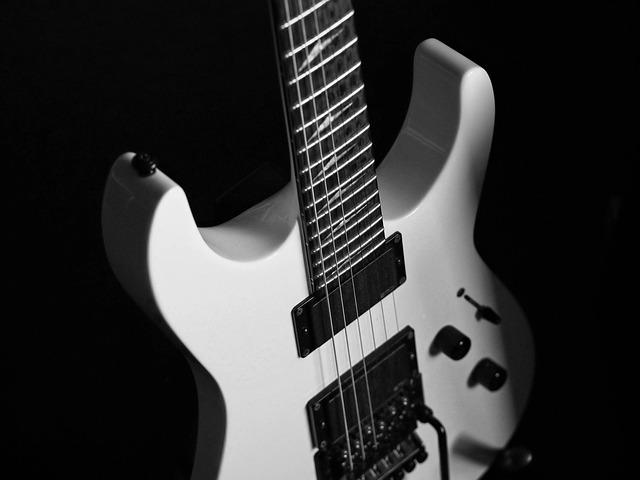
Shakespeare’s enchanted forest has rarely sounded quite like this. A new musical staging of A Midsummer Night’s Dream in London trades lutes and lyres for electric guitars and drum kits, recasting the Bard’s most whimsical comedy as a heady blend of rock concert and fairy-tale fantasia. With a fairy band underscoring the action and a leather-clad, rock-chick Titania at its center, this production aims to attract a new generation of theatregoers while reimagining a classic for contemporary audiences. But does the high-voltage concept illuminate the play’s themes of love, illusion and conversion, or drown them out beneath the amplification?
Staging the supernatural How the fairy band and rock infused score reimagine Shakespeare’s woodland world
The production’s greatest coup is the decision to make the fairies not wisps of gossamer, but a gigging backstage band, half roadies, half rock gods.Barefoot Pucks slalom between amps and cables, Oberon prowls like a frontman toying with the crowd, and Titania’s court moves with the swagger of a late‑night festival set. Their instruments double as props – a drum rim becomes a ritual circle, a mic stand morphs into a sceptre – collapsing the barrier between concert and play. Under saturated purples and acid greens, the forest feels less like a moonlit glade and more like an after-hours venue where time bends, identities blur, and mortals are mere walk‑on parts in the fairies’ never‑ending tour.
- Fairy band as chorus: underscoring scenes live, reacting in real time to lovers’ quarrels.
- Rock-infused motifs: distorted guitar licks for mischief, shimmering synth pads for enchantment.
- Vocal layering: ethereal harmonies instead of traditional sound effects for spells and charms.
| Shakespeare’s Text | This Production’s Sound |
|---|---|
| “I’ll put a girdle round about the earth” | Racing hi-hat, looping bass riff |
| “Music, ho! music” | Live cue for a grunge-tinged ballad |
| “Lord, what fools these mortals be” | Snarky guitar slide and crowd-like chant |
The rock palette doesn’t merely modernise; it interprets. When Titania appears as a full-throttle rock chick, her power is expressed in riffs rather than reverence, her lullabies delivered with the smoky edge of a lead singer holding a late slot. The score constantly comments on the action – a feedback squeal punctuates a misplaced kiss, a sudden drop to acoustic underscores moments of vulnerability – shaping the woods as a sentient soundscape that shifts mood with every chord change.In doing so, the creative team finds a contemporary equivalent for Elizabethan belief in the unseen: the invisible atmosphere of live music, felt in the chest before it’s fully heard, becomes the new magic that governs who falls, who rises, and who wakes up wondering what on earth just happened.
A rebellious queen Titania as rock chick icon and the gender politics of this bold reinterpretation
In this staging, Titania strides on not as an ethereal consort but as a leather-clad frontwoman who treats the forest clearing like her personal backstage. Electric guitar slung low, smudged eyeliner framing a gaze that refuses apology, she turns Shakespeare’s most beguiled monarch into a rock icon whose authority is performed as loudly as it is indeed written. Her band of fairies becomes a touring entourage, underscoring her status as the production’s headliner rather than Oberon’s whimsical counterpart. The costumes, sound design, and swaggering mic-stand choreography work in concert to signal a monarch who owns her pleasure, her power, and her mistakes, even when drugged into romantic farce.
This reframing reshuffles the gender hierarchy at the heart of the play. Rather of a queen manipulated into humiliation, we see a performer battling a rival headliner for creative control over the “set list” of the night’s magic. The dynamic between Oberon and Titania now reads less like patriarchal discipline and more like a band feud, urging the audience to question who gets to orchestrate desire and whose voice is amplified.
- Visual language: studded jackets, boots, glitter-signals of agency, not ornament.
- Vocal power: solos that drown out Oberon’s scheming underscore her narrative centrality.
- Political charge: consent, control, and public image play out like a backstage scandal.
| Traditional Titania | This Production’s Titania |
|---|---|
| Romantic victim of a spell | Frontwoman caught in a PR disaster |
| Decorative fairy royalty | Creative director of the fairy band |
| Subject to Oberon’s will | Negotiates power like a rock star on tour |
Standout performances and key musical moments that make this production worth the ticket
The evening belongs to this production’s magnetic leads and its mischievous house band of fairies. Titania, reimagined as a leather-clad rock goddess, tears through the score with volcanic vocals that slice cleanly through the forest of harmonies; every entrance feels like a stadium encore.Opposite her, a tender, guitar-strumming Oberon trades snarling riffs for hushed indie ballads, their duet over the enchanted lovers unfolding like a late-night rooftop session. Around them,the quartet of young Athenians become a vocal supergroup: Hermia’s crystalline soprano,Helena’s smoky belt,and the two impassioned tenors for Lysander and Demetrius collide in tight,almost pop-commercial harmonies that draw spontaneous mid-scene applause. Even Puck, here a wiry ringmaster-DJ, scratches and samples Shakespeare’s language live, looping lines into percussive hooks that make iambic pentameter sound unexpectedly club-ready.
- Fairy Band: A onstage ensemble that fuses folk strings, synth pads, and crunchy guitar for a constantly shifting soundscape.
- Dream Motif: A recurring four-note figure, whispered first on solo violin, later blasted out by the full company in a choral wall of sound.
- Bottom’s Ballad: A comic showstopper where the “rude mechanical” channels classic glam rock,complete with tongue-in-cheek key changes.
- Final Reprise: A curtain-call mash-up that layers every major theme into a single, festival-sized anthem.
| Moment | Musical Style | Why it lands |
|---|---|---|
| Titania’s first entrance | Arena rock | Instantly establishes her as the show’s sonic powerhouse. |
| Lovers’ forest quarrel | Pop-rock quartet | Overlapping melodies mirror the chaotic romantic tangle. |
| Puck’s spell sequence | Electro-rap | Beat-driven rhymes turn the magic into controlled mayhem. |
| Closing benediction | Folk-choral | A cappella harmonies send the audience out in hushed wonder. |
Who should see this show Audience guidance on age suitability Shakespeare familiarity and musical theatre appeal
This staging leans into its mischievous,musical mayhem,making it a lively option for families and school groups,but not the very youngest. The wordplay and romantic entanglements will likely land best with ages 10+, especially those pleasant sitting through a full-length production with amplified sound, bursts of rock music, and a few flirtatious gags. Parents and teachers should note the mild innuendo, some smoky club-style lighting, and the occasionally frenetic fairy antics. For teens, it’s an accessible gateway into Shakespeare, folding classic verse into a high-energy gig atmosphere that feels closer to a festival set than a dusty classroom text.
Whether you know the play inside out or barely remember Puck from your exam notes, the show is built to welcome different levels of familiarity. The band-in-the-woods concept,a swaggering rock-chick Titania,and playful choreography give musical theatre fans plenty to enjoy even when the iambic pentameter flies fast. The production particularly suits:
- First-time Shakespeare audiences who want story clarity and visual spectacle
- Musical lovers drawn to live onstage instruments, tight harmonies, and genre-blending songs
- School groups and drama students looking for a bold, contemporary spin
- Seasoned theatregoers curious about how far the text can bend without breaking
| Audience | Best For |
|---|---|
| Families (10+) | Fairies, music, visual comedy |
| Shakespeare fans | Fresh take, faithful core story |
| Musical theatre fans | Live band, rock-infused score |
| Casual theatregoers | Fast pace, clear storytelling |
Concluding Remarks
this musical adaptation of A Midsummer Night’s Dream doesn’t just update Shakespeare; it reframes him through the lens of amplified guitars, fairy riffs, and a reimagined queen of the night. Not every experiment lands, and purists may bristle at the more brazen choices, but the production’s commitment to its concept is never in doubt. With its fairy band underscoring the magic and a rock-chick Titania seizing centre stage, this London staging offers a bold, noisy reminder that classic texts can still surprise us-especially when the moonlight falls on a very modern forest.