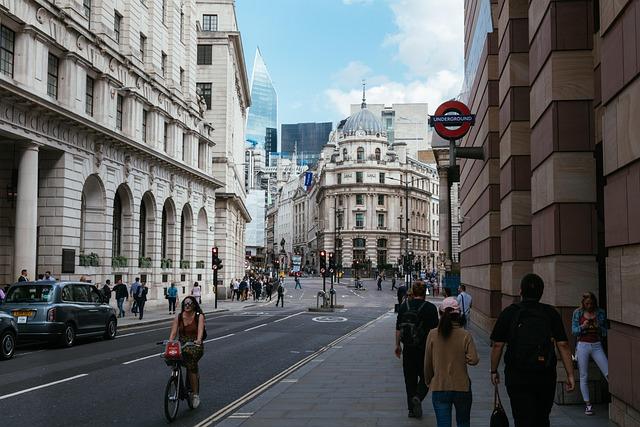
Residents of a quiet North London neighbourhood have found themselves on the front line of a growing battle over Low Traffic Neighbourhoods (LTNs), as anger mounts over a controversial scheme that blocks cars from a councillor’s own street. What was billed as a bold step towards cleaner air and safer roads is now being blamed for gridlocked traffic, longer journeys and mounting frustration among families who say their daily lives have been upended. As pressure intensifies on local officials to scrap or rethink the measures, the dispute exposes the sharp divisions over how Britain’s cities should balance environmental ambition with the realities of everyday urban life.
Backlash against controversial London low traffic neighbourhood as residents decry gridlock and displacement
Anger is spilling over on once-quiet streets as locals claim the scheme has simply pushed cars onto neighbouring roads,creating bumper‑to‑bumper queues,longer school runs and choking fumes outside homes that previously saw only light traffic.Parents describe children doing homework to the soundtrack of idling engines, while elderly residents say they feel marooned as buses and taxis crawl through newly formed bottlenecks. In community WhatsApp groups and packed town-hall meetings, neighbours talk of a policy sold as green and progressive but experienced, on the ground, as displacement rather than reduction.
- Longer journey times for school runs and commutes
- Side-street rat‑running as drivers dodge new filters
- Emergency access fears amid congested main routes
- Perception of unfairness where councillors’ own roads are protected
| Issue | Residents’ Claim |
|---|---|
| Air quality | Worse on boundary roads |
| Local trade | Drop in passing customers |
| Travel times | Up to 20-30 mins longer |
| Public trust | Eroded by lack of consultation |
How traffic restrictions on a councillors street fuel claims of double standards and broken trust
For many residents, the fact that a senior local representative lives on one of the streets insulated by the scheme has become a lightning rod for anger. Neighbours argue that while they are forced to endure tailbacks, longer school runs and buses crawling through jams, those on the “protected” road enjoy cleaner air and quieter evenings. This perception of an elected official benefiting from a policy that pushes congestion onto surrounding routes has crystallised into accusations of double standards, with some locals saying they feel less like participants in a green transport experiment and more like collateral damage.
The fallout is visible in community meetings, local WhatsApp groups and petitions, where distrust in the decision-making process is growing. Residents say repeated assurances that the project serves the “greater good” are undermined when they see who is shielded from the downsides. Among the most frequently voiced grievances are:
- Unfair displacement of traffic and pollution onto neighbouring streets
- Perceived preferential treatment for those living on restricted roads
- Lack of clear consultation before the scheme was implemented
- Dismissal of lived experience when concerns about gridlock are raised
| Claim from Residents | Impact on Trust |
|---|---|
| Rules benefit councillor’s street | Sense of bias in local governance |
| Consultations felt “rubber-stamped” | Belief decisions were pre-persistent |
| Complaints met with technical jargon | Perception of being ignored or patronised |
Evidence of congestion air quality and emergency access impacts demands transparent independent review
Residents now point to mounting, real‑world evidence that the scheme is doing the opposite of what was promised. Parents describe school‑run choke points where stationary vehicles idle for several light changes, while shopkeepers report deliveries taking twice as long to complete short journeys. Locals say the pressure on a handful of boundary roads has become intolerable, with drivers rat‑running down side streets and buses forced to crawl through bottlenecks. They argue that this lived experience,combined with emerging traffic data and air‑quality snapshots,can no longer be dismissed as mere teething problems but must be subjected to rigorous,arms‑length scrutiny.
Campaigners are demanding that the council publish all monitoring information in full and hand it to an independent body for analysis, insisting that the public cannot be expected to trust headline claims without seeing what sits underneath. They highlight three areas where they say clarity is non‑negotiable:
- Congestion: comparative journey times, queue lengths and bus delays before and after the barriers were installed.
- Air quality: pollution levels on newly clogged roads, particularly outside schools, care homes and playgrounds.
- Emergency access: response times for ambulances and fire crews navigating newly restricted routes.
| Issue | Resident Concern | Data Demanded |
|---|---|---|
| Traffic jams | Rush‑hour gridlock on main roads | Peak‑time flow counts |
| Pollution | Exhaust fumes outside homes and schools | NO₂ and PM readings |
| 999 delays | Longer routes for ambulances and fire engines | Average response times |
Practical alternatives to blanket road closures including targeted calming smarter enforcement and community led planning
Urban planners are increasingly exploring tools that ease congestion without simply pushing it from one street to the next. Instead of sealing off whole zones, councils can combine targeted traffic-calming with data-led enforcement and local consultation to break the stalemate. Measures such as raised junctions, narrowed lanes and visually distinct crossings slow rat-runners while still allowing emergency vehicles and deliveries through. Smart cameras and average-speed systems, linked to transparent, consistently applied penalties, can deter the worst behavior without relying on crude bollards or planters. Crucially, these interventions can be adjusted in real time, using GPS and air-quality data to tweak restrictions when pressure points emerge.
That flexibility matters to residents who feel ignored by top‑down schemes imposed with little warning. Neighbours, schools and traders can work with transport officers to map lived experience onto the streets they use daily, identifying where queues form, where bikes feel unsafe and where buses are chronically delayed.Community workshops, citizen surveys and trial layouts make it possible to test ideas before they become permanent fixtures. The result is a mix of options that can be tailored street by street:
- Time-limited access outside schools and at peak hours, rather than 24/7 bans.
- Bus and emergency gates that keep main routes flowing while deterring shortcuts.
- Resident-led monitoring groups to flag unintended gridlock or safety hazards.
- Adaptive signage that can be changed quickly if traffic simply migrates elsewhere.
| Measure | Main Benefit | Key Risk |
|---|---|---|
| Targeted calming | Slows rat-running on specific streets | Can displace traffic if poorly mapped |
| Smarter enforcement | Reduces speeding and illegal turns | Public backlash if seen as cash grab |
| Community planning | Boosts trust and local buy‑in | Slower decision-making |
Key Takeaways
As the row over this corner of north London shows, low-traffic schemes are about far more than bollards and signposts. They cut to the heart of how streets are shared, who bears the brunt of change and how far residents are prepared to go in the name of cleaner air and safer roads.
For now, the council insists the LTN is part of a necessary shift away from car dependency, while campaigners argue it has simply displaced congestion and chaos onto neighbouring streets – some of them home to the very people who voted the scheme through. With petitions multiplying, tempers fraying and legal challenges being weighed, the fight over this “most hated” LTN has become a test case for town halls across the capital.
Whether the barriers come down or stay firmly in place, the outcome will be watched well beyond this borough. In a city choking on traffic but divided over how to tackle it,the battle for these few streets may offer an early glimpse of the road ahead for London’s transport revolution.