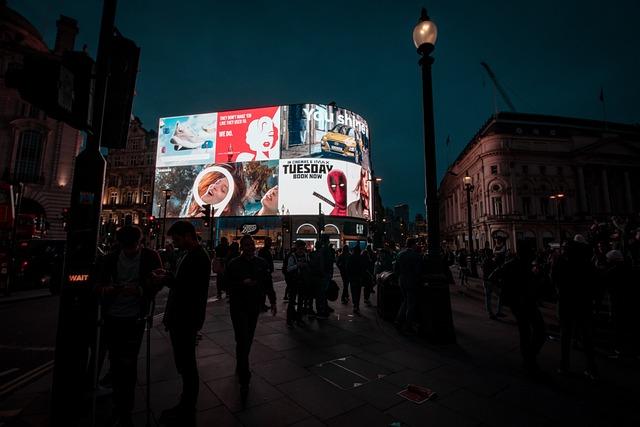
London‘s streets have rarely been safer on paper.Crime statistics point to long-term declines in violence, and successive mayors boast of a capital increasingly secure for its nine million residents and millions more visitors. Yet this reassuring picture jars with the daily experience of many Londoners: trains that don’t arrive, gridlocked roads, shuttered police counters, endless roadworks and a general sense that the basic systems that keep a city running are fraying at the edges.
This gap between official reassurance and lived reality is what some observers are calling “chaos creep” – not a single dramatic breakdown, but a slow, incremental erosion of order and reliability. It is the road closure that turns a 20‑minute journey into an hour, the delayed ambulance, the malfunctioning ticket gates, the unanswered 101 call. None of these,in isolation,signals a city in crisis. But together they create a pervasive feeling that London is becoming more difficult, more exhausting, and less predictable to navigate.
As policymakers celebrate falling crime, residents are asking a different question: if London is safer, why does it feel so much more chaotic? This article explores that contradiction – how a city can become statistically more secure even as everyday disorder quietly multiplies.
Understanding the paradox of safer streets and spreading disorder in London
On paper, the capital has never been more secure: homicide rates are lower than in the turbulent 1990s, public transport is heavily surveilled, and whole swathes of the city center feel walkable late into the night. Yet residents report an ambient unease, a sense that daily life is becoming more frayed at the edges. This tension between statistical safety and lived experience is driven by what criminologists call “signal crimes” – the highly visible, low-level disturbances that shape our perception of risk far more than spreadsheets do. Overflowing bins, smashed bus-stop glass and boarded-up shopfronts may not make the crime bulletins, but they whisper a different story about who and what is being allowed to slide.
The result is a creeping normalisation of small-scale disorder that steadily erodes trust in institutions. As resources are funnelled towards serious offences and headline-grabbing threats, the slow drip of antisocial behavior is left to soak into the urban fabric. Residents notice the difference in ways that statistics rarely capture:
- Stations feel safer – but the walk home is lined with broken lighting and noisy street drinking.
- Knife crime is down in some boroughs – yet shoplifting and abuse of staff in corner shops go unchecked.
- CCTV proliferates – while reporting minor offences becomes a digital maze few bother to navigate.
| Data trend | Street reality |
|---|---|
| Lower violent crime | More visible disorder |
| More surveillance | Less human presence |
| Safer transport hubs | Neglected side streets |
How underfunded services and stretched institutions fuel everyday chaos
Everyday breakdowns are now woven into the soundtrack of the city: buses silently pulled from the timetable, GP appointments vanishing into next month, housing officers who never call back. These are not freak glitches but the predictable outcomes of budgets shaved to the bone and staff rosters held together by overtime and goodwill. When youth centres close early,when mental health teams triage only the most extreme cases,when social workers juggle unachievable caseloads,minor issues are left to rot until they spill into the public realm. What might once have been a quiet intervention at a family’s kitchen table becomes, months later, a police call-out on a crowded street.
- Transport: thinning services, signal failures, chronic delays
- Healthcare: longer waits, rushed consultations, rising burnout
- Housing: slow repairs, overcrowding, fraying tenant support
- Policing: reactive rather than preventative, trust in retreat
| Service | Visible symptom | Hidden cost |
|---|---|---|
| Councils | Bin delays | Vermin, resentment |
| Transport | Shortened routes | Missed shifts |
| Clinics | Overfull waiting rooms | Late diagnoses |
Each of these small fissures chips away at a city’s sense of order. Underfunded boroughs outsource duty upwards: schools lean on overstretched charities, NHS teams lean on the police, neighbours lean on one another until they, too, are exhausted. The result is a lattice of micro-crises – missed benefits payments, unprocessed immigration forms, unresolved noise complaints – that never quite count as emergencies but collectively fray the social fabric. Safety statistics may improve on paper, yet the lived experience is of a metropolis where nothing quite works as it should, and where the burden of navigating dysfunction falls heaviest on those with the least time, money and power to spare.
The human cost of chaos creep for commuters residents and local businesses
On the ground, the slow drift towards disorder is most obvious to those who simply need to get from A to B or keep a small enterprise alive. Commuters describe a daily landscape of signal failures that never get properly explained, spontaneous platform closures and bus diversions announced only after passengers have already boarded. Residents live with overflowing bins left uncollected for days, e-scooters abandoned across pavements and an ambient sense that no one is quite in charge. For local shopkeepers and café owners, every unexpected road closure or suspended parking bay means fewer customers, shrinking margins and another reason to wonder whether trading is still viable.
- Commuters lose time, pay and predictability.
- Residents lose peace, cleanliness and confidence in local services.
- Businesses lose footfall,revenue and long-term resilience.
| Group | Everyday impact | Hidden cost |
|---|---|---|
| Office worker | Longer,unreliable journeys | Unpaid overtime,missed childcare |
| Local resident | Noise,litter,blocked pavements | Rising stress,weaker community ties |
| Shop owner | Sudden drops in customer traffic | Stock waste,postponed investment |
What links these experiences is not catastrophe but accumulation: a thousand minor frictions that rarely make headlines yet steadily erode trust in public authorities. People start to plan for failure as the default, building in extra travel time, avoiding certain routes altogether, or abandoning local high streets in favour of online shopping. London may record fewer serious crimes than in previous decades, but this creeping dysfunction creates a more subtle insecurity: a feeling that systems are fraying, that standards are drifting, and that everyday life in the capital is becoming harder, not easier, to navigate.
Policy choices that could restore order and confidence in the capital
Reversing the subtle drift into disorder will require decisions that are as visible on the street as they are in City Hall spreadsheets. London needs a more assertive settlement between central and local government that gives boroughs genuine control over transport, licensing and public realm budgets, paired with transparent performance targets that residents can track in real time. A redesigned policing model, focused on high‑presence neighbourhood teams, faster investigation of repeat offences and better digital reporting, would help rebuild the sense that someone is in charge. At the same time, planning rules must be tightened to curb speculative development that leaves dark, half‑empty blocks and construction sites blighting high streets for years.
Equally vital are policies that restore confidence in the everyday experience of the city. Small but symbolic interventions – from guaranteed minimum staffing levels at key stations to mandatory cleaning standards for bus stops and estates – signal that basic order matters. Fiscal incentives could encourage late‑night venues to sign up to accreditation schemes on safety and noise, while landlords who repeatedly allow antisocial behaviour might face tougher enforcement. Coordinated action,rather than piecemeal pilot projects,is critical; that means a standing City Resilience Board bringing together TfL,the Met,NHS trusts and major employers to agree shared priorities and publish progress.
- Empower boroughs with devolved budgets and clear accountability.
- Rebuild visible policing through local, trusted teams.
- Protect public space via stricter planning and maintenance standards.
- Back night‑time safety with incentives and enforcement for venues.
- Coordinate services through a permanent cross‑city resilience body.
| Policy Area | Key Action | Impact on Confidence |
|---|---|---|
| Neighbourhoods | Devolve funds to wards | Residents see rapid fixes |
| Transport | Guarantee staffed hubs | Safer, more reliable journeys |
| Policing | Boost local patrols | Visible deterrence and trust |
| Planning | Limit long-term blight | Cleaner, calmer streetscapes |
Insights and Conclusions
the question is not whether London is objectively safer than it was a decade ago – the data suggests it is in many respects – but whether it feels like a city that is being properly looked after. The slow degradation of public spaces, the sense of disorder on transport, the visible strain on services and infrastructure: these are not isolated irritations but part of a wider drift that shapes how people inhabit the capital.
“Chaos creep” is insidious precisely because it rarely announces itself as a crisis. Instead, it accumulates in uncollected rubbish, malfunctioning ticket barriers, shuttered police counters and the quiet assumption that no one is really in charge. Left unchecked, it erodes trust in institutions, weakens social norms and invites more serious problems to take root.If London is to remain a city that works – not just on paper but in the daily experience of its citizens – then safety cannot be measured only in crime statistics.It must include the predictability of a bus service, the reliability of a 999 call, the basic confidence that rules will be enforced and public space maintained. Reversing chaos creep will require investment, coordination and political will. But most of all, it will require acknowledging that a fraying city, though safe, is one that is already starting to come undone.