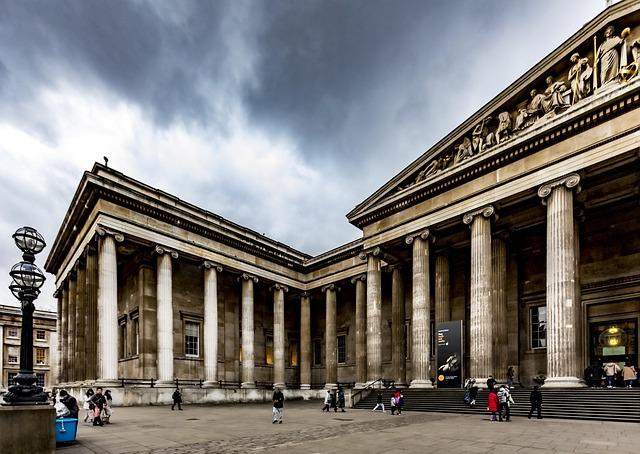
King’s College London has announced the launch of a new Master’s programme in Culture, Politics & Society, positioning itself at the forefront of interdisciplinary social research and debate. Designed for graduates seeking to understand how culture shapes political life and social change, the MA brings together perspectives from sociology, cultural studies and political theory at a time of heightened global uncertainty and polarisation. With its first cohort set to begin later this year, the programme aims to equip students with the analytical tools to unpack complex contemporary issues – from identity and inequality to media, protest and policy – and to apply this understanding across academic, public and professional spheres.
Exploring the intellectual foundations of the new MA in Culture Politics and Society at Kings College London
Rooted in the long-standing strengths of King’s in the humanities and social sciences,this programme brings together critical theory,political thought and cultural analysis to examine how power is produced,circulated and resisted. Students engage with key traditions of intellectual inquiry – from Marxism, postcolonial studies and feminist theory to cultural sociology and media theory – to interrogate how narratives, symbols and everyday practices shape public life. Rather than treating culture as an afterthought to politics or economics, the curriculum positions it as a primary arena where identities are negotiated, conflicts emerge and social change is imagined.
Teaching is structured around a series of intersecting conceptual lenses that help students decode contemporary crises and debates:
- Discourse and ideology – how language, images and stories normalise or challenge authority
- Race, gender and class – as analytic tools for understanding structural inequality and lived experience
- Global and urban transformations – tracing how cities, borders and networks reconfigure citizenship
- Technology and mediation – examining platforms, data and AI as new sites of cultural power
| Core Idea | What Students Explore |
|---|---|
| Power & Representation | Who speaks, who is silenced and how publics are shaped |
| Knowledge & Authority | Whose expertise counts in policy, media and culture |
| Resistance & Change | How movements, art and activism reimagine the social |
How the programme prepares graduates for careers across policy media and the cultural sector
The new MA equips students to move confidently between think tanks, newsrooms and cultural institutions by training them to decode how power operates through stories, images and public debate.Through core modules in political communication, cultural sociology and public ethics, students learn to translate complex ideas into accessible narratives for ministers, editors and curators alike. Workshops led by policy advisers, journalists and arts leaders simulate real-world briefs – from drafting a ministerial speech on cultural funding to scripting a podcast on social justice – ensuring graduates leave with portfolios that speak directly to contemporary employers’ needs.
Learning is anchored in London’s policy and media ecosystem, with opportunities to collaborate on live projects with external partners. Alongside academic supervision, students receive targeted career support, including tailored feedback on policy memos, media pitches and cultural project proposals. The programme’s professional focus is further reinforced through:
- Practice-based assessments that mirror policy papers, editorials and exhibition texts.
- Networking events with alumni working in government, NGOs, broadcasting and museums.
- Editorial clinics on data storytelling, op-eds and digital campaigns.
- Collaborative studios where students design speculative cultural interventions for urban spaces.
| Career Path | Key Skills Developed |
|---|---|
| Public Policy Analyst | Impact evaluation, briefing notes, stakeholder mapping |
| Journalist & Commentator | Narrative framing, fact-checking, rapid analysis |
| Cultural Programmer | Audience insight, curatorial writing, event design |
| Advocacy & Campaigns Lead | Message strategy, coalition building, media outreach |
Inside the curriculum key modules interdisciplinary methods and real world case studies
The programme is structured around a series of core labs and thematic pathways that cut across disciplines, rather than conventional siloed modules. Students move between political theory, cultural analysis, sociology, digital humanities and urban studies, working with staff who are active researchers in each field. Teaching is delivered through small seminars, workshops and practice-based studio sessions, where students learn to read a cultural text, analyse a policy paper and interrogate a data set within the same week. A dedicated methods strand runs throughout the year, introducing qualitative, quantitative and creative research tools that can be promptly applied to live policy questions and cultural debates.
- Core Lab: Culture & Power – unpacking ideology, identity and representation across media, art and everyday life.
- Methods Studio – training in interviews, ethnography, discourse analysis, data visualisation and mixed-methods design.
- Policy & Advocacy Workshop – simulating advisory roles with NGOs, think tanks and cultural institutions.
- City as Classroom – on-site case studies in London, from museums and grassroots organisations to local government.
| Module Focus | Real-World Case Study | Key Skill |
|---|---|---|
| Cultural Policy | Funding of community arts in London boroughs | Policy briefing writing |
| Digital Politics | Online campaigns around climate justice | Social media analysis |
| Urban Inequalities | Gentrification and housing activism | Stakeholder mapping |
| Global Movements | Transnational protest networks | Comparative case study design |
Throughout the degree, London functions as a living laboratory, with students collaborating on briefs set by external partners and responding to current events as they unfold. Assignments often simulate professional outputs rather than traditional essays alone: policy memos for city officials, public-facing commentary for media outlets, and research portfolios for cultural organisations. This combination of interdisciplinary methods and applied casework is designed to equip graduates with analytical dexterity and sector-ready experience, whether they move into academia, public service or the cultural and creative industries.
Recommendations for prospective applicants from admission requirements to funding and networking opportunities
Prospective students are encouraged to approach this MA with both intellectual curiosity and a clear sense of purpose. Applicants will typically be expected to hold a strong undergraduate degree in a relevant discipline such as politics, sociology, cultural studies or related social sciences, alongside evidence of critical writing ability and autonomous research skills.A concise personal statement that connects your academic background, work or activist experience, and long-term ambitions to the programme’s interdisciplinary focus can be decisive. International candidates should pay close attention to English language requirements and submission deadlines, allowing time for visas and document verification. It is also worth preparing a short portfolio of written work or policy briefs that demonstrate how you engage with contemporary debates on culture, power and social change.
Beyond admissions, students can draw on a rich ecosystem of funding, mentorship and professional networks anchored in London’s policy, media and cultural sectors. King’s offers a combination of departmental scholarships, widening participation bursaries and external partner awards, and applicants are advised to explore options early and tailor their applications to highlight public engagement and leadership potential.
- Scholarships & bursaries – partial fee waivers and living-cost support for outstanding and under-represented candidates.
- Research assistant roles – paid opportunities to support ongoing projects in culture, governance and social movements.
- Networking events – curated seminars with policymakers,NGOs,think tanks and creative industries.
- Alumni connections – informal mentoring and career insights from graduates working in advocacy, journalism and cultural institutions.
| Pathway | Key Benefit |
|---|---|
| Merit Scholarship | Reduces tuition for high-achieving applicants |
| City Partnerships | Access to London-based policy and arts networks |
| Alumni Mentoring | Targeted career guidance and introductions |
Concluding Remarks
As applications open, the new MA in Culture, Politics & Society signals King’s College London’s intent to remain at the forefront of critical social inquiry. By drawing together rigorous academic training, interdisciplinary collaboration and strong links to public life, the programme aims to equip graduates not only to interpret a rapidly shifting world, but to intervene in it. For students seeking to understand how culture and power intersect in shaping contemporary societies, King’s is positioning this degree as a timely and ambitious new route into advanced study and public engagement.