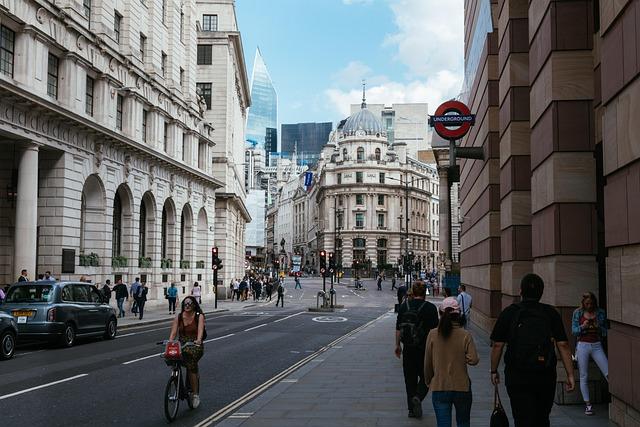
Britain’s financial capital risks undermining its own economic prospects if rising concerns over street crime are left unchecked, the Lord Mayor of London has warned. In remarks that underscore growing anxiety within the City, he cautioned that persistent fears about public safety could deter much‑needed domestic and international investment, just as London seeks to reinforce its status as a global hub for finance and business. His intervention comes amid heightened scrutiny of crime rates, public disorder and antisocial behavior in central districts, raising questions over whether the capital’s image as a safe and reliable place to live, work and invest is being put at risk.
Rising street crime perceptions threaten Londons global financial reputation
City grandees warn that nervous glances at smartphones on the Square Mile’s pavements are beginning to ripple into boardrooms in New York, Singapore and Frankfurt. While hard crime statistics remain contested, the perception of lawlessness – viral videos of daylight muggings, aggressors on e‑bikes and brazen shop raids – is fast becoming a risk factor on investors’ spreadsheets. Global funds assessing where to base their European operations increasingly weigh not just tax and regulation, but also whether senior staff feel safe leaving late-night meetings or commuting on public transport. In a sector where talent is fiercely mobile, the fear is stark: if high‑earning professionals and their families conclude that London’s streets are no longer secure, they may take capital, jobs and prestige elsewhere.
Financial firms are already stress‑testing reputational damage in risk committees, slotting public safety into the same models that track political upheaval and regulatory shocks. Many are quietly asking for:
- Visible policing around key transport hubs and financial districts
- Rapid, data‑driven responses to emerging crime hotspots
- Clear dialog from City Hall and the Met to reassure international clients
- Partnership programmes between businesses, local authorities and security services
| Concern | Investor Question |
|---|---|
| Street safety | Will staff feel secure after dark? |
| Brand impact | Does London still signal stability? |
| Talent retention | Will executives choose rival hubs? |
How investor confidence is shaped by safety concerns in the Square Mile
For global investors weighing whether to back a billion‑pound listing or a long‑term infrastructure project, perceptions of street-level security in the City are now part of the due diligence checklist.Fund managers increasingly probe not only regulatory stability and fiscal policy, but also how safe senior executives feel walking between late‑night meetings, or whether staff are comfortable commuting after dark. These seemingly anecdotal details feed into a broader sense of political risk, and can tilt capital either towards London or to rival hubs such as Paris and Frankfurt. In analyst briefings, concerns about crime translate into questions about insurance costs, operational resilience and the ability to attract high‑calibre international talent.
Within boardrooms, safety is being reframed as a core element of the City’s value proposition rather than a mere public-order issue. Investors are quietly benchmarking London against competitors on factors such as:
- Visible policing around key financial arteries and transport hubs
- Quality of public realm, including lighting, CCTV and street design
- Incident response times and data transparency from authorities
- Partnerships between City firms, local government and law enforcement
| Factor | Positive Signal to Investors | Negative Signal to Investors |
|---|---|---|
| Street crime trend | Falling incidents, clear stats | Rises and patchy reporting |
| Staff sentiment | Confident late‑evening use of the Square Mile | Growing reluctance to travel or socialise |
| Public messaging | Coordinated, data‑led reassurance | Reactive statements after high‑profile cases |
What City institutions and police are doing to reassure global markets
Senior figures in the Square Mile are moving swiftly to convince overseas investors that London remains a safe, predictable place to do business. The City of London Corporation is working with banks, law firms and asset managers on visible security upgrades around key financial hubs, including enhanced lighting, smarter CCTV coverage and more uniformed patrols during peak commuting hours. Simultaneously occurring, business leaders are quietly briefing major funds and sovereign wealth vehicles, stressing that crime levels in the financial district remain low by global standards and that recent high-profile incidents are being treated as a catalyst for tougher safeguards rather than a sign of decline.
Police chiefs, conscious that market confidence can shift on perception alone, are retooling their strategy with the international audience firmly in mind. Dedicated neighbourhood teams now liaise directly with trading floors and exchanges, providing real-time briefings on safety trends and rapid responses to investor concerns. Measures being highlighted to foreign institutions include:
- High-visibility patrols around transport hubs and major trading venues
- Joint training exercises with private security teams employed by banks and brokers
- Data-driven deployment targeting streets most used by financial professionals
- Multilingual communication to reassure global staff and visiting investors
| Reassurance Measure | Primary Goal |
|---|---|
| Extra patrols before & after market hours | Protect commuting traders and analysts |
| Quarterly security briefings for institutions | Maintain confidence of overseas investors |
| Shared incident reporting platforms | Speed up response and transparency |
Policy and urban design measures that could restore confidence on the streets
Reassuring residents, commuters and investors begins with visible, everyday changes that make city streets feel watched, lit and well used. Targeted measures such as better lighting on key routes, late-night public transport hubs staffed by uniformed wardens, and rapid-response cleaning teams that remove graffiti and vandalism before they become visual “warning signs” can subtly change the mood of an area. Equally, expanding CCTV with clear public signage, ensuring police and community officers patrol on foot rather than in cars, and supporting small businesses to extend opening hours all help to create a sense of continuous, legitimate activity that crowds out the perception of threat.
- Designing out blind spots with open sightlines and glass-fronted ground floors
- Activating empty spaces via pop-up markets, street food and cultural events
- Integrating transport and safety through staffed taxi ranks and secure cycle parking
- Co-producing solutions with local communities, BIDs and developers
| Measure | Main Benefit | Investor Signal |
|---|---|---|
| Smart street lighting | Brighter, safer walkways | Commitment to modern infrastructure |
| 24/7 mixed-use zones | More eyes on the street | Reliable footfall and trade |
| Visible patrols | Faster response to incidents | Robust safety governance |
| Community reporting apps | Quicker intelligence on hotspots | Data-led approach to risk |
Closing Remarks
As the City grapples with how to balance an open, vibrant urban surroundings with the demands of global capital, the message from the Mansion House is clear: perceptions of safety are now an economic issue as much as a social one.
Whether ministers and police chiefs can translate that warning into visible change on the streets will help determine if London retains its hard‑won status as a magnet for international investors – or finds nervous money looking elsewhere.