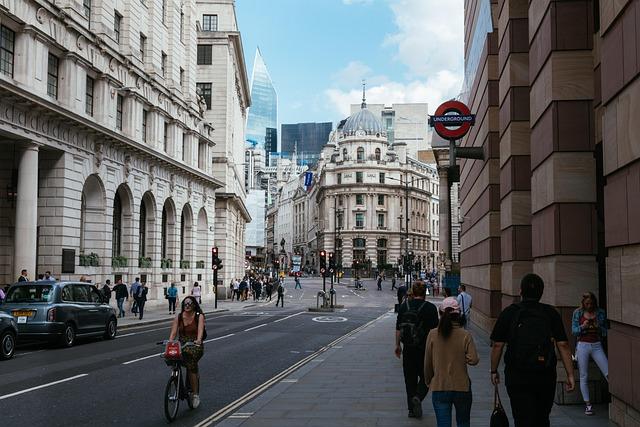
In a world increasingly shaped by data, debate and disruption, few institutions occupy the crossroads of economics, politics and society as prominently as the London School of Economics and Political Science. Better known simply as LSE,this specialist university in the heart of London has long been a magnet for ambitious thinkers,policy‑makers and future leaders from around the globe. Founded with a mission to understand the causes of things and to improve society, LSE today operates as both an academic powerhouse and a testing ground for ideas that ripple far beyond the classroom-into governments, boardrooms and international organisations. This article explores the origins, character and contemporary role of LSE, and examines how a compact institution has managed to exert outsized influence on global public life.
Exploring the Legacy and Global Reputation of the London School of Economics and Political Science
Nestled in the heart of London’s legal and political quarter, LSE has evolved from a reformist think tank founded in 1895 into a powerhouse of social science that routinely shapes public debate from Westminster to Washington. Its alumni footprint reads like a contemporary history of power and ideas: heads of state, Nobel laureates, central bank governors and UN leaders all trace their intellectual roots back to Houghton Street. What distinguishes the institution is not just academic prestige, but its role as a testing ground where economic models collide with political realities, and where public policy is interrogated in real time against global events. This distinctive blend of scholarship and influence has embedded the School in the machinery of decision‑making worldwide, from development ministries to multilateral institutions.
Its international reputation is reinforced by a campus culture that functions like a permanent global conference. Each year,a majority of students arrive from outside the UK,bringing policy challenges from their home countries straight into seminar rooms and public lectures. This diversity translates into a living laboratory of perspectives, and a network that follows graduates into key roles across continents:
- Global reach: alumni active in more than 150 countries
- Policy impact: research cited in major international reports and legislation
- Thought leadership: daily public events that attract governments, NGOs and business
| Region | Typical Alumni Roles |
|---|---|
| Europe | Finance ministers, EU policy advisers |
| Asia-Pacific | Central bankers, development strategists |
| Africa | NGO leaders, public sector reformers |
| Americas | Economists, political consultants |
Inside the LSE Academic Model and What Sets Its Teaching Apart
LSE’s approach to teaching feels less like attending classes and more like entering a live think tank. Lectures are often delivered by academics whose research is shaping policy debates in real time, and their findings migrate straight from working paper to seminar room.This creates an environment where students are prompted to challenge models, test assumptions and relate theory to events unfolding in today’s news cycle. Independent study is not an optional extra but a core expectation: course outlines are built around extensive reading lists and data sources that push students to construct their own arguments rather than repeat established ones.
What distinguishes the learning experience further is the way different disciplines collide in the classroom. A course in development, such as, may draw on economics, anthropology and political science in a single week, with students expected to navigate across methods and perspectives. Teaching is supported by small-group classes, office hours and specialist support centres that help students refine both quantitative and qualitative skills.
- Research-led teaching: courses updated around current academic and policy debates
- Interdisciplinary design: modules that cross traditional subject boundaries
- Discussion-driven classes: emphasis on seminars, not just large lectures
- Global cohort: diverse viewpoints built into classroom discussion
- Skills focus: data analysis, writing and argumentation embedded in assessment
| Element | How It Works at LSE |
|---|---|
| Seminars | Small, debate-focused groups guided by expert faculty |
| Assessment | Essays, problem sets and projects mirroring real policy tasks |
| Office Hours | Regular one-to-one academic support and feedback |
| Support Centres | Specialist hubs for writing, maths and data skills |
Student Experience at LSE Campus Culture Support Services and Daily Life
LSE’s central London setting shapes an energetic student journey that unfolds between lectures, libraries and landmark-filled streets. Between classes, students spill out into Lincoln’s Inn Fields, grab coffee in the Saw Swee Hock Student Center, or join debates that continue long after the speakers have left the podium. Cultural societies host film nights, language exchanges and food fairs, while campus media outlets turn breaking policy stories and student perspectives into podcasts and print. Many carve out a daily rhythm that blends seminar prep in the LSE Library with late-afternoon walks to the Thames, making the city an extension of the classroom and a testing ground for ideas.
Support is carefully woven into this pace of life, from specialist academic advisers to wellbeing teams who understand the pressures of an international, research‑intensive environment. Students navigate campus with a network of services that feel both formal and informal: appointments, peer mentoring, and chance conversations in common rooms. Key strands of this safety net include:
- Student Wellbeing Service for counselling, mental health and disability support.
- LSE LIFE workshops on study skills, writing and research strategies.
- Careers Service with employer events, CV clinics and alumni mentoring.
- Students’ Union advice on housing, finance and academic issues.
- Peer networks through societies, common rooms and halls of residence.
| Time | Snapshot of a Typical Day |
|---|---|
| 08:30 | Rapid breakfast in halls, headlines on the way to campus |
| 10:00 | Econometrics lecture, followed by group discussion |
| 13:00 | Lunch with society friends and planning an evening event |
| 15:00 | Study session at LSE LIFE and a careers drop‑in |
| 19:00 | Public lecture, then a walk through Covent Garden back to halls |
How to Prepare a Strong Application and Maximise Your Opportunities at LSE
Competition for a place is fierce, so every element of your application must signal academic maturity, intellectual curiosity and a clear sense of direction. Go beyond listing grades by demonstrating how specific modules, projects or readings have shaped your thinking on economics, politics or social sciences. In your personal statement, move from the concrete to the analytical: reference a policy debate you followed, a dataset you explored, or a book that changed how you understand inequality, and then explain what you learned. Admissions tutors look for evidence that you will thrive in a rigorous, discussion‑driven environment, so showcase independent research, critical engagement with complex ideas and any exposure to quantitative methods. Use your referee wisely: share your draft statement, a brief CV and your program interests so that their reference complements, rather than repeats, your narrative.
Securing an offer is only the start; the real advantage comes from knowing how to leverage LSE’s ecosystem once you arrive. Begin early by mapping the networks, societies and support services that align with your goals. Careers events, research assistant roles and public lectures can turn into internships, dissertation topics or mentorship if you approach them strategically and follow up. Consider this simple planning grid as you prepare:
| Stage | Action | Outcome |
|---|---|---|
| Pre‑application | Refine academic profile and statement | Clear fit with chosen programme |
| Offer holder | Engage with webinars, student ambassadors | Realistic view of LSE life |
| First term | Join key societies, attend careers briefings | Early professional networks |
- Align every paragraph of your statement with the skills and themes emphasised in your chosen programme.
- Curate evidence from reading, competitions, work experience and volunteering to show sustained interest, not last‑minute enthusiasm.
- Use campus resources tactically: office hours, LSE LIFE, departmental events and public lectures can all compound your academic credibility.
- Keep a simple opportunities log to track contacts, events and ideas that might shape future applications, internships or postgraduate study.
Closing Remarks
As the LSE continues to adapt to a rapidly changing world, its core mission remains recognisably the same: to understand the forces that shape societies and to equip people with the tools to influence them. From its early days in London’s legal quarter to its current role in global policy debates, the institution has consistently sat at the intersection of ideas and action.
For prospective students, policymakers, and curious observers alike, the School offers more than a prestigious name. It is a testing ground for new thinking,a meeting point for divergent viewpoints,and a reminder that economics and politics are never abstract disciplines,but living forces that determine how we work,live and govern.
In an age defined by uncertainty, LSE’s blend of intellectual rigour and real-world engagement ensures it will remain a central participant in the conversations that matter-both in London and far beyond.