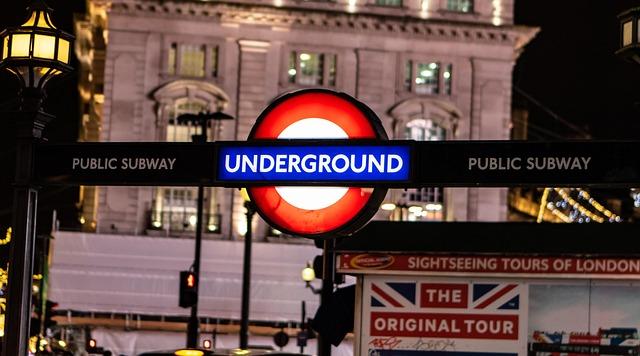
Commuters were left shaken after a man was slashed in the face during an attempted robbery at a busy London Tube station, in a violent incident that has reignited concerns over safety on the capital’s transport network. The attack, which took place in full view of passengers, saw the victim targeted by an assailant who reportedly tried to steal his belongings before turning to violence. British Transport Police launched an inquiry soon after, as paramedics treated the injured man at the scene. The incident has sparked renewed debate about knife crime and security on public transport, with authorities under pressure to reassure passengers that the Tube remains safe.
Reconstructing the attack sequence at the London Tube station and what witnesses reported
Piecing together accounts from commuters and police sources, the confrontation is believed to have unfolded in a matter of seconds on the edge of the evening rush.Witnesses describe a man stepping into the path of the victim near the ticket barriers, reportedly demanding valuables in a low, urgent voice before the situation “suddenly snapped.” According to those present, the suspect’s movements were fast and purposeful, with one onlooker recalling how the attacker appeared to scan the concourse first, as if checking for staff or security, before closing in. Moments later, a glint of metal was seen and the victim clutched his face, blood visible on the tiled floor as horrified passengers backed away.
Several witnesses have spoken of a brief struggle, followed by panic as people scattered towards platforms and exits. Staff hit emergency buttons while bystanders shouted for help, some attempting to shield children from the scene. Among the fragments of testimony, common details emerge:
- Timeframe: The incident reportedly lasted less than a minute before the suspect fled.
- Location: Near the barrier line and ticket machines, in full view of commuters.
- Reaction: Screams, phones raised to call 999, and station staff rushing in with first-aid kits.
- Focus: Witnesses say the attacker seemed intent on the victim’s bag and pockets.
| Key Moment | Witness Description |
|---|---|
| Initial approach | “He stepped in front of him, like blocking his way.” |
| Weapon seen | “I just saw something shine, then he swung his arm.” |
| After the slash | “People froze,then everyone ran at once.” |
| Suspect fleeing | “He bolted up the stairs and vanished into the crowd.” |
How security measures and surveillance performed during the attempted robbery
The incident laid bare both the strengths and limits of the station’s protective systems. CCTV cameras tracked the suspect’s movements from the ticket barriers to the platform,providing detectives with a clear timeline and crucial visual evidence. British Transport Police later confirmed that multiple angles of high-definition footage had been recovered, helping to identify distinctive clothing and behaviour moments before the attack. However,officers were not positioned on the exact platform at the time,underlining how surveillance alone cannot always prevent sudden violence in a crowded,fast-moving surroundings.
Commuters reported that emergency alarms and public address systems were activated within minutes, while staff followed established protocols designed for violent incidents.Key measures included:
- Rapid coordination between station staff, BTP and paramedics
- Immediate lockdown of affected stairways and platforms
- Targeted use of CCTV to trace the suspect’s exit route
- On-site triage for the injured victim in a designated safe area
| Measure | Performance |
|---|---|
| CCTV Coverage | Clear images, key to investigation |
| Staff Response | Swift, protocol-driven |
| On-site Policing | Reactive, not preventative |
| Public Alerts | Timely but limited detail |
The psychological and community impact of violent incidents on public transport users
Witnessing or even hearing about such a brutal attack during an everyday commute can profoundly alter how people relate to shared spaces. Regular passengers often report lingering anxiety, hypervigilance, and a sharp decline in trust toward strangers in confined environments like carriages and platforms. Many begin to change their routines-avoiding certain lines, travelling only at specific times, or standing closer to staff and CCTV cameras-shifting what should be a mundane journey into a carefully calculated risk. For some, especially those who have previously experienced crime, these incidents can trigger acute stress, sleep disturbances and a heightened sense of vulnerability that extends well beyond the transport network.
- Increased fear of repeat incidents
- Reluctance to travel alone, especially at night
- Greater dependence on visible security measures
- Heightened suspicion in crowded spaces
| Reaction | Typical Response |
|---|---|
| Short-term | Avoiding certain stations or lines |
| Medium-term | Relying on friends or family to travel |
| Long-term | Persistent distrust of public spaces |
Beyond the individual level, the ripple effects run through entire neighbourhoods connected by the line where the violence occurred. Local communities can experience a collective sense of shock and anger, often demanding visible policing, better lighting, and faster incident reporting systems from transport operators and city authorities. Simultaneously occurring, repeated exposure to headlines about stabbings and robberies risks normalising aggression, subtly reshaping the social contract of public travel: people become more guarded, less willing to intervene, and more inclined to retreat behind headphones and screens. This erosion of shared confidence undermines the idea of the Tube and wider transport network as inclusive civic space,raising urgent questions about how cities safeguard both physical safety and psychological wellbeing in the daily commute.
Practical safety recommendations for commuters and policy steps to reduce tube station crime
Regular passengers can considerably reduce their exposure to risk by adopting simple, consistent habits. Avoid isolated parts of the platform when possible, especially late at night, and stand near CCTV cameras, Help Points, and staffed areas. Keep valuables out of sight-phones, laptops and jewelry are prime targets-and use bags that can be zipped and worn across the body. Trust your instincts: if someone is acting aggressively or you feel you’re being followed, move towards other commuters, alert staff, or use the emergency intercom. Small adjustments, such as pre-loading travel cards to avoid fumbling with wallets and keeping headphones at a low volume, can make you more aware of your surroundings and harder to target.
- Stay visible: Wait in well-lit, busier sections of platforms.
- Secure your belongings: Use inside pockets for phones and wallets.
- Plan your route: Let someone know your expected arrival time at night.
- Report early: Log suspicious behaviour before it escalates.
- Use official exits: Avoid shortcuts through poorly lit back streets.
| Policy Measure | Impact on Safety |
|---|---|
| More visible patrols at peak risk times | Deters opportunistic attacks |
| Rapid-response units for violent incidents | Shortens time victims are left vulnerable |
| Improved lighting and camera coverage | Increases detection and conviction rates |
| Real-time safety alerts in apps | Gives commuters live risk information |
| Support for victims and witnesses | Encourages reporting and cooperation |
Transport authorities and city leaders can move beyond reactive statements and adopt targeted reforms backed by data. Prioritising high-incidence stations for extra staffing, undercover operations and technology upgrades can disrupt offenders who treat crowded platforms as hunting grounds. Mandating transparent reporting of violent incidents, along with regular public safety briefings, would help reassure commuters and hold operators to account. Coordinated campaigns-linking police, TfL, local councils and community groups-could focus on youth diversion schemes, knife-carrying awareness and fast-track prosecutions for serious offences committed on the network, sending an unambiguous message that the Tube is not a outcome-free space for violence.
Wrapping Up
The incident at the London Tube station underscores continuing concerns over violence and public safety on the capital’s transport network. As police appeal for witnesses and review CCTV footage, questions remain over how such attacks can be prevented and what further measures may be needed to reassure passengers.
Transport for London and the British Transport Police insist that serious incidents remain rare and that the network is patrolled and monitored. However, for many commuters, news of a man being slashed in the face in an apparent robbery attempt will reinforce anxieties about travelling, particularly at quieter times or in less crowded areas of stations.
The investigation is ongoing. Anyone who was in the vicinity at the time of the attack, or who may have information about those responsible, is urged to contact British Transport Police or Crimestoppers anonymously.