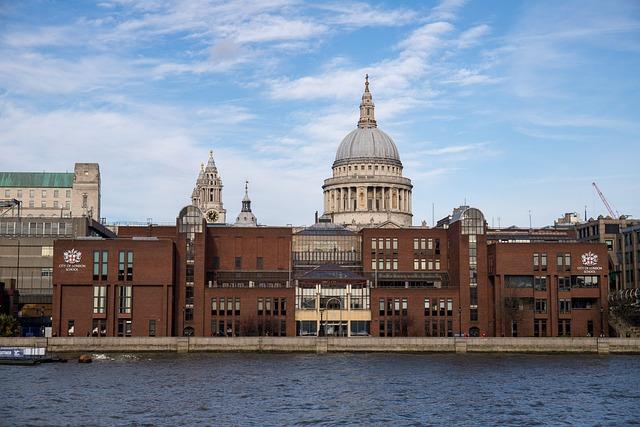
As demand for flexible, internationally recognised qualifications surges, the London School of Economics and Political Science (LSE) is quietly reshaping what it means to study at a world-leading university. Once defined by its red-brick campus in the heart of London, LSE now reaches students in more than 190 countries through a rapidly expanding portfolio of global and online degrees.
From working professionals in Lagos and São Paulo to school-leavers in Mumbai and Manchester, students are logging in to the same rigorous social science education that has long drawn them to London-but without boarding a plane. In partnership with the University of London and leading online learning platforms, LSE is betting that high academic standards and digital delivery are not mutually exclusive, but mutually reinforcing.
This article examines how LSE’s global and online degrees work in practice, who they are designed for, and what they mean for the future of elite higher education in an era defined by connectivity, competition and constraint.
Expanding Access to Elite Education through Global and Online Degrees at LSE
The convergence of digital learning and world-class scholarship is reshaping who can participate in LSE’s intellectual community. By offering programmes that can be pursued from Lagos, Lima or London, the institution lowers traditional barriers of geography, work commitments and financial constraints, while preserving the academic intensity for which it is known. Learners who might once have postponed or abandoned their ambitions are now able to engage with research-led teaching, live seminars, and collaborative projects without uprooting their lives. This broader reach is not simply about numbers; it is about bringing a more diverse range of professional and cultural perspectives into debates on economics, politics and social change.
To sustain academic rigour at scale, LSE combines flexible delivery with carefully designed support structures.Students gain access to:
- Asynchronous lectures that fit around global time zones and professional schedules.
- Interactive tutorials where small groups test ideas and receive targeted feedback.
- Digital libraries mirroring on-campus resources, including journals, datasets and archives.
- Virtual office hours with faculty and advisers for personalised academic guidance.
- Career and alumni networks that extend opportunities far beyond graduation.
| Program Focus | Study Mode | Ideal For |
|---|---|---|
| Applied Economics | Fully Online | Analysts and policy advisers |
| Global Public Policy | Blended | Civil servants and NGO leaders |
| Data Science for Social Impact | Online with live labs | Professionals using data for decision-making |
Inside the Virtual Classroom How LSE Designs Rigorous and Flexible Online Programs
Behind each module sits a carefully engineered blend of academic depth and digital agility. LSE faculty start with the same research-led syllabi used on campus, then collaborate with instructional designers to reshape them for the screen: lectures are broken into short, high-impact segments; case studies become interactive scenarios; and seminar debates migrate to moderated discussion boards that reward evidence-based argument. Asynchronous materials are layered with live webinars, office hours and peer-led study circles, enabling students across time zones to join the same intellectual conversation without sacrificing academic intensity.
This design philosophy is anchored in a simple principle: flexibility must never dilute standards. Every assessment-whether a timed online exam, a policy memo, or a data-driven project-is benchmarked against on-campus criteria and supported by structured feedback loops. Students navigate this ecosystem through a streamlined digital hub that brings together readings, collaboration spaces and analytics on progress. Within that virtual campus, they gain access not just to content, but to a network of classmates and faculty whose perspectives span continents, industries and disciplines.
Student Support Across Time Zones Services Tools and Communities for Remote Learners
Whether you’re logging in from Lagos at dawn or Los Angeles at midnight, you are never studying alone. LSE’s digital campus weaves together live academic support with flexible, on-demand resources designed around shifting schedules. From 24-hour library databases and recorded lectures to global office hours that “follow the sun”, academic guidance is deliberately staggered across time zones. Remote learners tap into a network of advisers, language specialists and careers consultants who deliver feedback, coaching and skills workshops through platforms that are secure, intuitive and optimised for low-bandwidth environments.
Learners also gain access to a layered support ecosystem that extends well beyond the virtual classroom.
- Virtual Learning Environment (VLE) with modular content, quizzes and discussion boards
- Round-the-clock tech helpdesk for platform, access and software issues
- Peer mentoring schemes pairing new students with experienced online cohorts
- Regional study groups that organize co-working sessions in local time
- Thematic communities for policy, finance, data and social science debates
| Service | Format | Time Zone Reach |
|---|---|---|
| Academic Advising | Live video & email | Europe, Americas, Asia-Pacific |
| Study Skills Clinics | Webinars & recordings | Global, on-demand |
| Wellbeing Check-ins | Chat & calls | Multi-time-zone slots |
| Career Drop-ins | Virtual drop-in rooms | Rotating time bands |
Choosing the Right LSE Online Degree Strategic Advice for Career Changers and Working Professionals
Shifting careers or studying while employed demands more than prestige; it requires a programme that aligns with your long-term trajectory and day-to-day reality. Begin by mapping your current skill set against the capabilities you need for your desired role-such as data literacy for policy analysts or financial modelling for aspiring consultants-and then cross-reference these with each programme’s learning outcomes. Pay close attention to course structure, assessment methods and synchronous vs. asynchronous components; professionals managing full workloads often benefit from flexible modules, recorded lectures and clearly signposted deadlines. It is indeed equally vital to examine the intellectual lens: whether you are drawn to quantitative analysis, critical theory or applied policy will determine how naturally you fit into the academic culture of each degree.
Professional value, however, is not steadfast by curriculum alone. Investigate the industry relevance and networking ecosystem surrounding each option: alumni placement, sector partnerships, and opportunities for live projects with employers. Look for degrees that integrate real-world case studies, capstone projects, and cross-border perspectives, crucial for those seeking roles in global firms, NGOs or international organisations. To sharpen your decision, consider the following comparison of typical profiles and degree pathways:
- Mid-career professionals seeking leadership roles may prioritise strategic management and organisational change modules.
- Analytically minded career changers might look for strong foundations in statistics, econometrics and data visualisation.
- Policy-focused practitioners benefit from programmes that blend theory with regulatory, social and ethical analysis.
| Profile | Recommended Focus | Key Benefit |
|---|---|---|
| Working Manager | Online management or economics degree | Immediate application to team and budget decisions |
| Career Changer | Data, policy or finance specialisation | Credible pivot into high-demand sectors |
| Global Professional | International relations or public policy | Stronger profile for multilateral and NGO roles |
Final Thoughts
As demand for flexible, internationally recognised qualifications continues to grow, LSE’s global and online degrees suggest one possible shape of higher education’s future: borderless, data‑driven and closely tied to real‑world policy and practice.
For students, the calculation is increasingly pragmatic.A programme that blends LSE’s academic reputation with online delivery and global cohorts offers access to elite teaching without the traditional constraints of geography,cost and career interruption. Yet it also raises familiar questions about equity, digital access and the limits of remote learning.
What is clear is that the old binary between “on‑campus” and “distance” study is rapidly eroding. In its place, institutions such as LSE are testing a hybrid model in which a London‑based education can be assembled from anywhere with a reliable internet connection. Whether this becomes the norm or remains a premium niche will depend on outcomes: the careers graduates build, the research these programmes enable and the communities they help to shape.
For now, LSE’s experiment with global and online degrees is more than a technical shift in delivery. It is a test of how far a world‑leading social science education can travel-and how profoundly it can reshape who gets to participate in it.