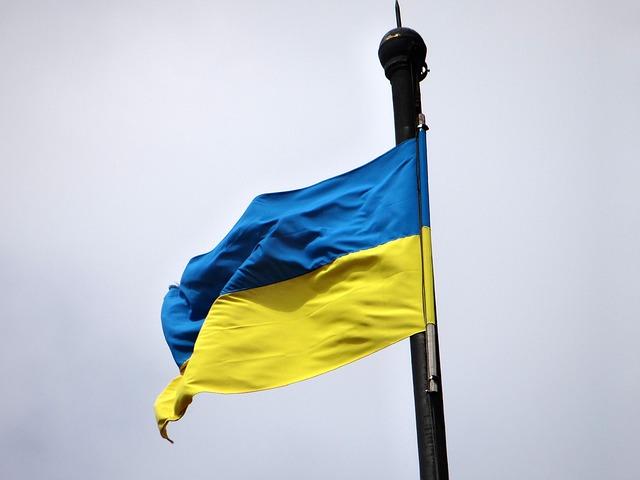
For much of the post-Soviet era, the balance of power between Russia and Ukraine appeared predetermined: Moscow dictated the tempo, Kyiv reacted. Yet nearly three years into Russia’s full-scale invasion, that script is being rewritten. On the battlefield,in the diplomatic arena,and across energy and trade routes,Ukraine has increasingly seized the initiative-forcing the Kremlin to respond to its moves rather than the other way around.From precision strikes deep inside Russian-held territory to deft coalition-building in Western capitals, Ukraine is reshaping a conflict once seen as a test of its survival into a broader recalibration of European security. This power shift is not absolute, nor is it irreversible, but its implications reach far beyond the trenches of the Donbas or the banks of the Dnipro. It is changing investment calculations, redrawing logistical maps, and challenging long-held assumptions in London, Brussels and beyond about where influence in Eastern Europe truly lies.
This article examines how Ukraine managed to wrest back the initiative-from military innovation and intelligence coups to economic resilience and strategic dialog-and what this means for businesses, policymakers and markets watching closely from the City of London.
Ukraine reshapes the battlefield Why Kyiv now dictates the tempo of war and diplomacy
From air defense breakthroughs over Kyiv to precision strikes deep inside Crimea, Ukraine has transformed itself from a state on the defensive into a pace-setter that forces Moscow to react rather than dictate. By combining Western technology with home-grown ingenuity-such as sea drones in the Black Sea and software-driven targeting on land-Ukrainian commanders are redefining modern warfare as a contest of speed, data and agility. This shift has not only disrupted Russia’s customary advantage in artillery and manpower, it has also eroded the Kremlin’s leverage over global energy and grain markets, reshaping conversations in European capitals and financial centres alike.
That battlefield momentum is now tightly interwoven with diplomatic strategy.Kyiv uses each successful operation to unlock new weapons packages, deepen security guarantees and stiffen sanctions regimes, effectively turning military wins into diplomatic currency. Western policymakers increasingly take their cues from developments on the ground, adjusting timelines and aid according to Ukrainian advances rather than Russian threats. This new dynamic is visible in:
- Arms negotiations that now focus on long-range and high-tech systems instead of basic defensive kits.
- Economic diplomacy centred on rebuilding corridors for trade through the Black Sea and EU border states.
- Security architecture debates in NATO that assume a resilient, militarily capable Ukraine for the long term.
| Front | Ukraine’s New Leverage | Impact on Russia |
|---|---|---|
| Military | Drone, cyber and precision strikes | Forced to disperse assets and slow offensives |
| Energy | Protecting transit, targeting logistics | Reduced coercive power over European markets |
| Diplomacy | Linking aid to battlefield results | Increasing isolation in key international forums |
From artillery to algorithms How Ukrainian innovation outmanoeuvred Russian mass and doctrine
On paper, Moscow’s advantage in tubes, shells and personnel should have been decisive. Yet Ukrainian planners quietly rewired the battlefield, replacing rigid “fire plans” with data-driven targeting cycles that compress decision-making from hours to minutes. Small, dispersed fire teams now operate as nodes in a digital ecosystem, feeding reconnaissance from cheap commercial drones, encrypted messaging apps and battlefield management software straight into artillery missions. Instead of massed barrages along predictable axes, Kyiv’s gunners deliver precision disruption-choking off logistics hubs, command posts and air defence radars while staying mobile enough to avoid counter-battery fire.
- Cheap drones acting as real-time spotters
- Decentralised command empowered by secure apps
- Open-source intelligence fused with military data
- Rapid-fire decision loops that outpace Russian responses
| Russian Approach | Ukrainian Approach |
|---|---|
| Mass firepower | Targeted precision |
| Top-down orders | Networked autonomy |
| Static doctrine | Iterative adaptation |
This quiet revolution is less about hardware than about mindset. Ukrainian officers treat each contact as a live experiment, logging where algorithms misjudge range, where drone feeds lag, where Russian jammers succeed-and updating tactics within days, not months. The result is a nimble, tech-enabled force that uses facts density to neutralise numerical inferiority, turning Russia’s reliance on mass into a vulnerability that can be mapped, modelled and methodically dismantled.
Western aid redefined Targeted support training and logistics that turned quantity into combat edge
Far from the caricature of endless blank cheques, assistance from Kyiv’s partners evolved into a tightly calibrated pipeline of precision weaponry, training, and battlefield data. Western instructors shifted Ukrainian units from Soviet-style massed formations to agile,small-unit tactics honed in Iraq and Afghanistan,coupling them with NATO-grade logistics and maintenance discipline. This meant not only learning to fire HIMARS or operate Leopard tanks, but understanding how to conserve barrels, rotate crews, and plan raids around satellite intelligence and real-time drone feeds. In effect, support moved from mere deliveries of hardware to the transfer of an entire operational culture – one that prizes flexibility, interoperability and the rapid exploitation of Russian mistakes.
- Advanced training programs in the UK, Poland and Germany
- Standardised logistics chains for ammunition and spare parts
- Data-driven targeting using Western ISR and Ukrainian drones
- Maintenance hubs outside Ukraine for heavy equipment repair
| Support Area | Key Impact |
|---|---|
| Artillery Precision | Fewer shells, more destroyed depots |
| Air Defence | Missile attrition over Kyiv and Odesa |
| Engineer Units | Faster breaching of minefields |
| Command Training | Quicker decisions at brigade level |
This recalibration turned limited quantities into a meaningful qualitative edge. Rather than trying to mirror Russia shell for shell, Kyiv used Western systems to target logistics hubs, command posts and bridging operations deep behind the front, undermining Moscow’s ability to mass forces. Sophisticated supply tracking cut waste and theft, while common standards made it easier to plug new equipment into existing units. The result was a leaner, smarter war effort: fewer shots, more disruption; fewer armoured columns, more pinpoint strikes – an approach that has steadily eroded Russia’s assumption that sheer volume would be enough to grind Ukraine down.
What business leaders can learn Strategic agility risk diversification and coalition building in times of shock
Ukraine’s ability to wrest the initiative from a larger, better-armed adversary offers a blunt lesson to executives facing economic shocks, technological disruption or antagonistic competitors: speed and adaptability can outweigh sheer scale. Kyiv’s leaders fused military intelligence, digital infrastructure and grassroots mobilisation into a rapidly evolving playbook, constantly testing, learning and discarding tactics that no longer worked.For boardrooms, that translates into building organisations that can pivot in weeks, not years, by empowering cross-functional “response cells,” shortening decision chains and rehearsing crisis scenarios before they hit. Just as Ukraine diversified away from Russian energy leverage, companies that rely on a single market, supplier or revenue stream are effectively handing their rivals a pressure point.
- Rehearse volatility with war-gaming sessions that stress-test supply chains, pricing power and data resilience.
- Spread exposure across geographies, vendors and product lines to avoid being cornered by one failed bet.
- Build alliances with stakeholders who share your interests, from regulators and industry peers to ecosystem partners.
- Invest in narrative: as Ukraine did with global public opinion, shape the information environment around your brand and strategy.
| Ukraine’s Move | Business Parallel | Leadership Takeaway |
|---|---|---|
| Rapid counter-offensives | Fast strategic pivots | Act before rivals can re-coordinate |
| Diversifying energy routes | Multi-source supply networks | Design out single points of failure |
| Securing Western support | Cross-industry coalitions | Turn competitors into issue-based partners |
| Digital-first command | Data-led decision rooms | Use real-time intel, not quarterly reports |
Wrapping Up
As the war grinds on, the balance of initiative remains a moving target, not a permanent prize. Yet Ukraine’s ability to seize the moment-leveraging agility, innovation and Western backing against a numerically superior foe-has redrawn assumptions about how power is measured on the modern battlefield. For boardrooms and policymakers in London and beyond, the lesson is clear: in an age of asymmetric shocks, it is indeed not sheer size but speed, adaptability and the smart use of alliances that determine who sets the agenda.
Whether Kyiv can sustain that advantage will depend on continued support, internal reform and the stamina of its war‑time economy. Russia, for its part, is adapting too, seeking new partners and tactics to blunt Ukraine’s gains. But whatever the conflict’s eventual shape, the power shift already witnessed offers a telling case study in 21st‑century statecraft-one that will inform military planners, investors and political leaders long after the guns fall silent.
![The 6 Best Free Things To Do In London This Weekend [December 19-21] – Time Out Worldwide](https://londontimenews.info/wp-content/uploads/2025/12/1729-the-6-best-free-things-to-do-in-london-this-weekend-december-19-21-time-out-worldwide-150x150.jpg)