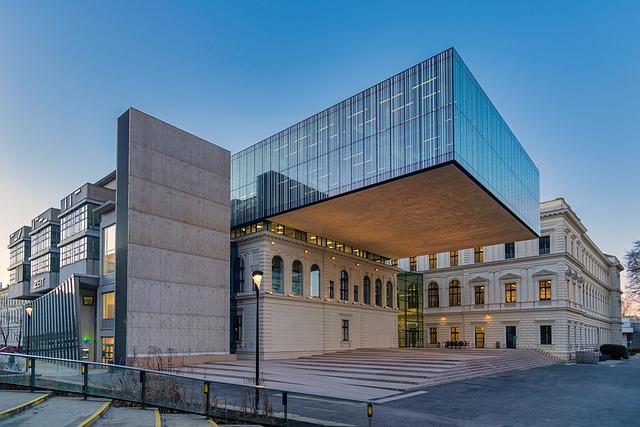
On a campus where Victorian redbrick meets cutting-edge laboratories, Queen Mary University of London is quietly reshaping what it means to deliver a world-class education.Long regarded as one of the capital’s most internationally diverse universities, Queen Mary is now placing equal emphasis on how students learn as on what they learn, weaving academic rigour together with a sharply focused, data-driven approach to the student experience.
From lecture halls in Mile End to clinical teaching spaces in Whitechapel and state-of-the-art facilities in the City, the institution is testing new models of teaching, assessment and support that reflect the realities of a changing world. It is a strategy that goes beyond league-table performance,aiming instead to close attainment gaps,foster genuine inclusion and equip graduates with the skills and confidence to navigate an increasingly complex global landscape.
This article examines how Queen Mary’s pursuit of excellence in education is being translated into day-to-day student life: the policies and practices behind the rhetoric, the innovations inside and outside the classroom, and the lived experiences of the students at the center of this change.
Teaching quality at Queen Mary University of London how innovative pedagogy is reshaping the classroom
Lecture theatres across campus are being reimagined as dynamic studios where students co-create knowledge with their lecturers. Interactive polling tools, live data dashboards and collaborative whiteboards have replaced much of the passive note-taking, enabling students to test understanding in real time and shape the pace of teaching. In laboratory and seminar settings, staff deploy flipped classrooms, problem-based learning and micro-simulation exercises that mirror real-world complexity, ensuring that theory is constantly stress-tested against practice. This shift is underpinned by continuous staff development, with academic teams sharing best practice through cross-faculty teaching forums and peer-observation schemes that focus as much on inclusion and accessibility as on subject expertise.
Digital and face-to-face methods are woven together to create a seamless learning habitat that feels both rigorous and responsive.Students access bite-sized video explainers, AI-supported feedback tools and discipline-specific virtual labs, while workshops focus on discussion, debate and applied projects. Key features of this evolving approach include:
- Authentic assessment – portfolios, podcasts and policy briefs in place of over-reliance on exams.
- Research-led teaching – final-year modules built around live staff research and local community partnerships.
- Learning analytics – early alerts that help tutors intervene before students fall behind.
- Co-designed curricula – student partners advising on reading lists, case studies and assessment formats.
| Innovation | Main Benefit |
|---|---|
| Flipped lectures | More time for discussion and critical thinking |
| Virtual labs | Safe, flexible experimentation |
| Authentic tasks | Stronger alignment with workplace skills |
Student support and wellbeing inside the services that underpin academic success
From the moment students arrive on campus, a network of integrated services works quietly in the background to remove barriers to learning and to safeguard mental health. Specialist teams collaborate with academic schools to provide tailored guidance, early interventions and rapid signposting, ensuring that no student has to navigate difficulty alone.This joined‑up approach spans everything from discreet counselling provision to financial guidance and accessibility support, all designed to sustain focus, resilience and confidence in demanding degree programmes.
Support is delivered through multiple touchpoints that fit around busy study schedules and diverse personal circumstances, combining digital tools with human contact for maximum impact:
- Dedicated advisers in schools offering one‑to‑one guidance on study pressures and progression.
- Wellbeing and counselling services providing confidential,clinically informed support.
- Inclusive learning adjustments for disabled and neurodivergent students,embedded in course design.
- 24/7 digital resources on stress management, sleep, motivation and exam planning.
- Peer‑led networks that foster belonging, shared experience and mutual encouragement.
| Service | Focus | Access |
|---|---|---|
| Student Life Advisers | Practical and pastoral support | Drop‑in & online |
| Wellbeing Hub | Mental health and resilience | Self‑referral |
| Disability & Dyslexia | Adjustments and advocacy | Pre‑arrival & in‑term |
| Money Advice | Funding and budgeting | One‑to‑one sessions |
Inclusive campus culture at Queen Mary how diversity and belonging drive learning outcomes
Across classrooms, laboratories and social spaces, Queen Mary cultivates an environment where students can bring their whole selves to their studies. This commitment is embedded in everyday practice: from academics who weave global perspectives into their syllabi, to peer-led networks that ensure under‑represented voices shape decision‑making. Dedicated support teams track engagement and outcomes for different groups, then act swiftly to close gaps through targeted mentoring, accessible teaching materials and flexible assessment design. The result is a learning ecosystem where identity is not an obstacle, but a source of intellectual richness and critical debate.
On campus, inclusion is experienced as a series of tangible touchpoints rather than a distant policy. Students encounter visible signals of welcome – prayer and reflection spaces, accessible study zones, and societies that reflect a wide spectrum of cultures and lived experiences. These elements combine to boost confidence, participation and, ultimately, academic performance.
- Co‑created curricula that integrate student feedback from diverse backgrounds
- Targeted academic coaching for first‑generation and international students
- Intersectional wellbeing support linking counselling, finance and disability services
- Staff training on inclusive teaching, assessment and feedback practices
| Initiative | Focus | Impact on Learning |
|---|---|---|
| Diversity Dialogues | Student‑led seminars | Higher seminar participation |
| Belonging Bursaries | Inclusive extracurricular access | Stronger cohort cohesion |
| Inclusive Curriculum Lab | Module redesign support | Improved attainment parity |
From lecture hall to labour market practical recommendations to enhance employability and real world readiness
Bridging the gap between academic theory and professional practice demands more than occasional careers fairs. At Queen Mary, students are encouraged to treat every module, project and presentation as a rehearsal for the workplace. This means sharpening transferable skills – from analytical writing and data literacy to cross-cultural interaction – while actively seeking out live briefs set by employers, community partners and industry mentors. Embedding work-based learning within degrees, whether through consultancy-style group projects or discipline-specific simulations, helps students experience real deadlines, stakeholder expectations and the ambiguity that defines modern work.
To turn potential into employment outcomes, students and staff can co-create a personalised career strategy that evolves from first year to graduation. This includes building a visible, credible profile both on campus and online, and exploiting the university’s global networks with intent rather than by chance.Practical steps include:
- Curating a portfolio of assessed work, side projects and research summaries that demonstrate impact, not just grades.
- Embedding micro-internships and job shadowing into vacation periods to test sectors quickly and cheaply.
- Leveraging mentoring schemes with alumni to gain sector-specific insight and realistic salary and role expectations.
- Practising professional communication by treating every email, meeting and presentation as part of a personal “brand audit”.
- Aligning optional modules with emerging labour market trends such as AI literacy,sustainability and data governance.
| Focus Area | Campus Action | Labour Market Outcome |
|---|---|---|
| Skills | Workshops in coding, pitching, negotiation | Job-ready technical and soft skills |
| Experience | Clinical placements, pro bono clinics, start-up labs | Evidence of impact beyond the classroom |
| Networks | Alumni panels, sector-specific societies | Warm introductions to key employers |
| Visibility | Guided LinkedIn strategy, digital portfolios | Stronger presence in recruiter searches |
Final Thoughts
As pressures on higher education intensify-from shifting funding models to rapid technological change-Queen Mary’s approach offers a pointed reminder that excellence is no longer measured solely in league tables or research output. It is increasingly defined by the texture of day‑to‑day student life: who feels welcome, who is supported to succeed, and who emerges equipped to navigate an uncertain world.
At Queen Mary, the emphasis on inclusive teaching, cross‑disciplinary learning and robust student support suggests a model in which academic rigor and personal development are not competing priorities but mutually reinforcing goals. The university’s challenge now will be to sustain this momentum: to embed innovation without losing focus on equity, and to scale up successful initiatives without diluting their impact.
In a sector under constant scrutiny, the Queen Mary case underlines a broader story about British higher education: that the institutions most likely to thrive are those that treat the student experience not as an add‑on to academic excellence, but as its essential counterpart.