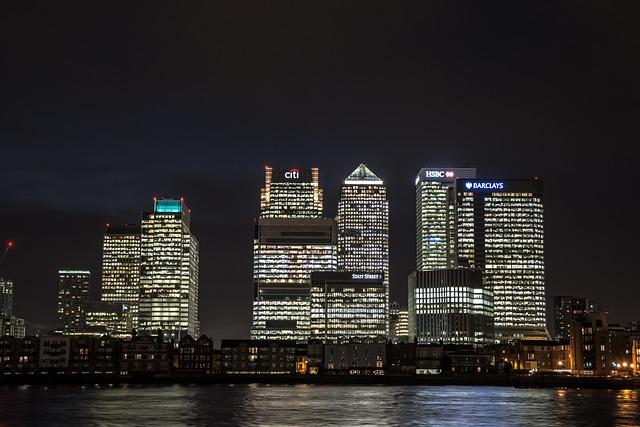
London’s skyline tells a story of money, power, and constant reinvention. From the glass-and-steel towers of Canary Wharf to the medieval street plan of the Square Mile and the centuries‑old banking houses of Lombard Street, the city’s financial districts form one of the world’s most complex and influential economic hubs. Together,they handle trillions in capital flows,shape global regulatory standards,and help set the pace for markets from New York to Hong Kong.
Yet these districts are far from interchangeable. Each has its own history, specialisation, and culture: Canary Wharf, the purpose‑built docklands reboot that became a symbol of modern finance; the City of London, or “Square Mile,” where trading floors, insurers, and legal heavyweights sit on top of Roman foundations; and Lombard Street, a relatively short stretch of road that has punched above its weight for centuries as a focal point for banking and credit.
This article examines how these three districts evolved, what roles they play in today’s financial system, and why their influence still matters to investors, businesses, and policymakers around the world.
Evolution of London’s Financial Powerhouses From Historic Trading Hubs to Global Finance Centers
In the narrow lanes around the Thames,money once moved as bales of wool,chests of spices,and handwritten bills of exchange shuffled between goldsmiths and merchants. Over centuries, informal coffeehouse deals on streets like Lombard evolved into sophisticated financial instruments that would shape empires. The City of London-the famed Square Mile-grew from a medieval marketplace into a dense cluster of joint-stock banks, marine insurers, and commodity brokers, setting the template for modern capital markets. Institutions that began by financing voyages and underwriting cargoes gradually learned to price risk, pool capital, and standardize contracts, laying the foundations for today’s global trading systems and regulatory frameworks.
By the late 20th century, deregulation and digital technology pushed this legacy into a new skyline. Glass-and-steel towers in Canary Wharf now host multinational banks, trading floors, and data centers, all plugged into a global network where capital moves at algorithmic speed. Yet the DNA of London’s early mercantile culture still shapes its competitive edge: a blend of legal certainty, deep expertise, and a tradition of innovation. This continuity is visible in the way historic streets coexist with modern infrastructure:
- Lombard Street – from goldsmiths’ vaults to private banking and niche finance
- Square Mile – from merchant guilds to worldwide banks and insurance giants
- Canary Wharf – from docklands to high-frequency trading and global deal-making
| Era | Key Activity | Financial Legacy |
|---|---|---|
| 17th-18th Century | Maritime trade & bills of exchange | Birth of modern banking |
| 19th Century | Empire finance & insurance | Global reserve currency role |
| Late 20th Century | Deregulation & eurodollar markets | Rise of global investment banks |
| 21st Century | Fintech, data, and derivatives | Integrated global finance hub |
Comparing Canary Wharf and the Square Mile Sector Strengths Key Institutions and Investor Appeal
While both districts are synonymous with high finance, they have evolved into distinct ecosystems that cater to different segments of the global market. Canary Wharf is dominated by universal banks, trading floors, and large-scale back-office operations, thriving on modern infrastructure and expansive floor plates that suit complex, tech-heavy operations.The Square Mile, by contrast, leans into its historic role as the capital of wholesale finance and professional services, clustering specialist firms within walking distance of one another. This divergence has created two complementary hubs rather than direct competitors,offering investors differentiated risk and return profiles.
For institutional and international investors, the calculus often hinges on sector exposure and covenant strength rather than geography alone. In broad terms:
- Canary Wharf attracts tenants in global banking, commodities, and fintech scale-ups, offering newer stock, large floorplates, and campus-style amenities.
- The Square Mile is anchored by insurance syndicates, legal giants, and asset managers, underpinned by a deeper pool of ancillary services and prestige addresses.
- Both markets benefit from strong transport links, but the Elizabeth Line has sharpened Canary Wharf’s appeal for commuters and cross-London connectivity.
| Feature | Canary Wharf | Square Mile |
|---|---|---|
| Core Sectors | Global banks, trading, fintech | Insurance, law, asset management |
| Typical Tenant Profile | Large multinational headquarters | Specialist and advisory firms |
| Investor Focus | Yield, scale, modern campuses | Stability, prestige, long leases |
| Built Environment | Towers, uniform skyline | Mix of heritage and landmark towers |
Lombard Street Today Niche Specializations Regulatory Environment and Banking Opportunities
Once the preserve of merchant banks and bullion brokers, this narrow City thoroughfare now thrives on niche financial services that prize expertise over scale. Specialist trade finance houses, boutique treasury advisers, and FX risk managers operate alongside insurtech start-ups and legacy Lloyd’s market intermediaries, forming a concentrated ecosystem of cross-border finance.Many firms have pivoted toward advisory-driven revenue, offering tailored liquidity solutions, supply-chain finance, and structured deposits aimed at corporates navigating volatile rates and currency regimes. The result is a streetscape where historic banking halls now host hybrid models: part client-facing salon, part data lab.
The operating backdrop is defined by a dense regulatory framework shaped by the Bank of England,the Prudential Regulation Authority (PRA),and the Financial Conduct Authority (FCA),all under the shadow of post-Brexit divergence from EU rulebooks. Compliance, conduct risk, and capital planning have themselves become a business line, spawning boutiques that translate regulatory complexity into competitive advantage. Opportunities cluster around three themes:
- Reg‑tech and compliance outsourcing for mid-sized banks and payment firms
- Green and sustainable finance, including transition-linked lending and ESG screening
- Cross-border payments and FX innovation, driven by open banking and instant settlement
| Segment | Key Focus | Opportunity Signal |
|---|---|---|
| Boutique Banks | Trade finance, treasury advisory | Higher margins on specialist deals |
| Reg‑Tech Firms | Automated reporting, KYC/AML | Demand from non‑bank lenders |
| ESG Advisors | Disclosure, green structuring | Capital reallocation to low‑carbon assets |
| Payments & FX | Real-time cross-border flows | Corporate shift from legacy rails |
Practical Guidance for Investors and Professionals Navigating Costs Risks and Career Prospects in Each District
For investors weighing where to allocate capital-or professionals deciding where to build a career-understanding the trade-offs between London’s financial hubs is critical. The Square Mile offers deep liquidity,blue-chip tenants,and a centuries-old regulatory ecosystem,but that stability often comes with premium pricing on both office space and residential property. Canary Wharf, by contrast, tends to deliver newer stock, larger floorplates, and slightly more competitive yields, yet its concentration in banking and large corporates can magnify sector-specific shocks. Lombard Street, with its dense cluster of boutique firms, tends to be more niche: attractive for specialized investors targeting smaller players and for professionals in high-touch roles in corporate banking, risk, and treasury. Risk in all three districts is driven not only by macroeconomic cycles, but also by shifts in regulation, fintech disruption, and evolving work patterns.
- Cost-conscious investors may prioritize secondary stock in Canary Wharf or fringe City locations for better yields.
- Early-career professionals often target the Square Mile for training programs and broader mobility across roles and firms.
- Specialists in capital markets, risk, and regulation may find Lombard Street’s boutique environment offers faster progression and influence.
- Hybrid-work strategies should factor in commuting times, transport links, and amenity value across districts.
| District | Typical Office Costs | Key Risks | Career Edge |
|---|---|---|---|
| Square Mile | Premium | High entry price, regulatory shifts | Training, global brand names |
| Canary Wharf | High but competitive | Sector concentration, vacancy swings | Big-bank roles, modern campuses |
| Lombard Street | Niche, relationship-driven | Limited scale, firm-specific risk | Specialist tracks, faster responsibility |
Future Outlook
Taken together, the Square Mile, Canary Wharf, and Lombard Street trace the arc of London’s evolution from a mercantile hub to a 21st-century financial powerhouse. Each district reflects a different chapter: the City’s medieval roots and regulatory might, Canary Wharf’s glass-and-steel embrace of global capital, and Lombard Street’s enduring role as a symbol of credit, trust, and continuity.
For investors, businesses, and policymakers, understanding how these areas interact-competing at times, but more frequently enough complementing one another-is key to grasping London’s resilience as a financial center. As markets digitize, regulations tighten, and geopolitical pressures reshape capital flows, the exact balance of power among them may shift. Yet their collective ecosystem, built on deep liquidity, legal certainty, and a long history of innovation, suggests that London’s financial districts are likely to remain central players in global finance for years to come.