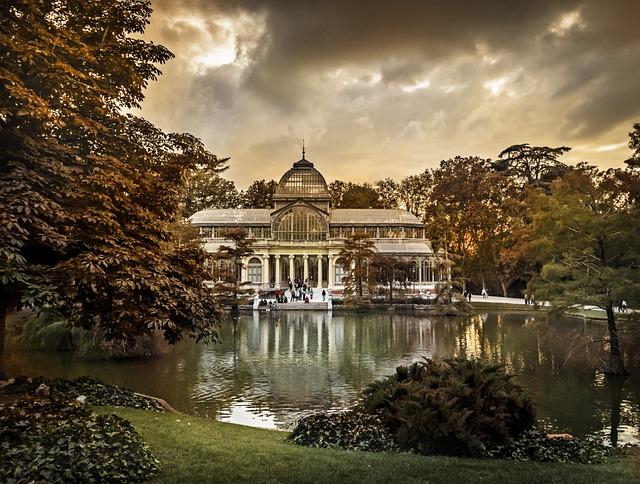
Morgan Sindall has unveiled fresh proposals for a major new sports hub at Crystal Palace, promising to revitalise one of London’s most historic athletic venues. The plans, showcased through a series of new visualisations, set out a modern, multi-sport complex designed to serve both elite athletes and the local community. Featuring upgraded facilities, reconfigured public spaces and improved accessibility, the scheme aims to secure the long-term future of the site while respecting its sporting legacy. In this picture-led feature, Construction Management Magazine explores the key elements of the design, the construction approach behind the project, and what the change could mean for Crystal Palace and its users.
Design vision for the new Crystal Palace sports hub and its role in regenerating the park
The proposals imagine a contemporary pavilion-style building that sits lightly within the historic landscape, replacing tired facilities with a low-carbon hub that opens up long-blocked views across the park. Glazed elevations and green roofs blur the line between inside and out, while timber structural elements, biosolar panels and rainwater harvesting reflect a strong sustainability agenda.Public access is central to the scheme: pathways are widened, step-free routes are introduced, and new wayfinding connects the athletics stadium, leisure lake and surrounding residential streets, turning what was a fragmented corner of the park into a coherent civic destination.
Beyond delivering new changing rooms and spectator amenities, the hub is positioned as a catalyst for wider social and economic renewal. The design team has mapped out how sport, culture and community uses can overlap across the day, supported by flexible interiors and robust, easy-to-maintain finishes.Key ambitions include:
- All-age sports offer with adaptable courts and multi-use studios
- Community-facing spaces for clubs, schools and local events
- Improved lighting and sightlines to enhance safety after dark
- Landscape-led regeneration restoring heritage views and habitats
| Design Move | Regeneration Benefit |
|---|---|
| Open, glazed frontage | More active park edges and visible activity |
| Green roofs and planting | Boost to biodiversity and cooler microclimate |
| Flexible internal zones | Shared use by schools, clubs and local groups |
| New pedestrian spines | Safer, direct links between park gateways |
Sustainability measures embedded in Morgan Sindall’s construction and long term operations strategy
From the earliest design sketches to the handover of the finished facility, Morgan Sindall has hard-wired environmental performance into every stage of delivery. The contractor is targeting a lean, low-carbon build with fabric-first efficiency, high recycled content and modern methods of construction that reduce waste, vehicle movements and noise in the park. On site, all plant and logistics are being scrutinised, with hybrid and electric machinery, smart fuel management and a strict materials passporting regime to keep embodied carbon in check. Water-saving fixtures, responsible sourcing of timber and aggregates, and a commitment to reuse excavated materials where possible are embedded in project protocols rather than treated as add-ons.
- Low-carbon construction logistics to cut emissions and congestion
- On-site segregation of waste with ambitious diversion-from-landfill targets
- Biodiversity-led landscaping aligned with local ecology plans
- Energy-smart building systems ready for future grid and battery integration
| Focus Area | Long-Term Measure |
|---|---|
| Energy | High-efficiency plant, LED lighting and digital controls to monitor real-time use |
| Carbon | Operational performance benchmarks tied to net-zero transition plans |
| Biodiversity | Managed habitats, native planting and seasonal monitoring of species return |
| Community | Local employment, skills programmes and shared environmental reporting |
Once operational, the sports hub is designed to function as a live test bed for data-driven sustainability, with integrated sensors tracking temperature, air quality and occupancy to optimise comfort while limiting energy demand. Maintenance contracts emphasise low-toxicity materials, circular replacement strategies and periodic reviews to align with tightening regulations and local climate goals. In practise,that means the facility’s running costs,carbon footprint and ecological impact are locked into a continuous advancement cycle – ensuring the asset does more than provide new pitches and courts,but actively supports the park’s long-term environmental resilience.
Community access plans balancing elite sport facilities with local grassroots use
The design team has sketched out a layered access strategy that aims to keep world-class competition spaces open to the surrounding neighbourhood. Under the proposals,elite training zones,show courts and high-performance gyms would operate on a timed booking system,freeing up off-peak hours for school groups,disability sports clubs and casual users.A sliding scale of tariffs is being explored, with subsidised community rates supported by premium event hire and sponsorship income, ensuring that local residents can book the same pitches and courts used by professional athletes. Shared circulation routes, transparent glazing and viewing galleries are also being used as architectural tools to dissolve barriers between “back-of-house” performance areas and everyday community spaces.
Management plans set out a partnership model in which borough sports officers, local clubs and national governing bodies jointly shape the programme. To avoid the hollow promise of access that never materialises, draft agreements include ringfenced time slots for grassroots use written into operating contracts, alongside simple booking technology to prevent block reservations by a small number of users.
- Guaranteed hours for schools and youth clubs during term time
- Open-access sessions on weekends for informal play
- Women and girls’ programmes prioritised in early evening slots
- Adaptive sports blocks tailored around local disability groups
| Facility zone | Peak use | Community access window |
|---|---|---|
| High-performance pitches | Pro training, match days | Weekday mornings, Sunday late afternoon |
| Indoor arena | Tournaments, elite camps | Local leagues after 8pm, school festivals |
| Strength & conditioning suite | Squad sessions | Pay-as-you-train slots, coached community classes |
Procurement lessons and risk management recommendations for delivering complex urban sports projects
For a regeneration scheme as intricate as the Crystal Palace sports hub, early procurement strategy becomes a form of risk insurance.Aligning design teams, specialist sports consultants and local authority stakeholders through pre-construction services agreements (PCSAs) can surface constraints before they become claims, particularly around heritage, ecology and community access. Flexible frameworks and two-stage tenders not only secure competitive pricing, they also incentivise innovation in offsite fabrication, lasting materials and digital coordination. By building in clear gateways linked to planning milestones and funding approvals, project leaders can keep political shifts and cost volatility from derailing delivery.
- Engage supply chains early to lock in key trades for pools, courts and M&E-heavy areas.
- Structure contracts for collaboration, with shared pain/gain linked to social value outcomes.
- Use BIM and digital twins to de-risk interfaces between transport links, public realm and sports facilities.
- Embed whole-life costing so operating budgets for lighting, maintenance and security inform design choices.
- Plan for phased openings to maintain public access and revenue while construction progresses.
| Risk Area | Typical Challenge | Procurement Response |
|---|---|---|
| Stakeholder alignment | Competing community priorities | Co-create briefs with user groups |
| Cost escalation | Inflation on specialist sports kit | Early supplier engagement & options |
| Programme slippage | Planning and utilities delays | Two-stage tender with flexible phasing |
| Operational performance | Underused facilities post-completion | Performance-linked FM and operator input |
On dense urban plots, risk management also hinges on what happens beyond the site boundary.Interface risks with live transport corridors, neighbouring residents and existing park users should be priced and programmed from day one, rather than treated as “unknowns”. Robust early works packages, detailed logistics plans and social value clauses can definitely help keep the project welcome in the community, mitigating protest, legal challenge or reputational damage. For contractors and clients alike, the emerging lesson from schemes like Crystal Palace is clear: the most resilient procurement models are those that treat sporting ambition, neighbourhood impact and commercial discipline as inseparable parts of the same brief.
Final Thoughts
As Morgan Sindall’s vision for Crystal Palace takes shape,the proposed sports hub stands as a clear statement of intent: to modernise a historic venue while expanding access to community sport.
Planning negotiations, detailed design work and community consultation will now determine how much of this ambition is ultimately realised on the ground. But for local residents,sports organisations and policymakers alike,the images released so far offer a first,detailed glimpse of how one of London’s most storied sporting landscapes could be reimagined for the next generation.