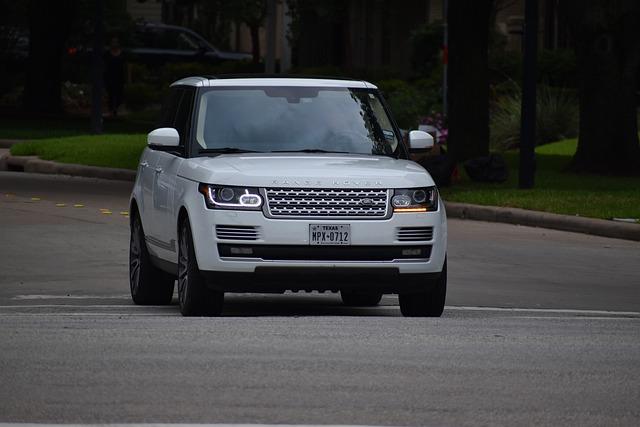
For years, London‘s streets have filled with ever-larger SUVs, provoking rows over congestion, pollution and the changing character of the city’s roads. Now, a proposed “Range Rover tax” is putting that simmering debate into sharper focus. The idea, floated by London politicians and transport campaigners, would see drivers of heavier, more polluting vehicles pay higher parking or access charges in parts of the capital. But how would such a scheme actually work in practice-who would pay, how much, and under what authority? In this article, London-centric journalist Jim Waterson unpacks the politics, practicalities and potential pitfalls of a policy that aims to reshape what Londoners drive, and how they move around their city.
Understanding the proposed Range Rover tax and its impact on London drivers
At the heart of the idea is a simple premise: make the heaviest, most polluting urban tanks pay more to use city streets already choking with traffic. Under proposals floated by transport campaigners and tentatively explored by councils, large SUVs such as Range Rovers would face an extra daily or hourly charge when entering controlled zones, similar in spirit to the congestion charge but targeted at vehicle size, weight and emissions. Local authorities could use Automatic Number Plate Recognition (ANPR) cameras to flag vehicles that breach agreed thresholds,automatically applying a surcharge on top of existing parking or driving fees.The aim is not an outright ban, but a nudge: encourage drivers to switch to slimmer, cleaner cars that take up less road space and pose less risk to pedestrians and cyclists.
For Londoners behind the wheel, the practical impact would depend on what they drive, where they live and how often they cross inner-city borough boundaries. Families running a modest hybrid may see little change, while owners of hulking luxury SUVs could find everyday errands more expensive, especially in boroughs keen to reclaim streets for walking, cycling and public transport. Councils are already eyeing potential revenue to fund safer crossings, school streets and low-traffic neighbourhoods, though critics warn of a creeping “war on motorists” and a new class divide between those who can afford premium car taxes and those locked out. In reality, the policy is likely to be highly localised, experimental and contested, producing a patchwork of rules across boroughs rather than a single citywide regime from day one.
- Who pays more? Owners of heavier, high-emission SUVs, especially luxury models.
- Where would it apply? Likely inner London boroughs with existing traffic schemes.
- How is it enforced? ANPR cameras, parking permits and targeted surcharges.
- What’s the goal? Cut congestion, emissions and road danger from oversized cars.
| Vehicle Type | Example | Likely Charge Impact |
|---|---|---|
| Large luxury SUV | Range Rover Sport | Highest surcharge |
| Mid-size SUV | Nissan Qashqai | Moderate or none |
| Small hatchback | Ford Fiesta | Unchanged |
| Electric city car | Renault Zoe | Lowest or zero |
How luxury SUV charges could reshape congestion and emissions across the capital
City Hall’s wager is that making it more expensive to drive hulking, high-emission vehicles into town will do more than just raise revenue. By targeting the most space-hungry cars – the kind that occupy more road and kerbside real estate than many inner-London flats – the surcharge could begin to thin out the most obstructive traffic, particularly in already-crammed boroughs. Transport planners say that if even a modest share of drivers swap to smaller cars, car clubs or public transport, the cumulative effect on gridlock could be significant, especially on school-run corridors and weekend shopping routes. Critics, though, warn of displacement: wealthier drivers may simply reroute through neighbourhoods just outside the charging boundary, shifting jams and fumes rather than removing them.
The environmental calculus is starker. London’s air-quality hotspots are closely aligned with affluent zones where oversized 4x4s are as much fashion item as family transport,and officials hope price signals will cool demand for the most polluting models. A tiered fee, linked to emissions bands and vehicle weight, could accelerate the shift towards hybrids, EVs and smaller engines while making the dirtiest SUVs socially – and financially – awkward to own. Alongside the headline charge, campaigners are urging complementary measures, such as:
- Preferential parking for low-emission vehicles on residential streets
- Micro-discounts for car-share schemes that replace private SUVs
- Clear reporting of roadside pollution before and after implementation
| Area | Likely Effect on Traffic | Likely Effect on Emissions |
|---|---|---|
| Central retail districts | Fewer bulky SUVs, smoother traffic flow | Noticeable drop in NO2 peaks |
| Inner suburban school runs | Shift to smaller cars and buses | Reduced morning pollution spikes |
| Outer borough bypass routes | Risk of short-term diversion | Mixed, depends on enforcement |
Winners losers and legal hurdles in implementing a citywide gas guzzler levy
Any serious attempt to slap extra charges on high-emission SUVs would instantly create a new set of urban winners and losers. Inner-city families who’ve already ditched cars for bikes and buses would effectively receive a quiet subsidy in cleaner air and calmer streets, while tradespeople reliant on older diesel vans could feel unfairly punished unless exemptions or phase-in periods are built in. Car dealerships in affluent postcodes might pivot to marketing “tax-proof” low-emission models, but outer-borough residents with limited public transport options could see the scheme as another levy designed in Zone 1 and paid for in Zone 5. Politically, that’s combustible: the same policy that delights climate-conscious renters in Hackney could enrage multi-car homeowners in Bromley.
Behind the scenes, the more complex fight would play out in courtrooms and committee rooms.City Hall lawyers would need to prove the charge is about air quality and congestion, not a stealth wealth tax on people who buy expensive cars, to avoid challenges on discrimination and proportionality. Manufacturers, motoring groups and even resident associations would probe every loophole: is it lawful to target specific body types like large SUVs rather than emissions alone? Can ANPR and DVLA data be used this way without overreaching privacy rules? With judicial review now a standard tool of political opposition, any misstep in consultation, impact assessment or signage could see a flagship policy stalled for years.
Policy recommendations for a fair effective and politically viable Range Rover tax in London
Designing such a levy to survive both legal challenge and public backlash means anchoring it in clear principles: emissions, space, and safety. City Hall should frame the charge as a technology-neutral, data-led adjustment to existing road pricing, not a cultural war on 4×4 drivers. That means linking fees to empirically measurable factors such as vehicle weight, tailpipe and particulate emissions, and on-street footprint, with transparent thresholds and a route to avoid the charge through cleaner models or off-street parking. To blunt accusations of stealth taxation, revenues must be ringfenced and audited, with an annual public report on how the money is spent and what impact it has had on congestion, air quality and serious collisions.
- Base fees tied to weight and emissions bands,applied across all brands
- Discounts for residents,blue-badge holders and low‑income households
- Time-of-day pricing to focus on school runs and peak congestion
- Automatic exemptions for emergency and essential service vehicles
- Dedicated fund for bus upgrades,cycle lanes and safer crossings
| Vehicle type | Daily charge (Zone) | Revenue use |
|---|---|---|
| Heavy SUV,high emissions | £15 (inner),£7.50 (outer) | School streets, air monitors |
| Mid-size petrol/diesel | £7 (inner), £3 (outer) | Bus priority, junction redesign |
| EV/hybrid SUV | £3 (inner), £0 (outer) | EV charging hubs |
Crucially, the politics will depend on who feels the benefit. A credible package would be sold not as a punishment aimed at Chelsea tractors, but as a neighbourhood dividend: safer pavements around primary schools, cleaner air on high streets, faster buses through clogged junctions. Communication will matter as much as pricing. That means pilot schemes in a handful of boroughs; visible, early wins (like new crossings or bus frequency upgrades) funded directly from the first months of income; and a sunset clause requiring the mayor to re-approve or revise the levy after a fixed period. By coupling a targeted charge with tangible,hyper-local improvements,City Hall stands a chance of turning a culture-war headline into a quietly accepted piece of urban housekeeping.
The Conclusion
Whether Khan’s “Range Rover tax” ever makes it from eye-catching soundbite to functioning policy will depend on the politics as much as the plumbing of London’s road-charging systems. Any scheme would have to balance air quality gains against accusations of “war on motorists”, mesh with existing charges such as Ulez and the congestion zone, and survive inevitable legal and technical scrutiny.
But the direction of travel is clear.As cities wean themselves off petrol and diesel, flat daily fees will be harder to justify and pressure will grow for more targeted charges based on what you drive, when you drive and where. Today’s talk of a tax on Chelsea tractors may be framed as a row about class and culture. In practice, it is a test case for how far London is willing – and able – to go in reshaping who gets to drive what on its streets, and at what price.