Ken Livingstone has long been one of the most polarising figures in modern British politics: a shrewd strategist to his admirers,a relentless provocateur to his critics. Rising from Labor Party activism to lead the Greater London Council in the 1980s, he became a symbol of the capital’s left-wing resistance to Margaret Thatcher’s Conservative government. Two decades later, as the first mayor of the newly created Greater London Authority, he helped reshape the city’s transport system, championed congestion charging and positioned London as a global, multicultural metropolis. Yet his career has also been marked by bitter internal party battles, high-profile feuds and controversies that ultimately overshadowed his achievements. This article traces Livingstone’s complex political journey, drawing on the Britannica entry to examine how he helped redefine urban governance in Britain-and why his legacy remains so fiercely contested.
Early life and rise of Ken Livingstone in British politics
Born in London in 1945 to a working-class family, Ken Livingstone’s formative years were shaped by postwar austerity, bomb-scarred streets, and the rise of the welfare state. After leaving school at 16, he worked as a technician in a biology laboratory, an experience that grounded his politics in the everyday realities of ordinary workers.Politically alert from a young age, he gravitated toward the Labour Party, drawn by its promise of social justice, public ownership, and expanded rights for marginalized groups.In local party branches he honed his skills as an organizer and debater, gaining a reputation for being both uncompromising in his principles and unusually adept at reading the political mood of the capital.
By the 1970s, Livingstone had become a rising force in London’s increasingly combative municipal politics, building alliances with trade unionists, community activists, and the emerging New Left. His ascent was marked by key milestones and a willingness to challenge both Conservative governments and Labour’s own leadership. He earned notoriety-and admiration among many grassroots supporters-for backing bold, redistributive policies and for confronting institutional inequality head-on.
- Grassroots base: Built credibility through local council work and community campaigns.
- Ideological clarity: Advocated anti-racism, public transport subsidies, and expanded local democracy.
- Media presence: Used confrontational rhetoric that secured headlines and defined his public image.
| Year | Political Step | Impact |
|---|---|---|
| 1960s | Joins Labour activism | Establishes left-wing credentials |
| 1970s | Local council roles | Builds London power base |
| Early 1980s | Leads London governance | Becomes national political figure |
From Greater London Council leadership to Mayor of London tenure
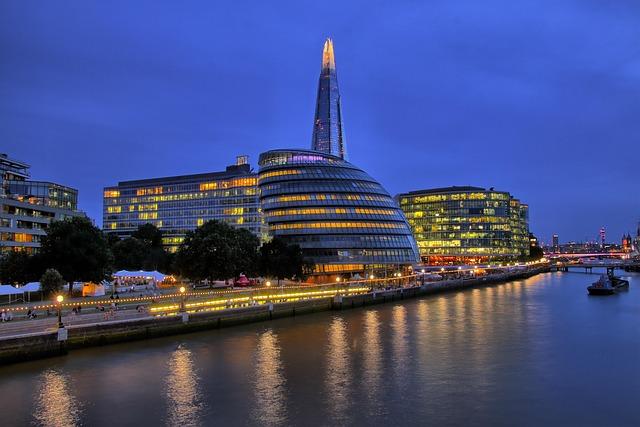
Long before City Hall’s glass curves became his political stage, Ken Livingstone had already honed his taste for confrontation at County Hall. As leader of the Greater London Council in the early 1980s,he turned the GLC into a laboratory for urban progressivism-subsidised public transport,outspoken opposition to Margaret Thatcher,and high‑visibility campaigns on race,gender,and LGBT rights. His unapologetically radical agenda earned him the tabloid label of “Red Ken,” yet also cemented his reputation as a canny local operator who understood how to leverage limited powers into national influence. When the GLC was abolished in 1986, many assumed his capital-wide career was over; instead, the closure gave him a powerful narrative of central government overreach that he would later repurpose in a new political era.
That narrative reached its next act with the creation of the London mayoralty in 2000, a role he initially won as an independent after a bitter break with Labour’s leadership. At City Hall he translated the rhetoric of the GLC years into large‑scale executive decisions, blending ideological consistency with pragmatic deal‑making.
- Transport revolution: championed the congestion charge and expansion of bus services.
- Urban redevelopment: backed major projects in the Docklands, East London and around the Thames.
- Global city diplomacy: promoted London as an open, multicultural hub and secured the 2012 Olympic bid.
- Political controversies: clashed with national leaders, media outlets and foreign governments, keeping his maverick image alive.
| Era | Power Base | Signature Focus |
|---|---|---|
| GLC Leadership | County Hall | Rate-capping battles, social equality |
| Mayoral Years | City Hall | Transport, regeneration, global profile |
Controversies policy battles and their impact on his public legacy
Throughout his career, Livingstone’s fiercest battles were as much ideological as administrative, shaping an image of a politician who thrived on confrontation. From clashes with successive Conservative governments over municipal autonomy and public spending in the 1980s to later disputes with New Labour over privatisation and transport policy, he consistently framed himself as a defender of local democracy against centralising forces. His decision to introduce the London congestion charge, champion LGBT+ rights when they were far from mainstream, and openly criticise aspects of UK foreign policy placed him at the heart of national debates about urban governance and social justice. These conflicts forged a public persona that many saw as principled and authentic, while others judged him as reckless and polarising.
Yet it was his most contentious remarks, particularly regarding race, religion and antisemitism, that cast a long shadow over his reputation in later years. Repeatedly accused of using inflammatory rhetoric, he was suspended and ultimately left the Labour Party amid intense scrutiny and media backlash. The contrast between his early legacy as a modernising city leader and his later notoriety created a sharply divided public memory. His record is now frequently enough assessed through competing lenses:
- Supporters highlight his role in reshaping London’s governance, expanding public transport and advocating minority rights.
- Critics emphasise his combative style, contentious comments and the damage they believe he did to political discourse.
- Historians tend to place him in the lineage of post-war radical municipal leaders, emblematic of both the promise and perils of ideological politics.
| Area | Key Dispute | Legacy Effect |
|---|---|---|
| City Governance | Autonomy vs. central control | Seen as a champion of London’s powers |
| Transport | Congestion charge and fares policy | Credited with bold,divisive innovations |
| Public Discourse | Statements on antisemitism and history | Ample reputational damage |
Assessing Ken Livingstones long term influence and what Britannica adds to the record
Livingstone’s legacy sits uneasily between pioneering urban reform and polarizing political theatre. His early push for congestion charging, LGBT+ rights, and multicultural outreach in London anticipated policies later adopted by mayors across Europe, while his willingness to confront central government recast the role of the city leader as an independent power broker rather than a municipal caretaker. Yet his career is equally marked by controversies over party discipline, accusations of antisemitism, and a combative media presence that, for many, overshadowed his substantial policy record. As time passes, historians and journalists are less focused on whether he was “Red Ken” or a populist maverick, and more on how he helped normalize strong, directly elected city leadership in Britain’s political landscape.
Encyclopædia Britannica adds a layer of editorial distance that freezes this contentious career into a structured narrative,smoothing the noise of daily headlines into themes and milestones. Its entry highlights his trajectory from the Greater London Council to City Hall, while underscoring the ideological battles that defined his public life. This kind of reference framing does not settle the arguments around him, but it does anchor them in verifiable context, allowing readers to weigh his impact against his missteps. Within that frame, certain enduring features stand out:
- Institutional innovation – advancing the model of a powerful, policy‑driven mayoralty.
- Urban experimentation – early adoption of congestion charging and environmental initiatives.
- Cultural politics – strong advocacy for minority communities amid intensifying identity debates.
- Enduring controversy – ongoing disputes that continue to shape how his record is interpreted.
| Aspect | Long-Term View | Britannica’s Role |
|---|---|---|
| Policy Legacy | Influential for city governance and transport | Documents key reforms and timelines |
| Public Image | Remains sharply divided | Offsets rhetoric with factual summary |
| Past Status | Seen as a formative London mayor | Places him within UK political evolution |
Final Thoughts
As with many long-serving public figures, Ken Livingstone’s legacy resists easy summary. To his admirers, he remains the audacious strategist who reshaped London’s governance and pushed issues of social justice, transport and the environment onto the mainstream political agenda. To his critics, he is a polarising operator whose misjudgments and incendiary remarks overshadowed his achievements and hastened his departure from public life. Yet whether viewed as pioneer or provocateur, Livingstone’s trajectory from the battles over the Greater London Council to the creation and stewardship of the modern mayoralty ensured that his imprint on the capital’s political landscape-and on debates within the Labour movement-will endure well beyond his active career.